Some fresh picked mangos were shared at our early breakfast (Yum) before leaving the Ashanti Kingdom and heading south to the Cape Coast.
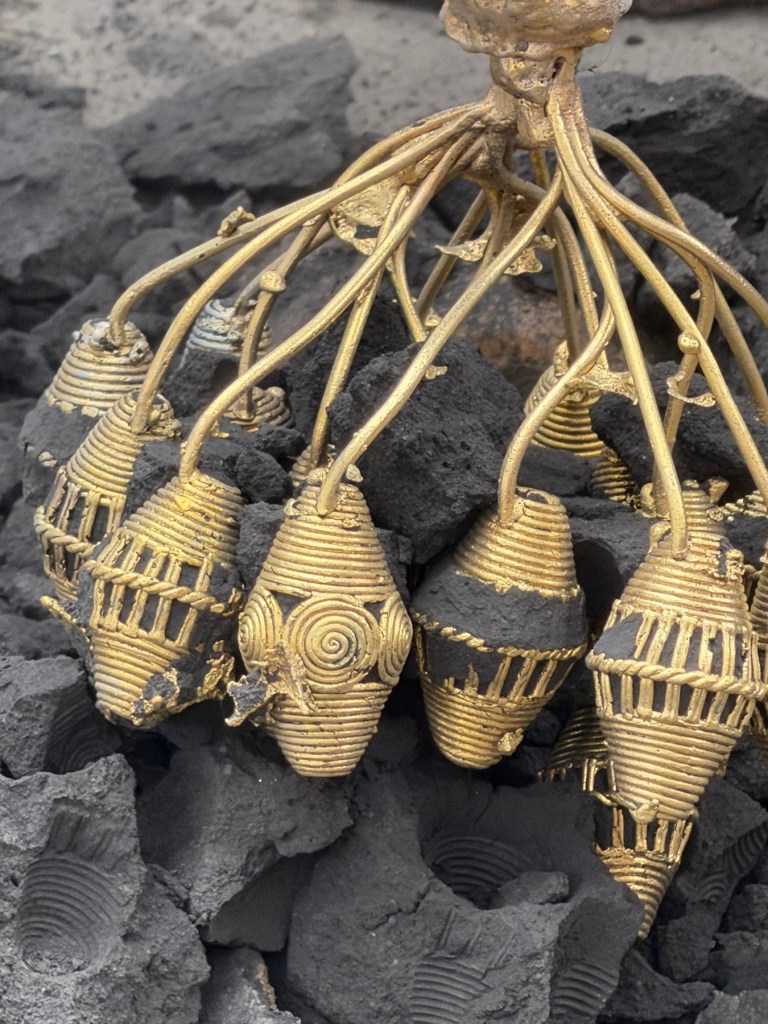
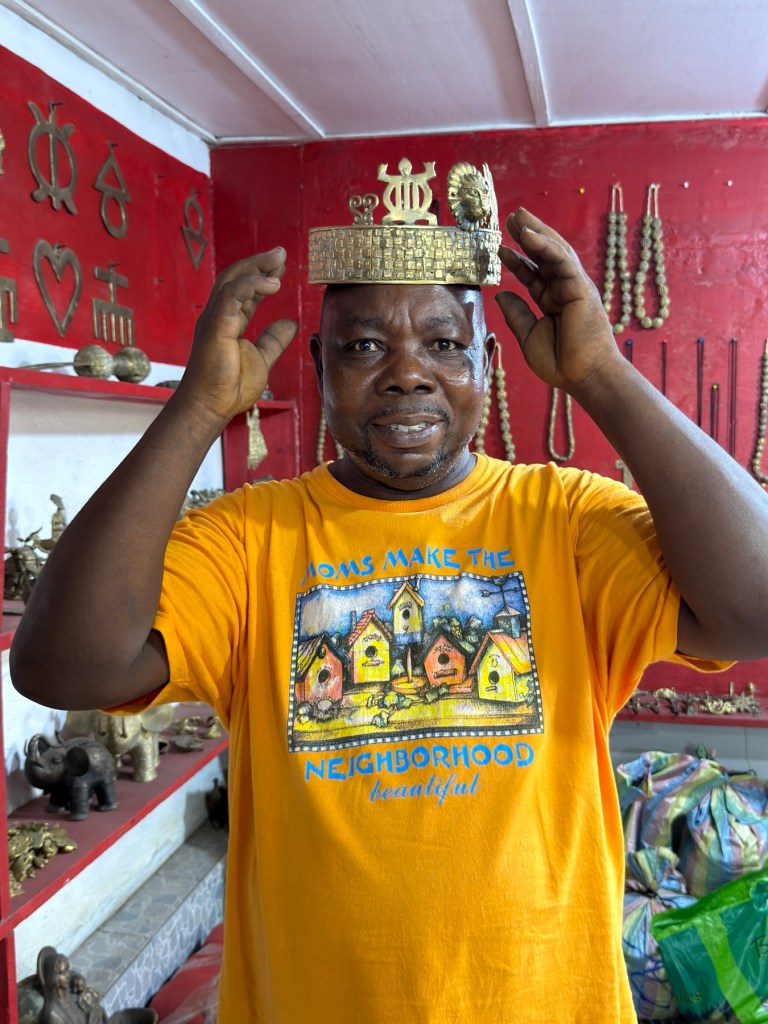
An unscheduled, unexpected and unbelievable stop as our journey began brought us to a family that does brass casting. We were given a demonstration and explanation of the entire multi step process.
Brass casting in Ghana is centuries old. It is a traditional art handed down through generations. The method used is known as the lost wax method. Before our eyes, a beeswax model was made.
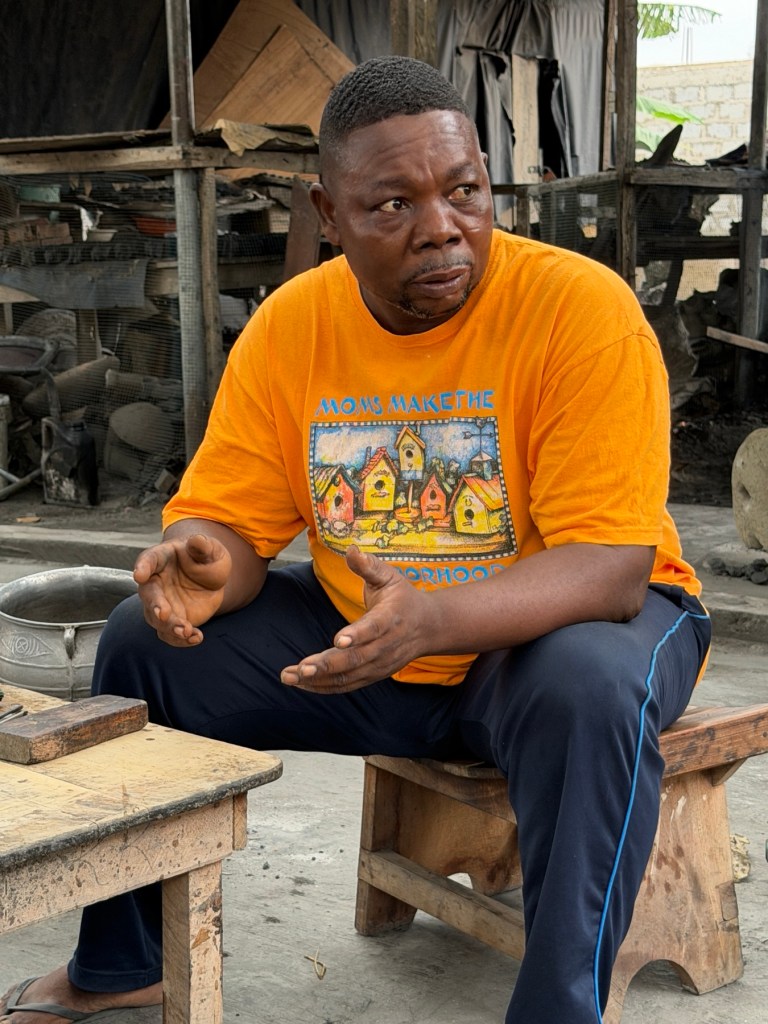
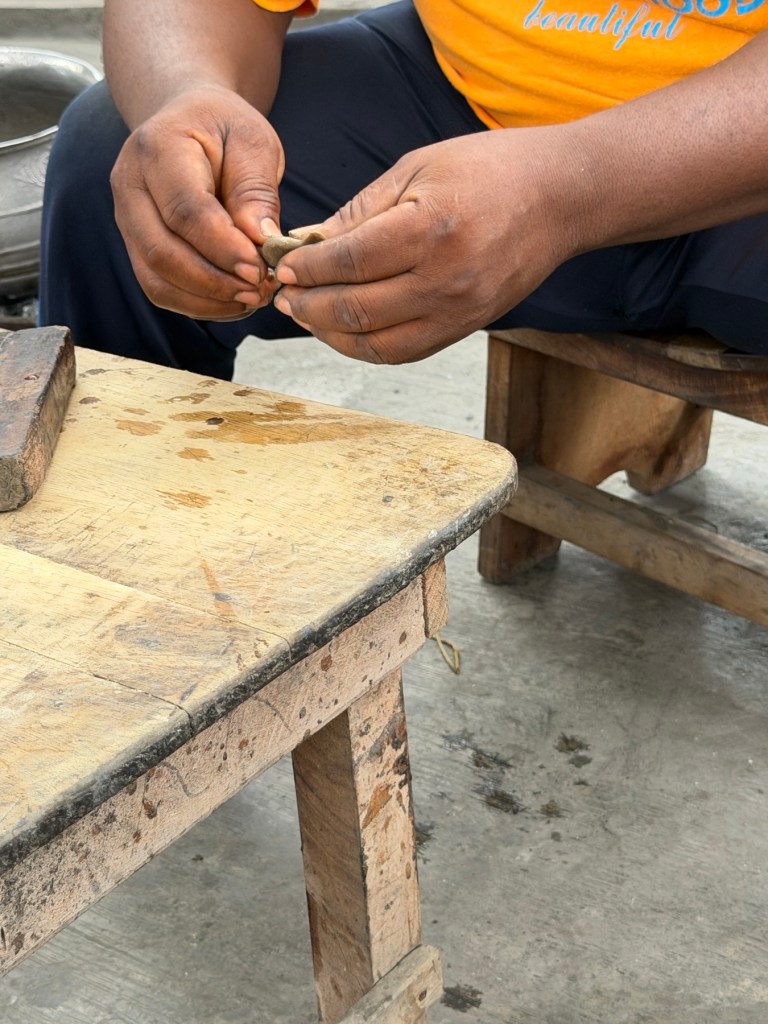
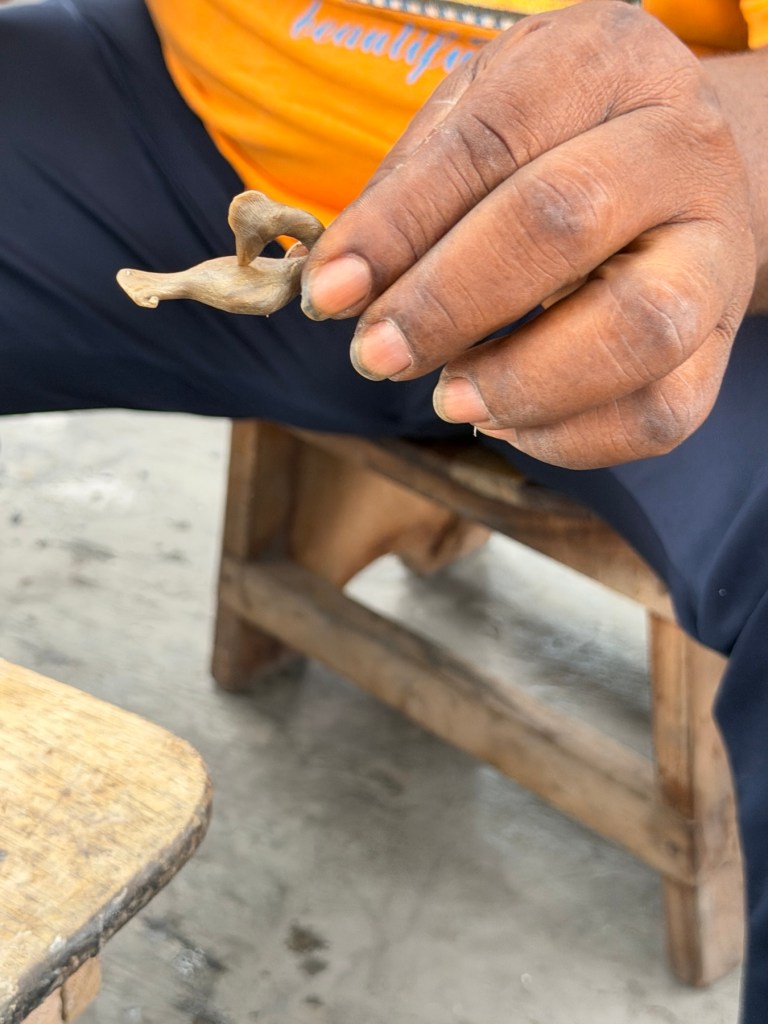
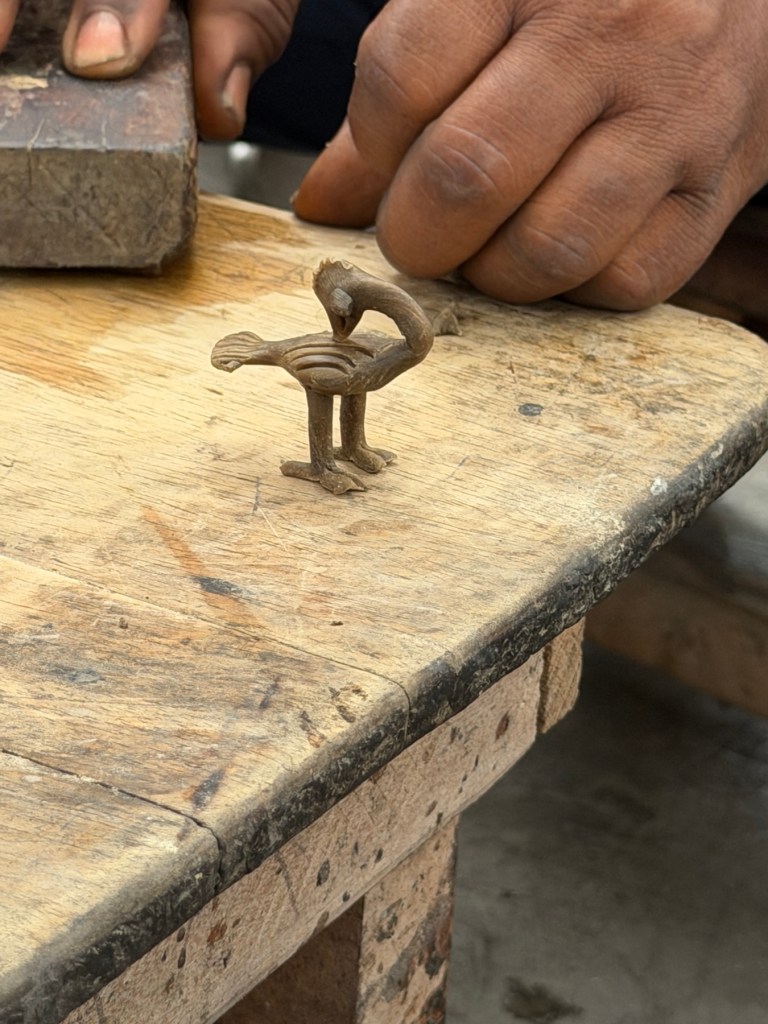
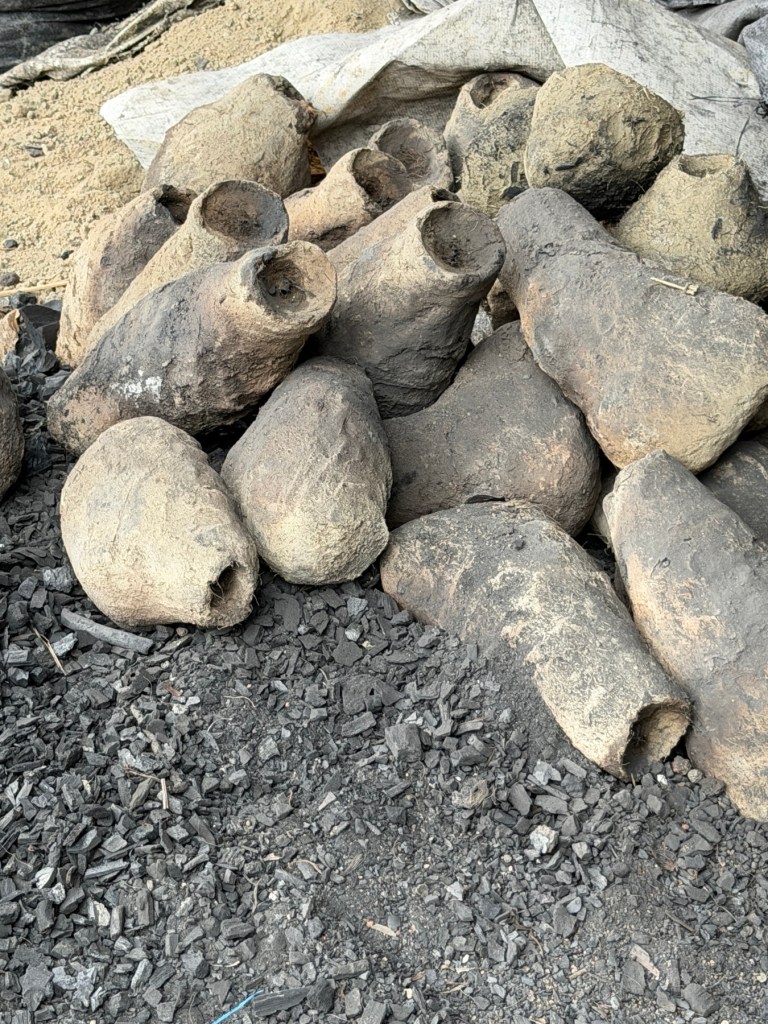
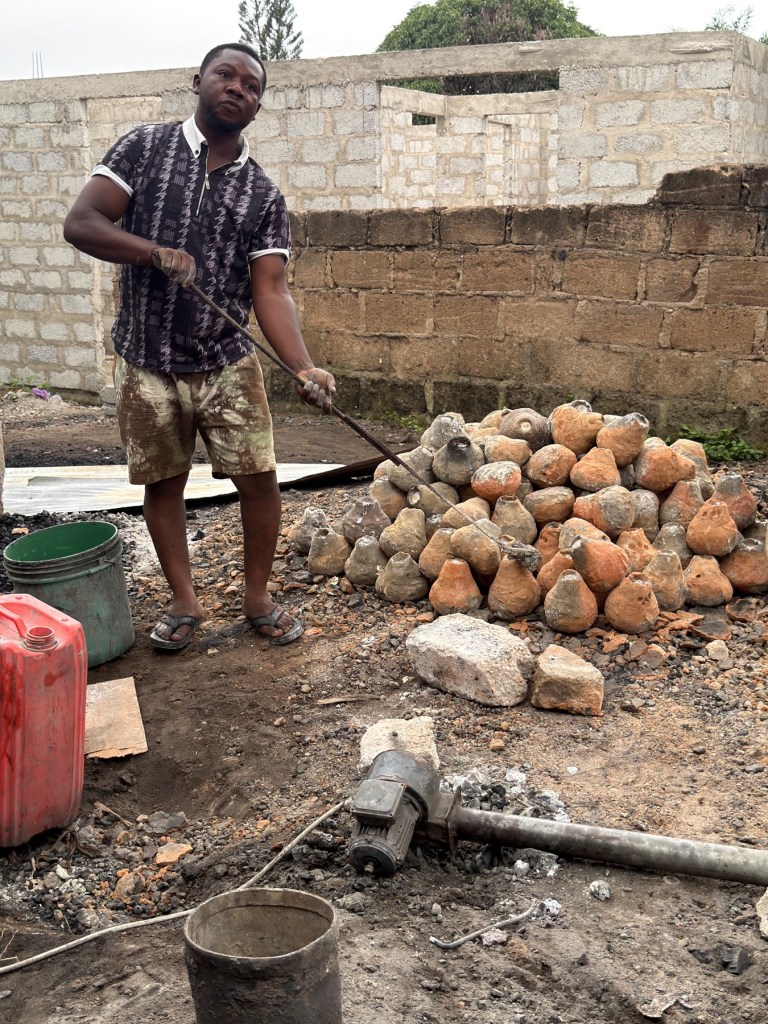
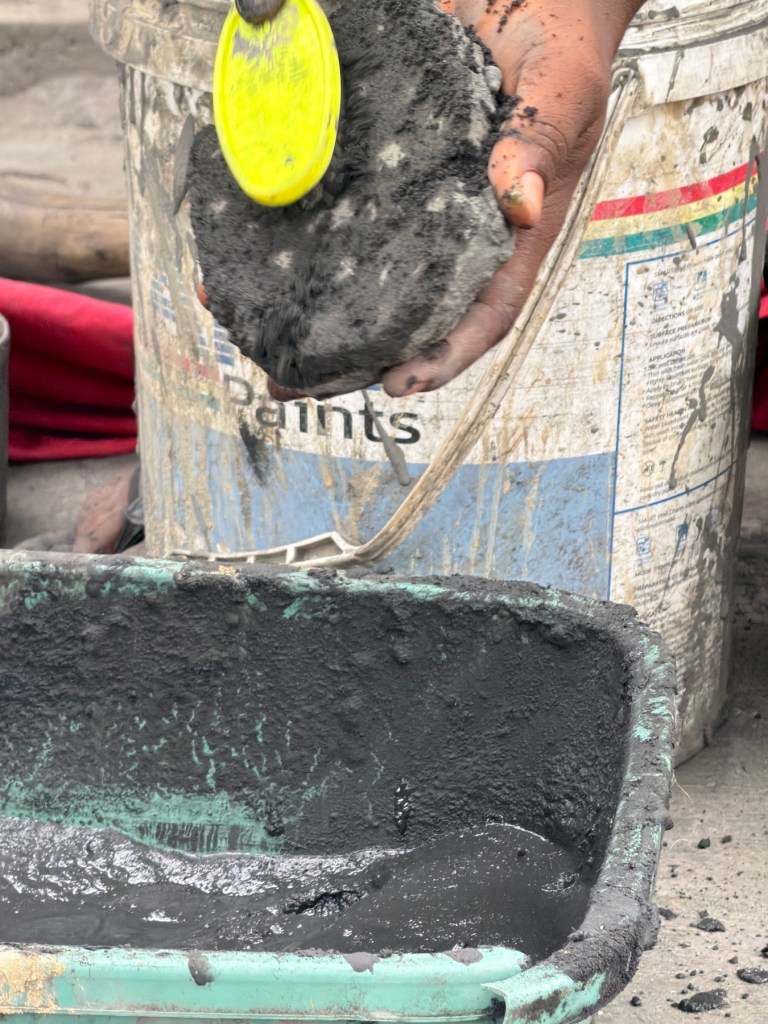
The wax model goes through several coating processes with charcoal and clay. The final step is clay and fiber making a spout hole.
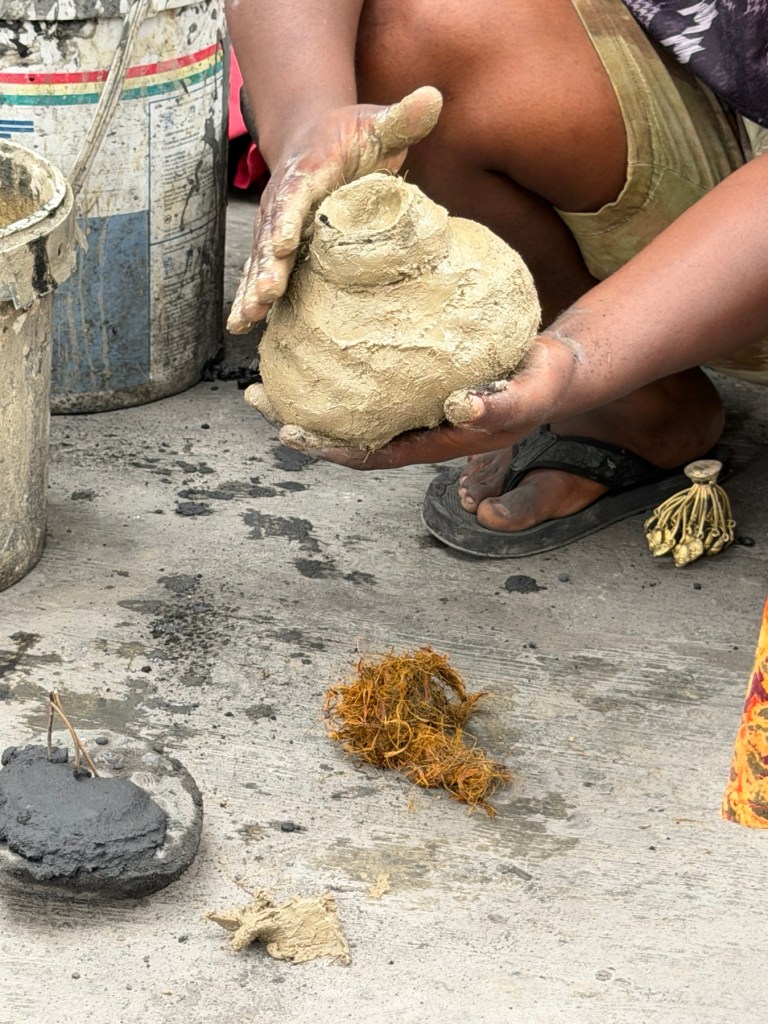
Once the coating is dry, it goes into the kiln and the wax melts away leaving a perfect cavity for the molten brass to be poured. The clay mold is brushed off and the charcoal is removed and like magic… twenty brass beads.
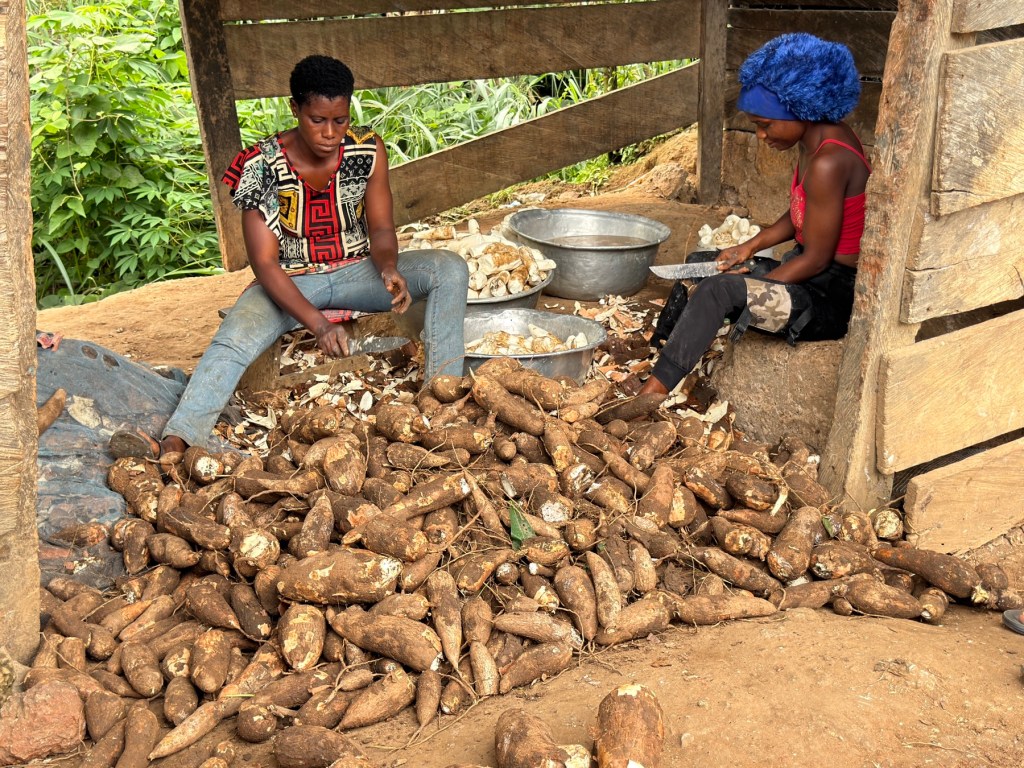
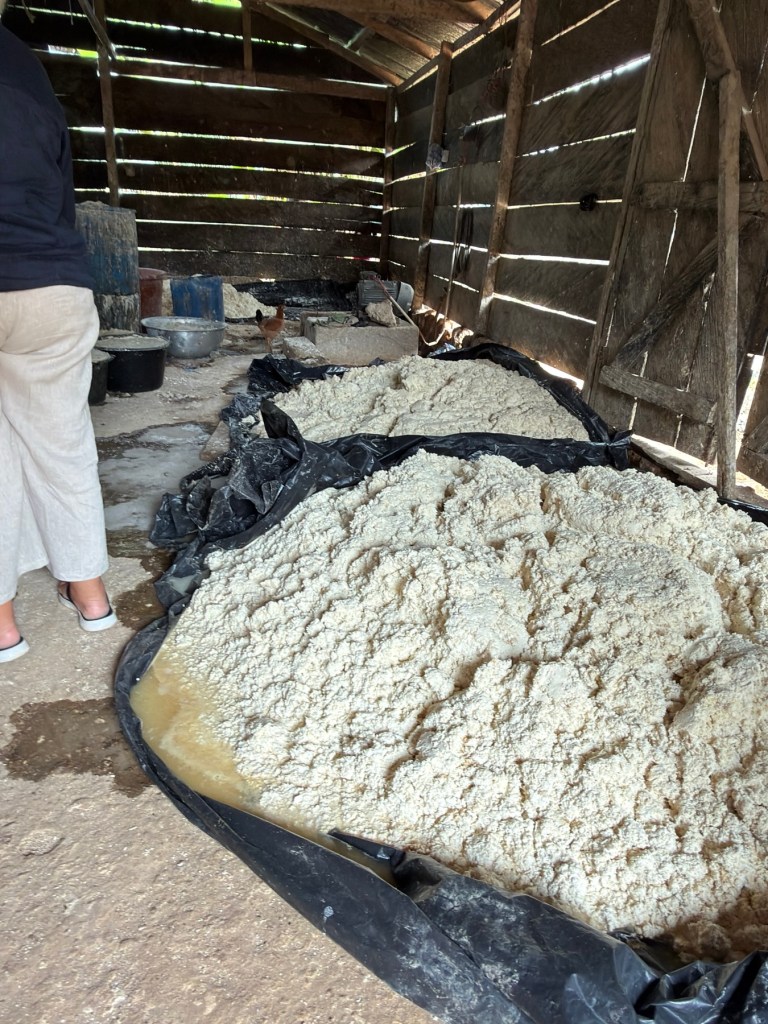
Along the way we passed the ubiquitous stalls and small villages before stopping at a small women’s cooperative where they make cassava flour and dough. Once again, a multi step tedious process. The final result feels like play-doh. The flour and dough are both staples in the Ghanan diet. It is used in making fufu, baku, gari and bread to name a few.
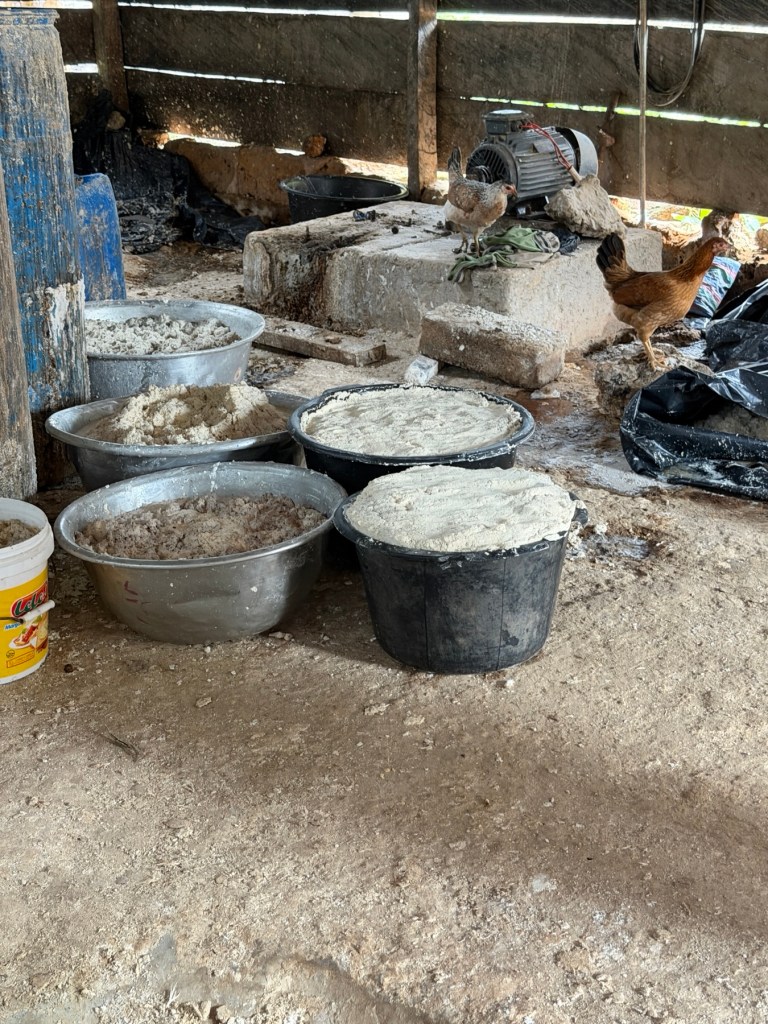
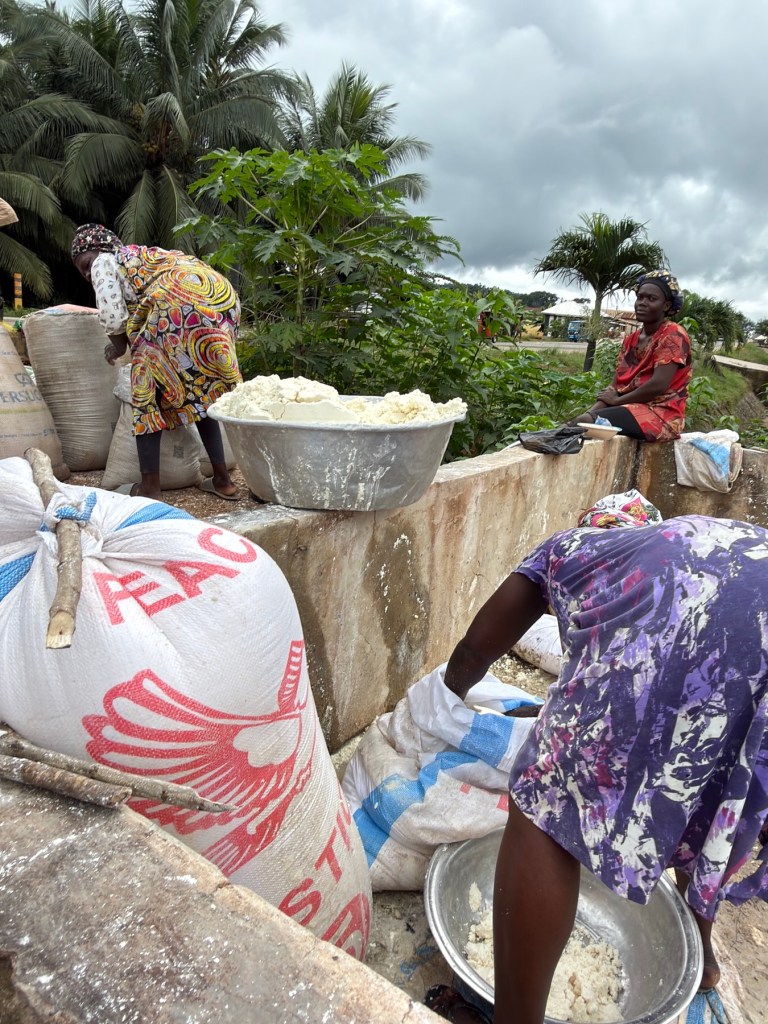
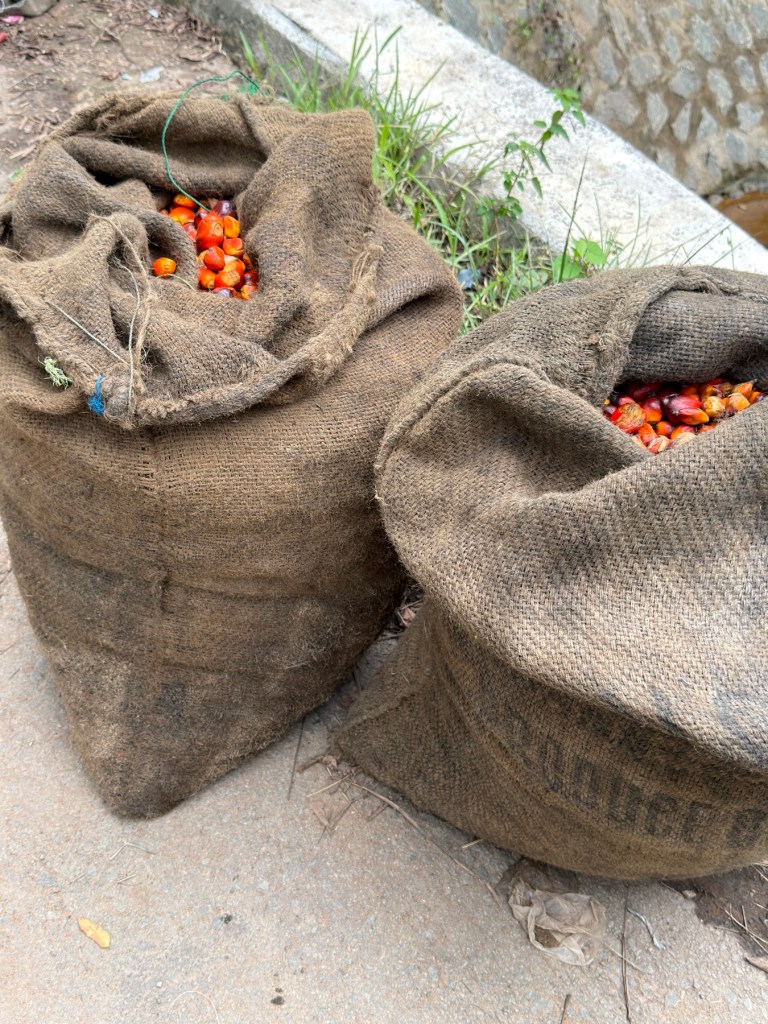
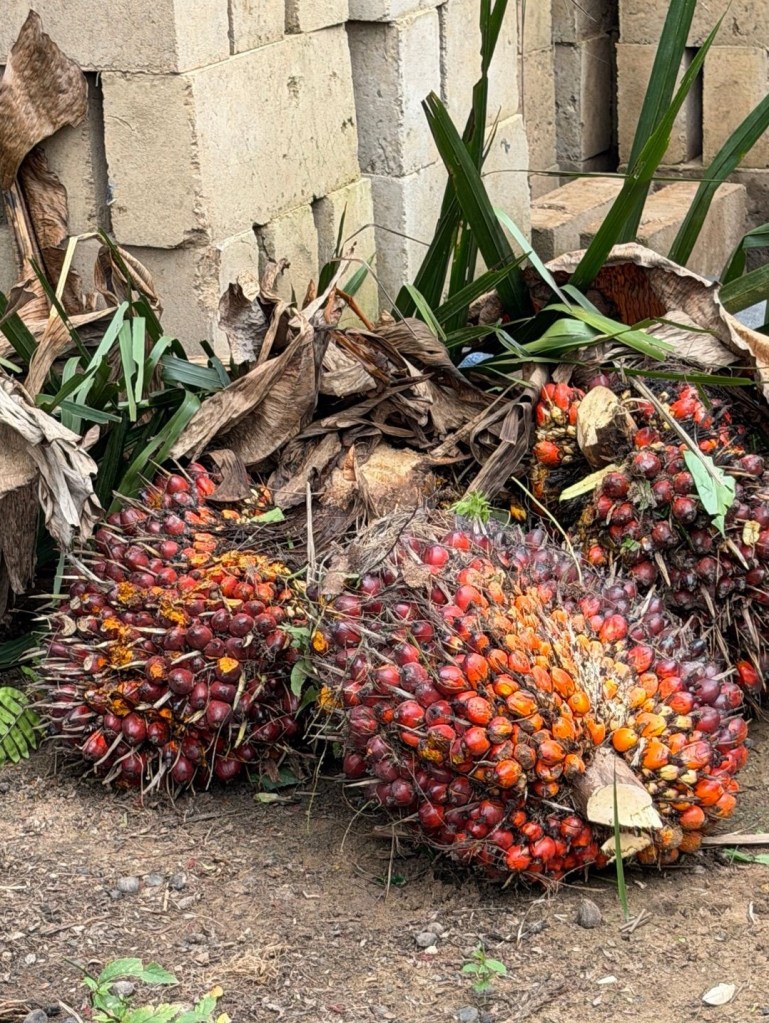
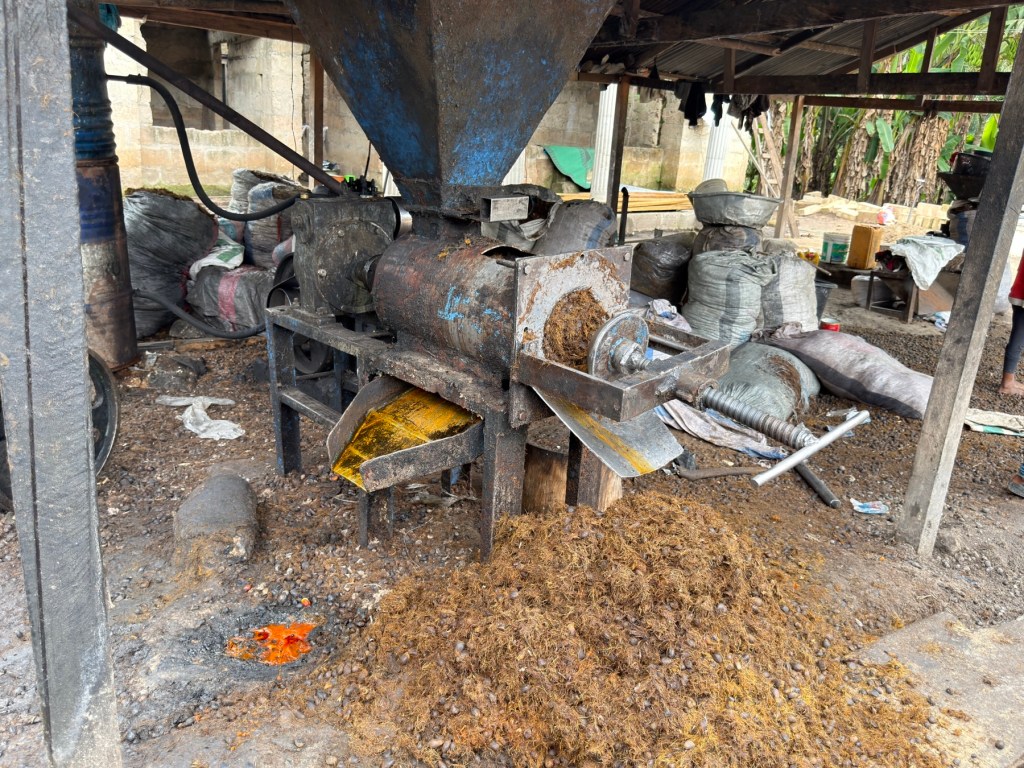
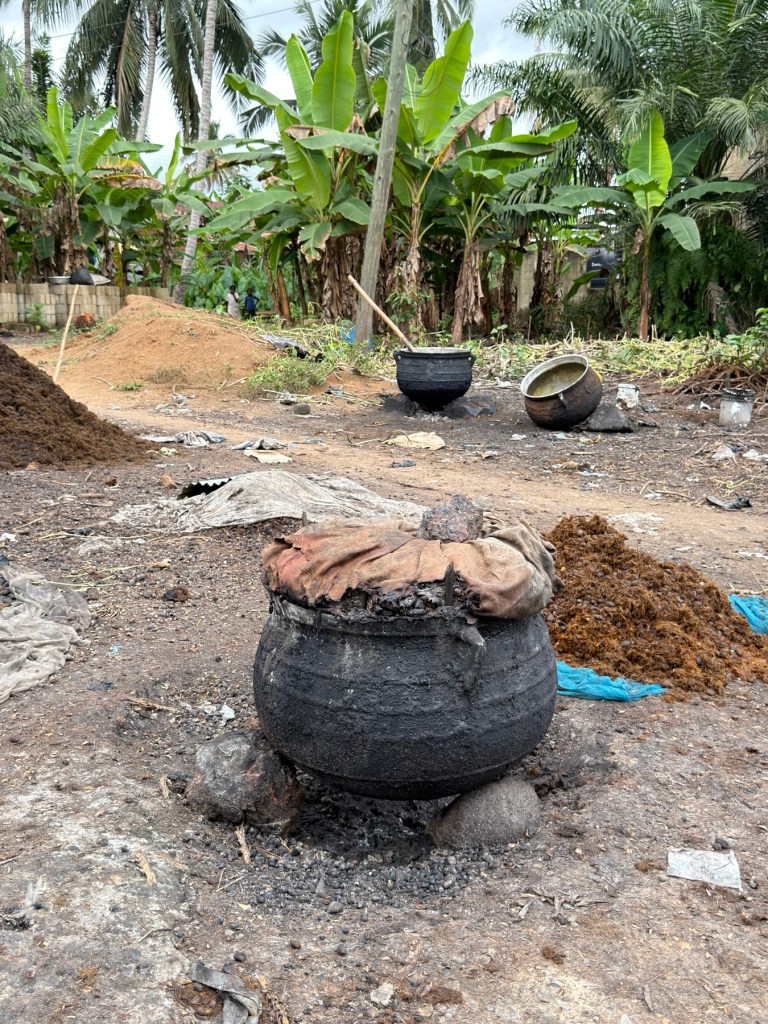
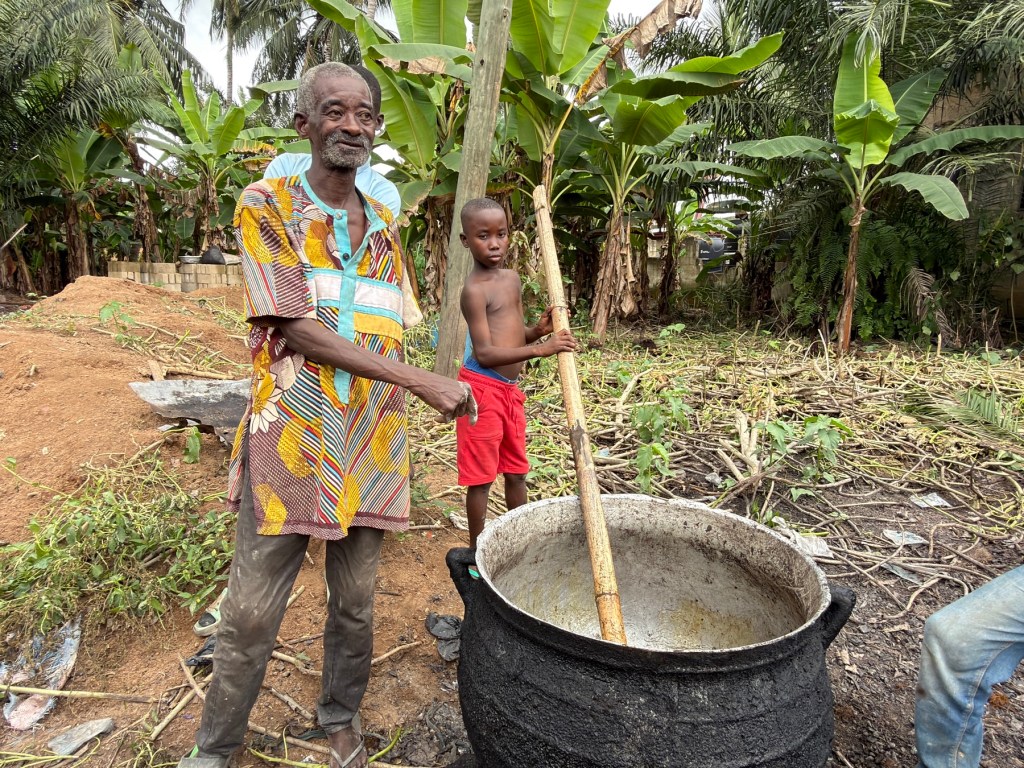
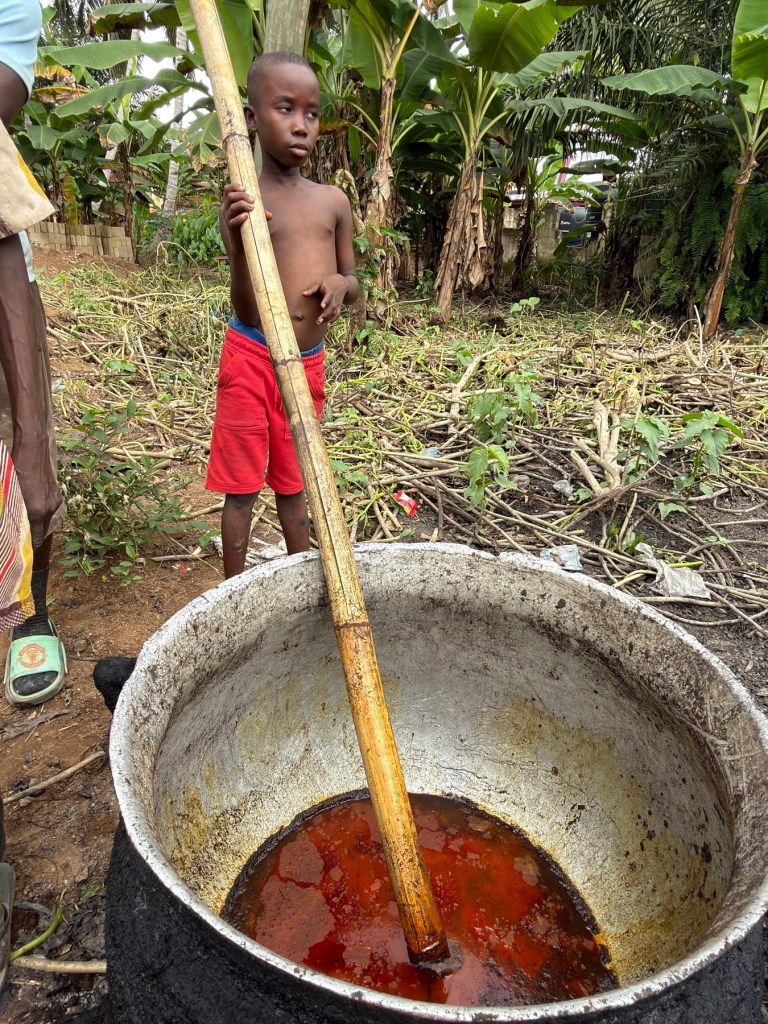
Behind the cooperative was another family which presses and processes the red palm oil that is in many Ghanan recipes. The amount of work to make the oil is daunting. The entire family plays a role in each step.
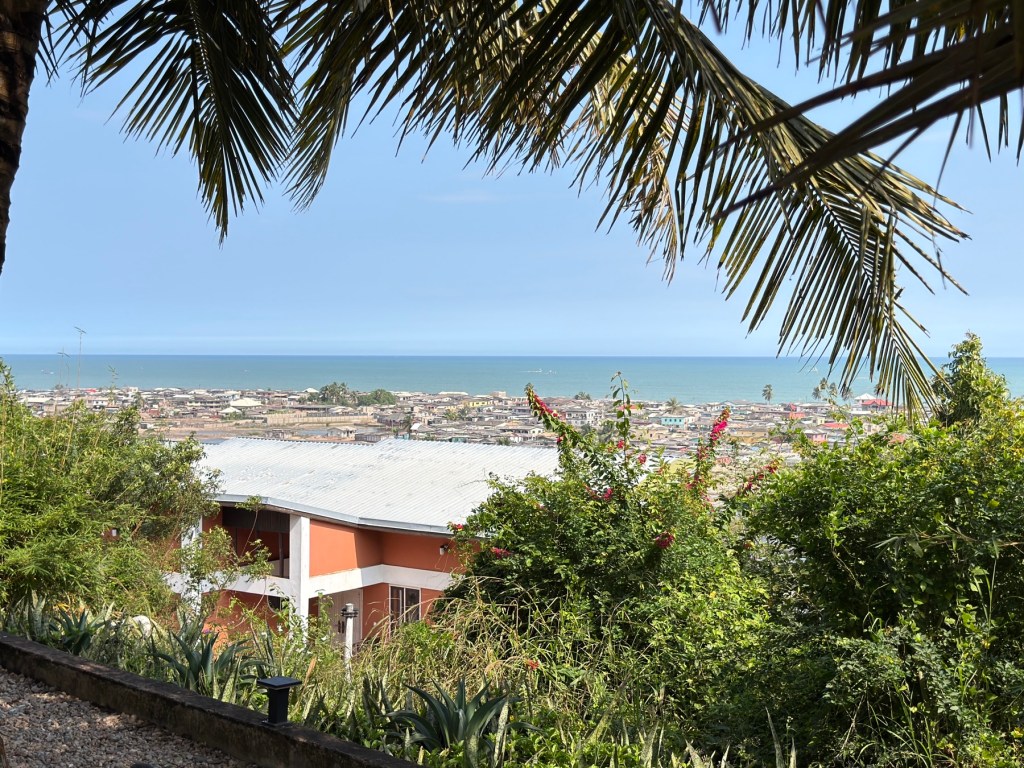
Nearing Cape Coast, the ocean was visible and the palm trees swayed in the breeze.
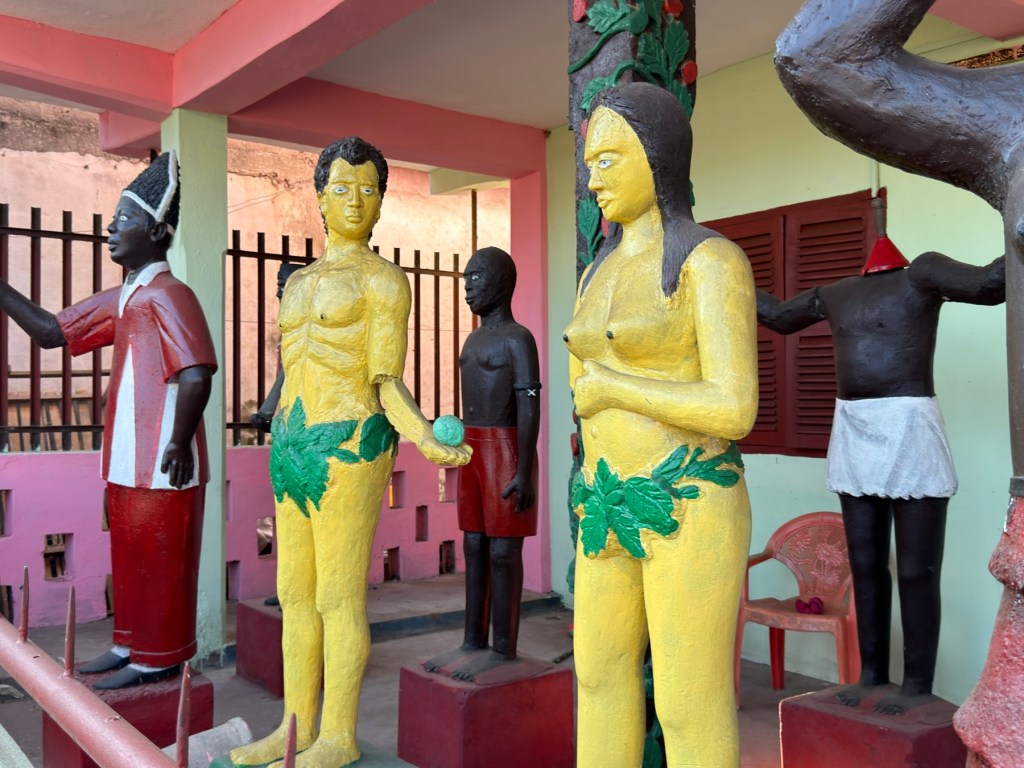
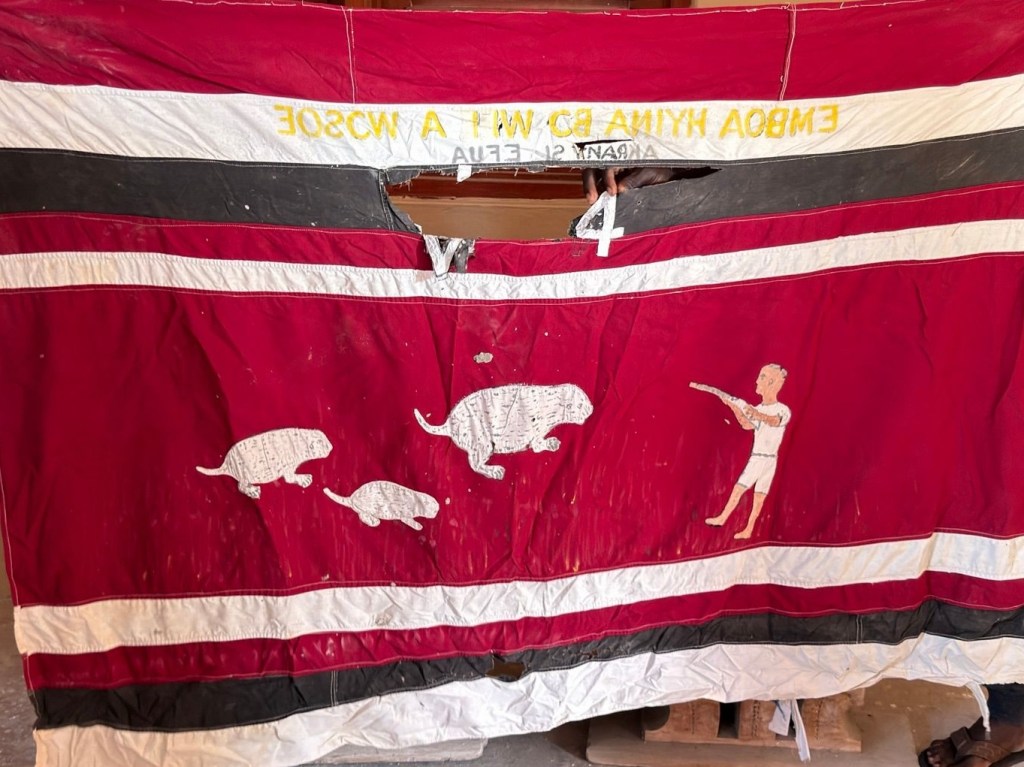
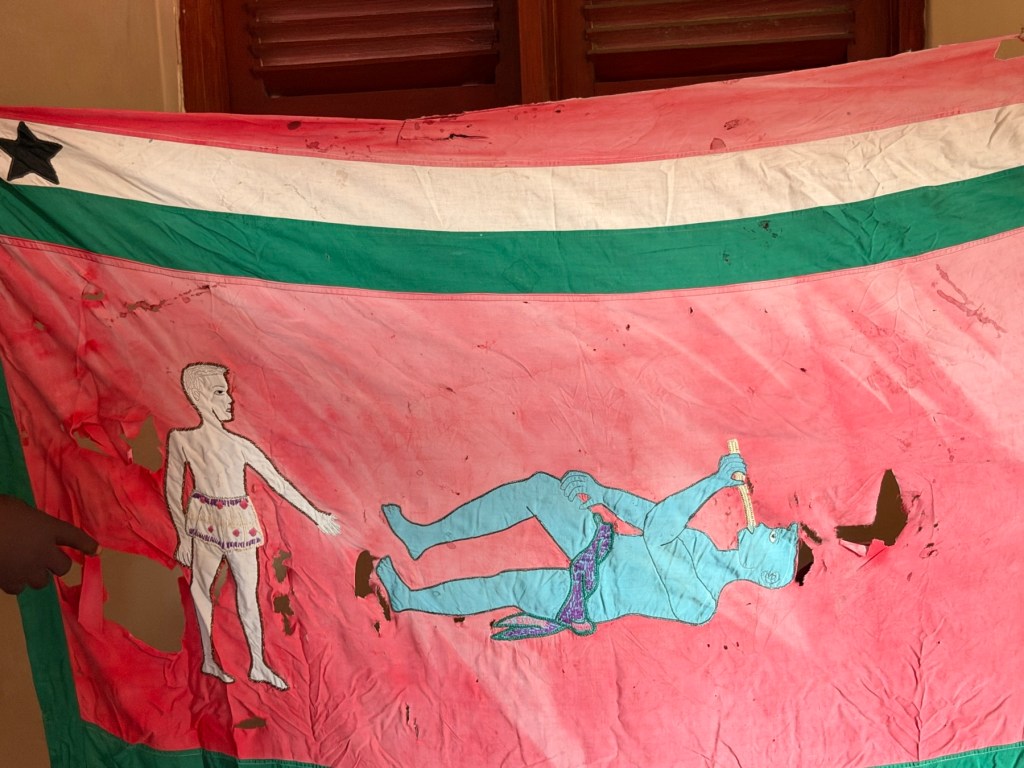
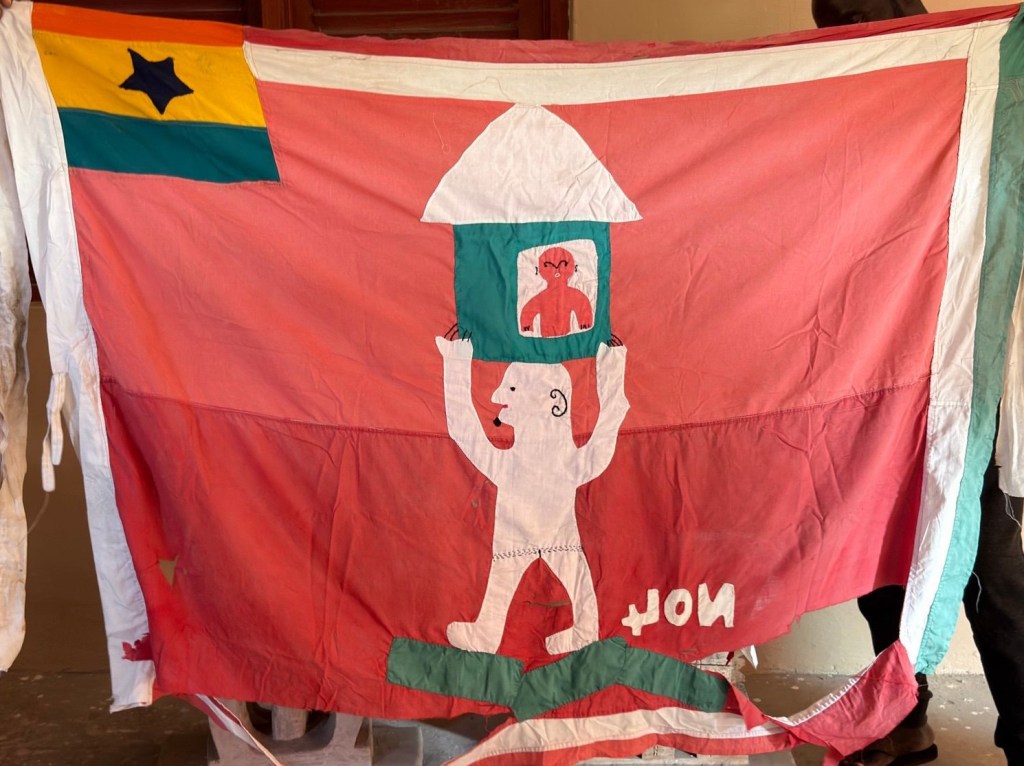
The coastal fishing village of Elmina has several Asafo shrines. The Asafo companies (troops) were warrior men who defend their village. They developed appliqué flags which tell a proverb or historical event about security or warfare.
We visited the Posuban, a concrete shrine, of Asafo company number four. It has colorful concrete figures of Adam and Eve and some warriors. The shrine, once storage for munitions, now serves as a place for regalia and meetings. The Asafo flags are carried through the village for ceremonies and festivals.
Capping off the day’s activities…
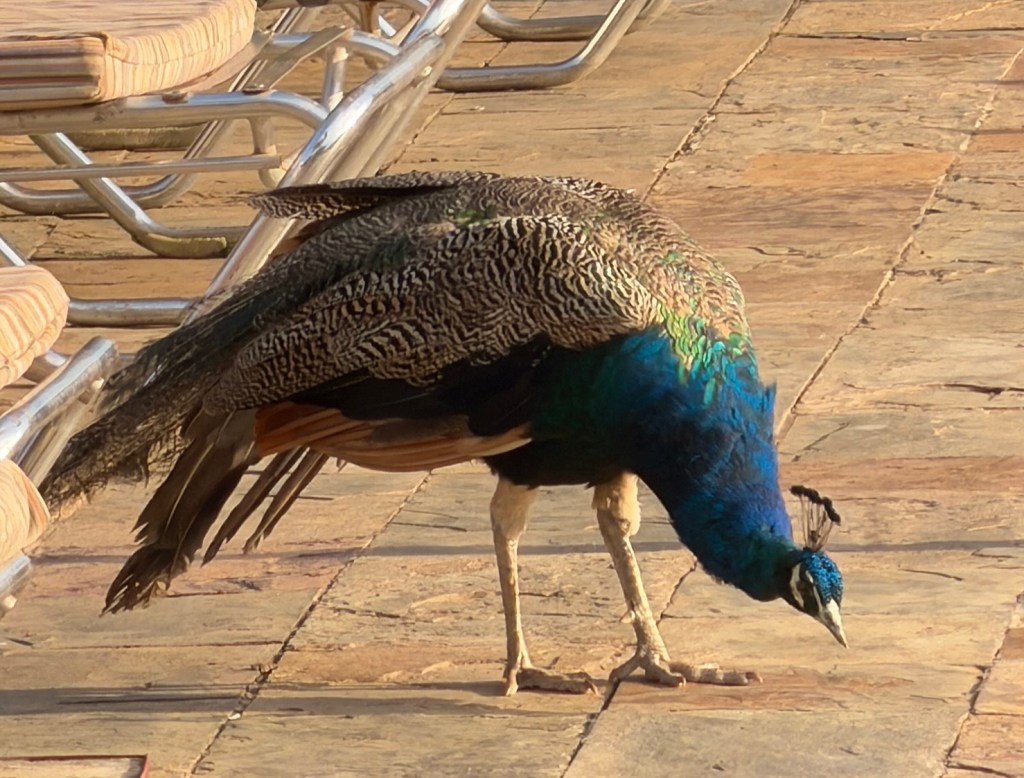
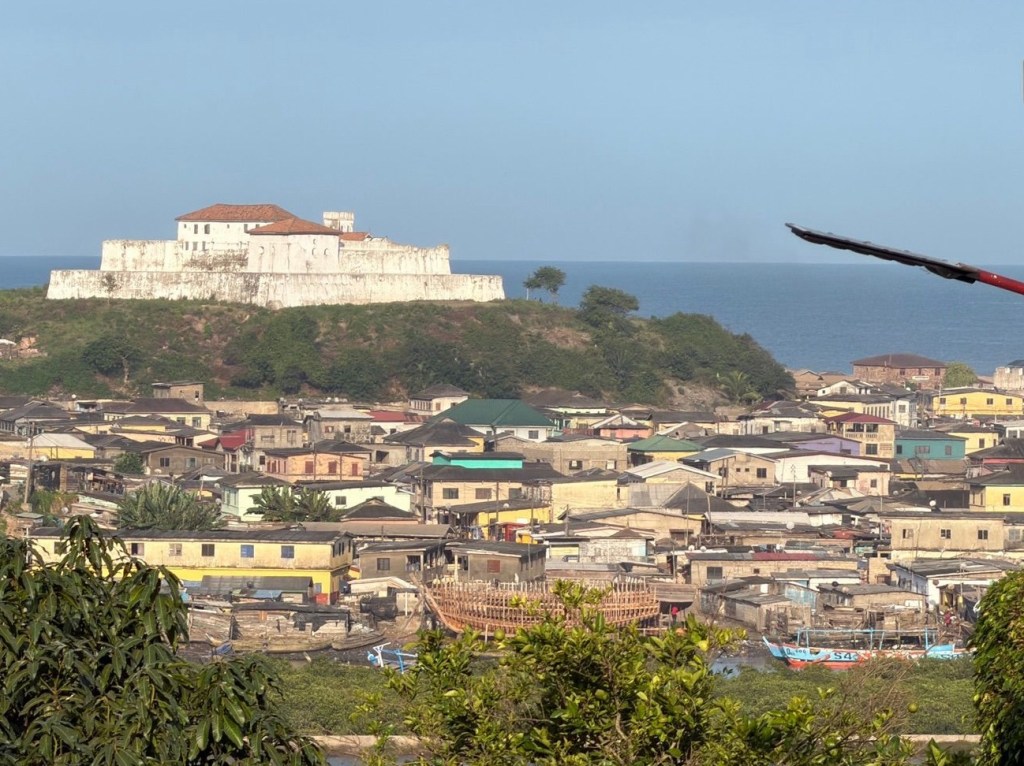
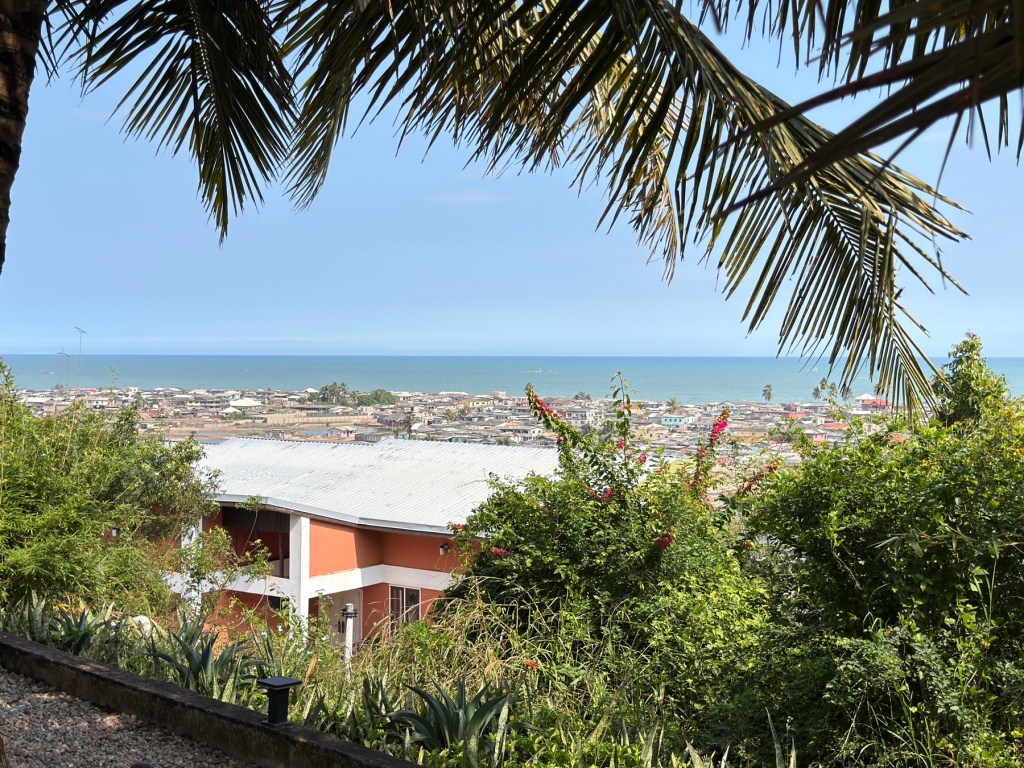
We were greeted by a peacock and a view of the Atlantic from our hotel in Cape Coast. Captivating.


