Our first day in Ghana introduced us to Accra (pronounced Ah-Krah), the countries capital. It is sprawling, vibrant and exciting. There are many distinct districts to explore.
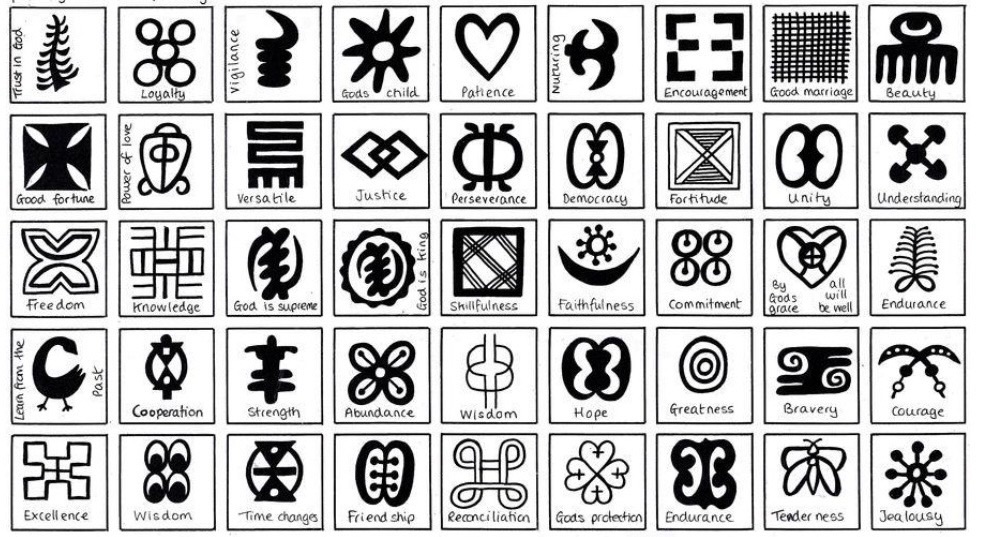
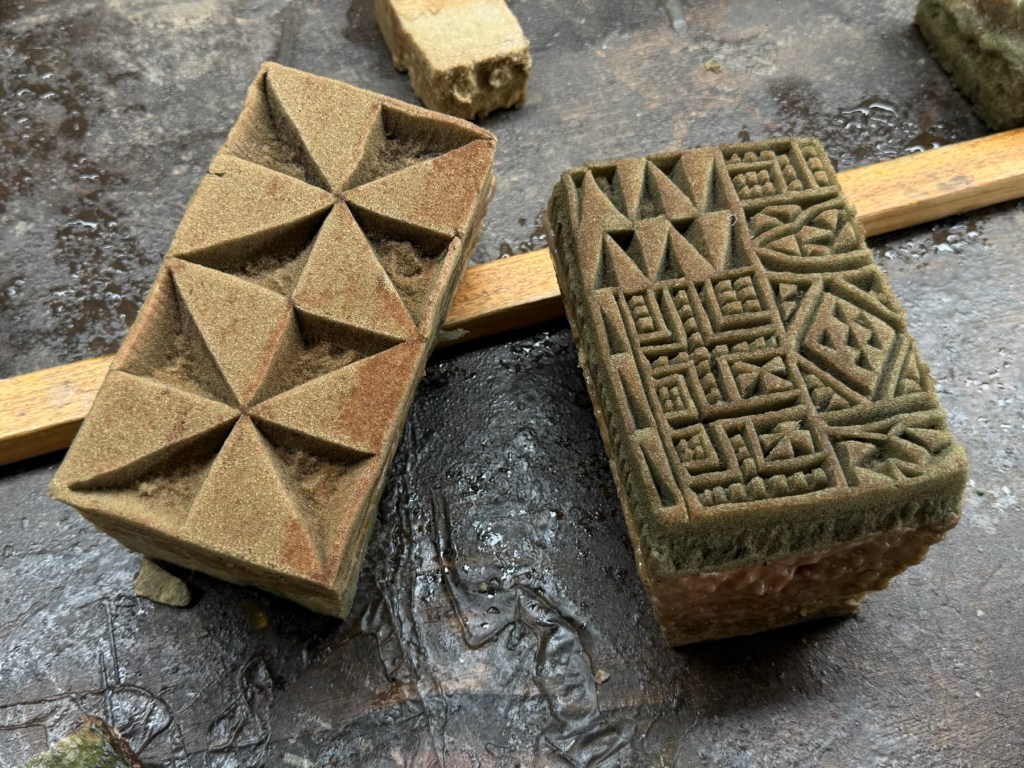
First up; a batik workshop. Batik is a fabric art featuring wax stamped designs. Many countries have unique and distinctive variations of the art form. It is believed that batik was introduced to Ghana by a Dutch trader with ties to Indonesia. Ghana batik is typically applied with wood or foam blocks. It has become a significant part of the culture. Often, the stamps are of Adrinka symbols (from the Akan people) which convey values, proverbs and life wisdom. The dyed fabric is often made into clothing and accessories.
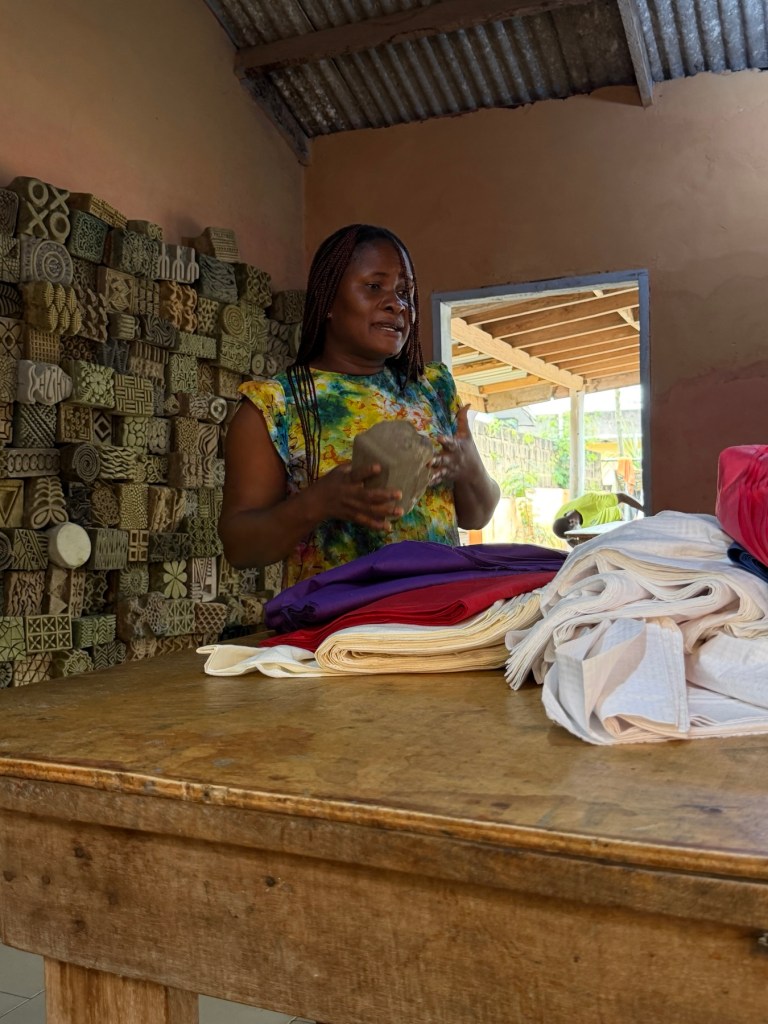
Our group met with “Auntie Esther’s” daughter-in-law. Salane. She has been creating batik fabric with Esther for decades. The studio and shop is Exmac fabrics. Esther and her team have created and produced wonderful batik designs that have been shipped and used around the globe. We donned aprons, picked our fabric and stamps and began our projects. Fortunately, we had a team of assistants.
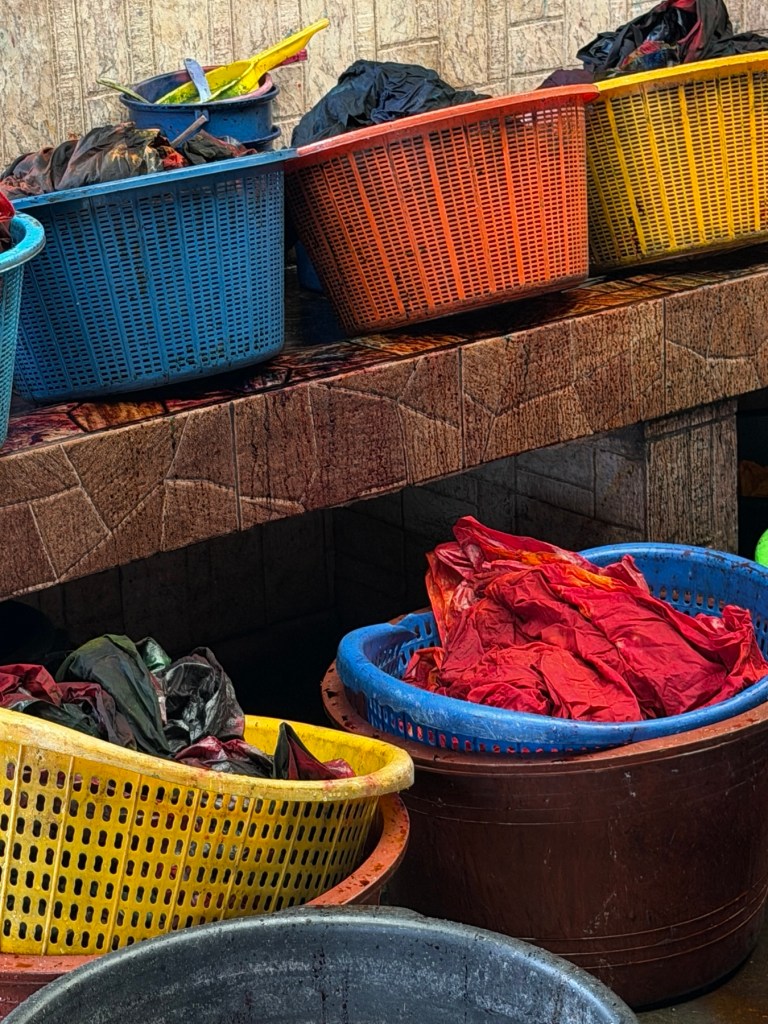
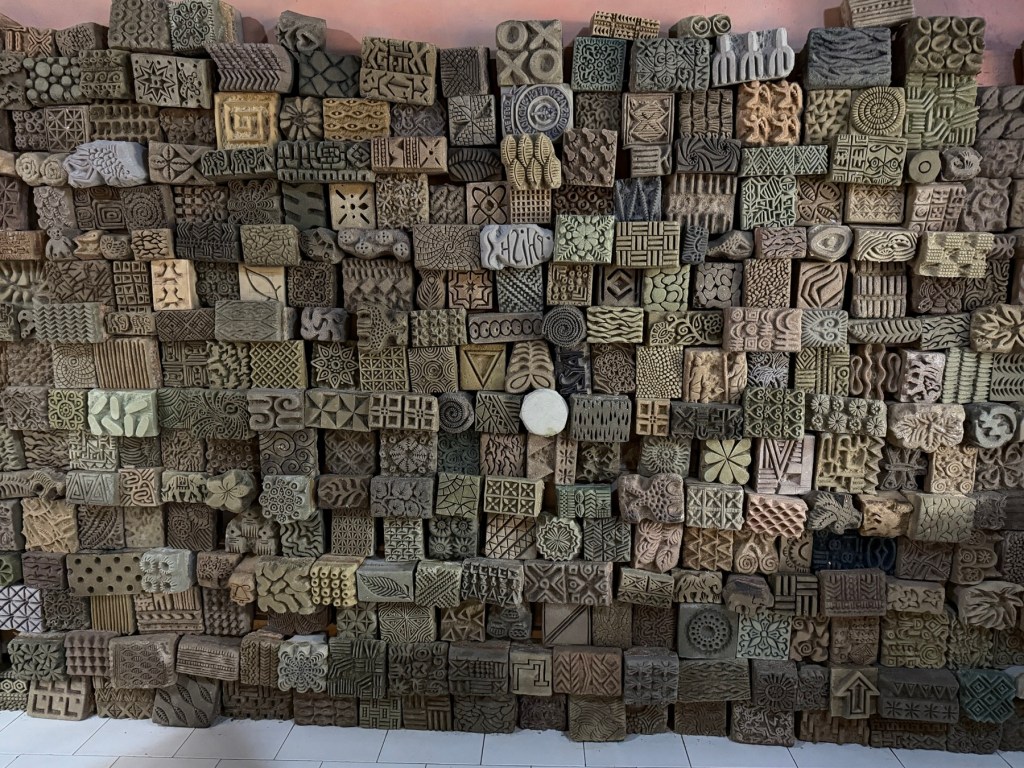
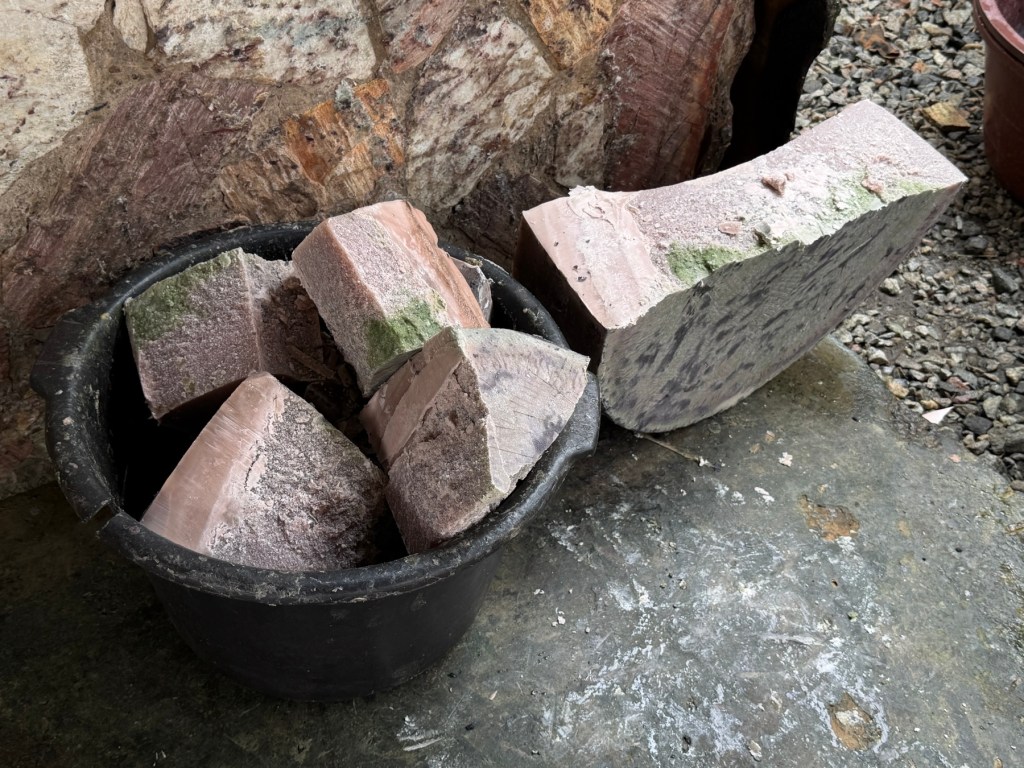
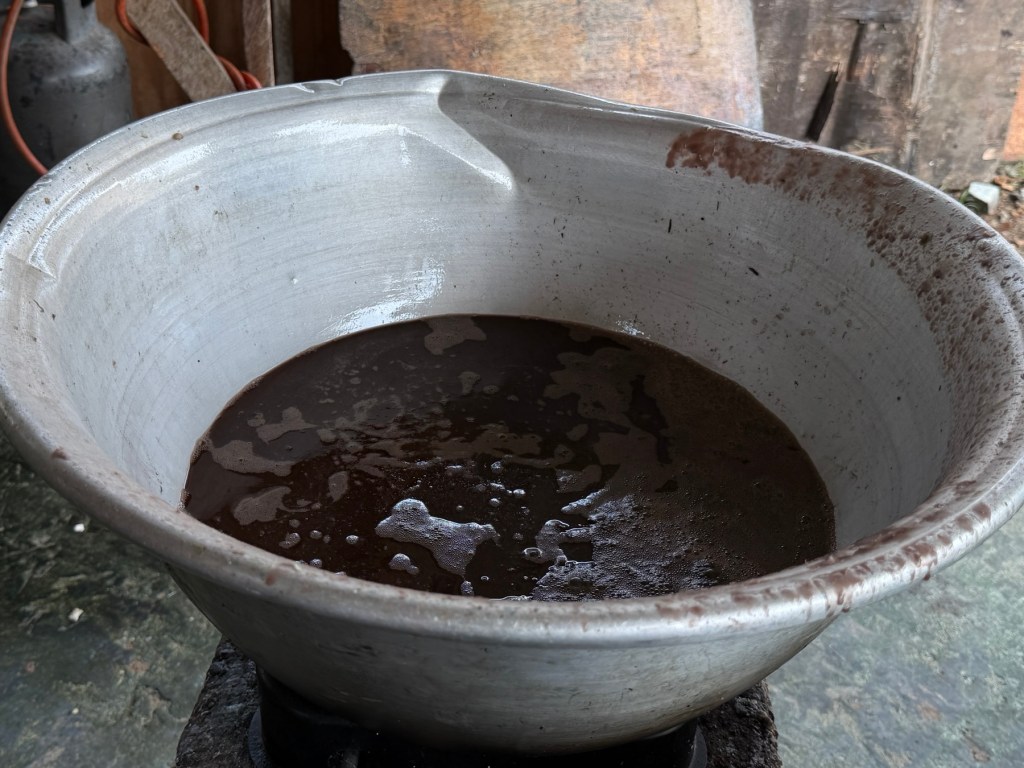
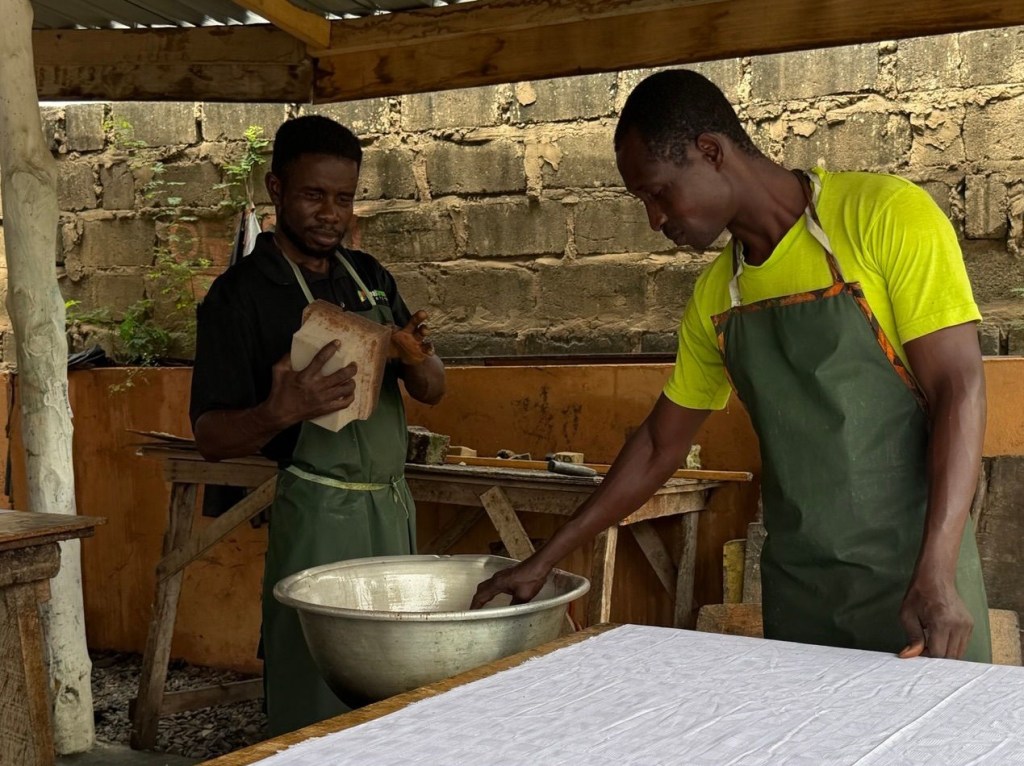
I chose two stamps which have no specific symbolism. My fabric was a deep coral, I chose a red dye to keep it monochromatic. The assistant dipped the foam stamps in the hot wax, and it was fun to align and stamp the fabric. Stamping complete, the fabric was handed off to get dyed. It then was placed on a mat in the yard to set. The next step was to put it in blistering hot water and agitated to melt the wax off. After, the fabric was transferred to cooler buckets of water and wrung out. The final step was to lay it on the grass to dry. Voila two yards of batik fabric.
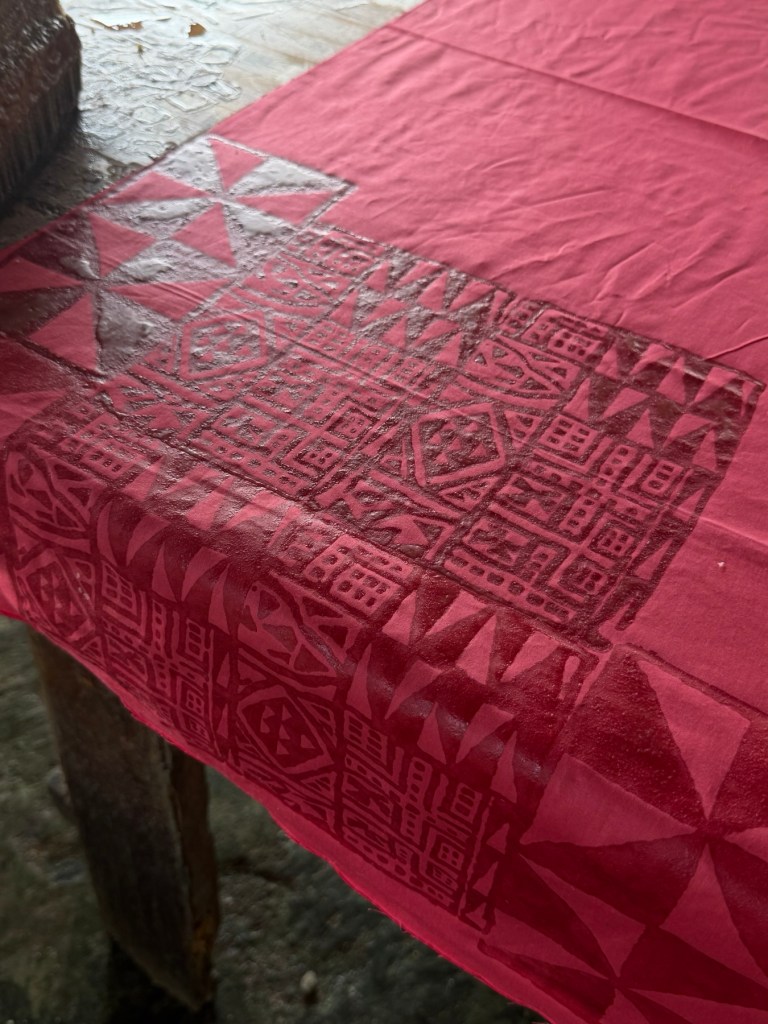
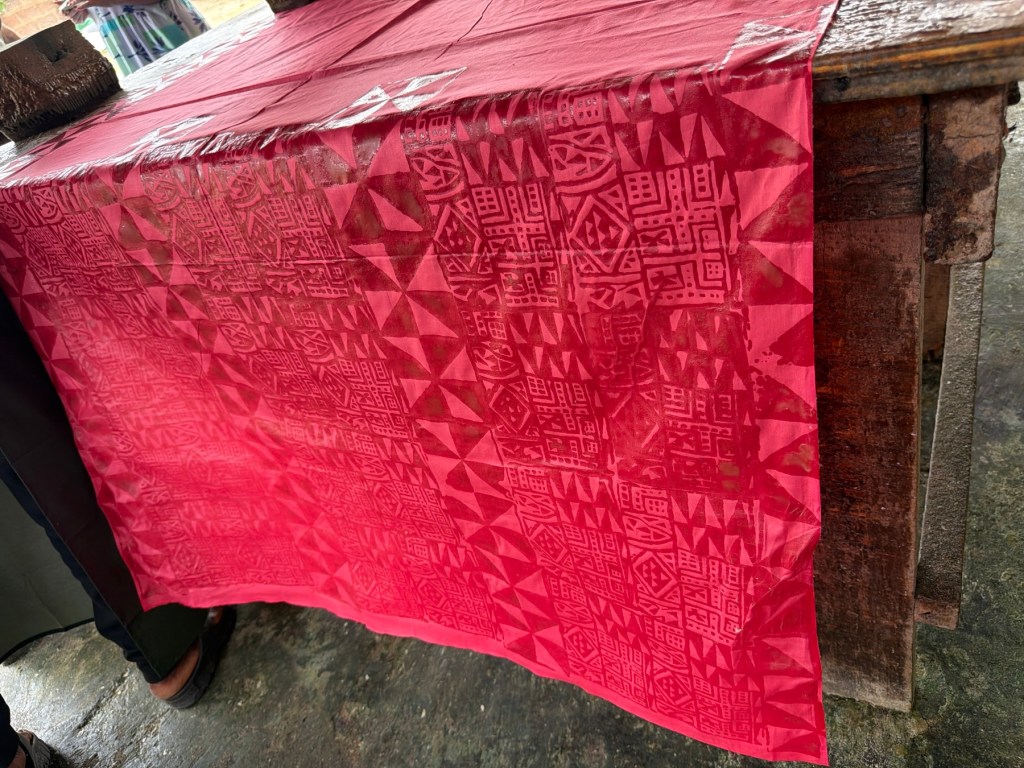
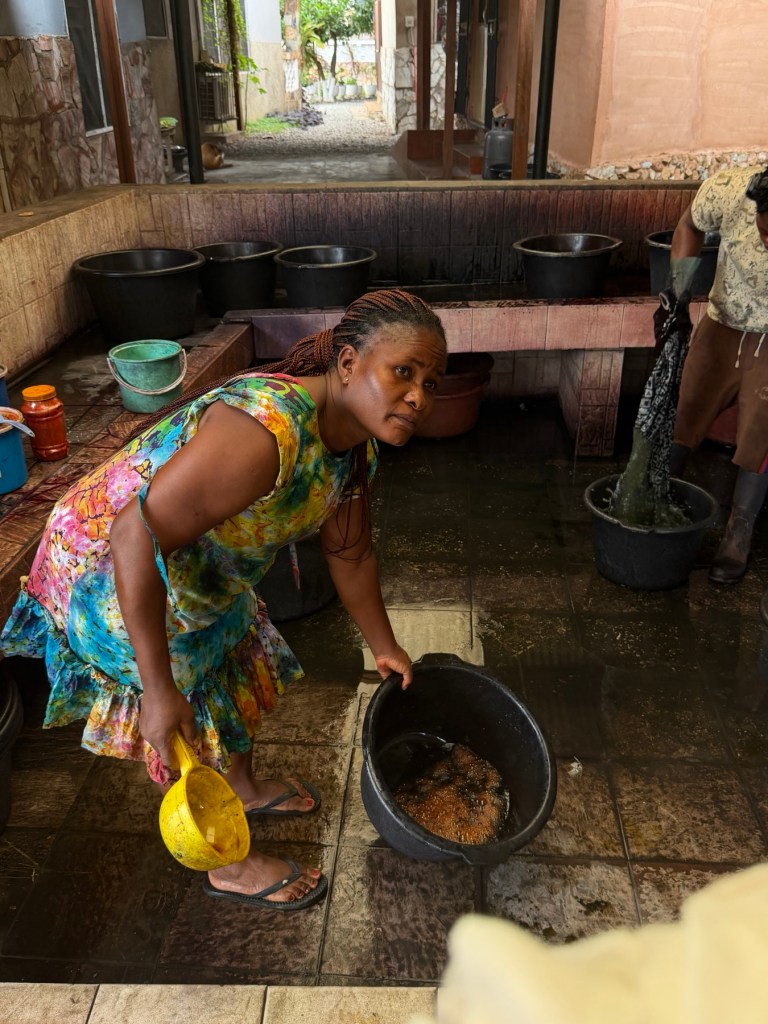
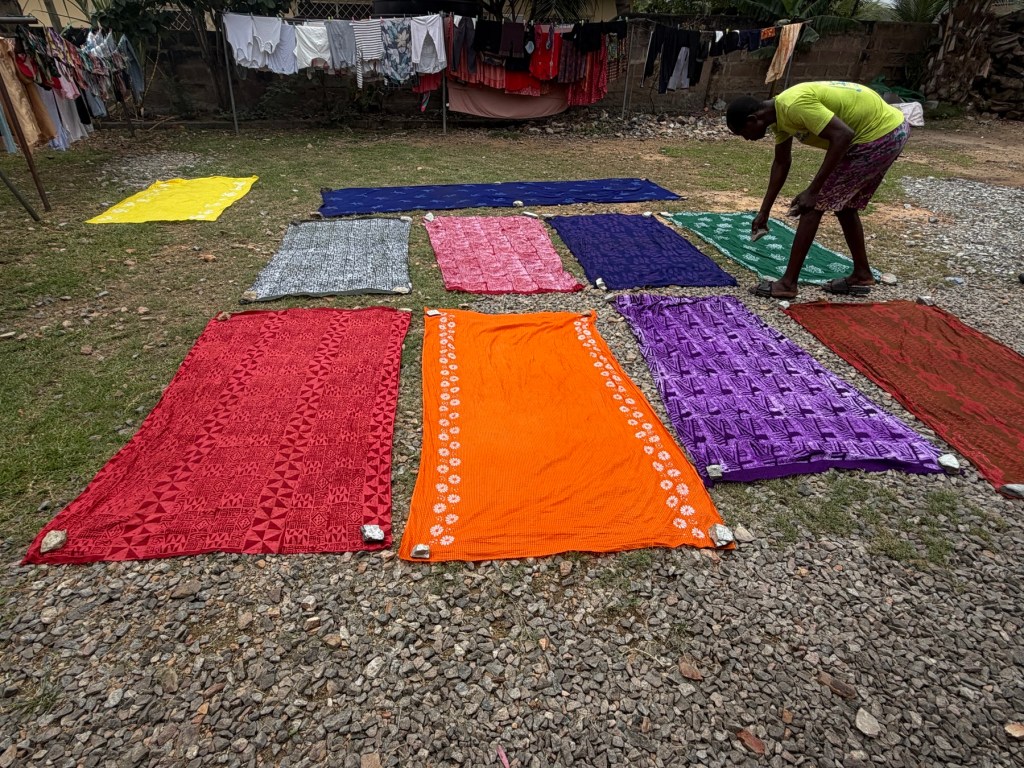
While we waited for our batiks to dry, we were served a delicious and typical Ghanan lunch. There were fried plantains, jollof rice, a dish with cassava, mashed melon seeds and greens, red red beans and fish and platters of chicken and fish. To drink there was fresh pineapple and watermelon juice and a new to me drink called sobolo bissap which is hibiscus juice and ginger,
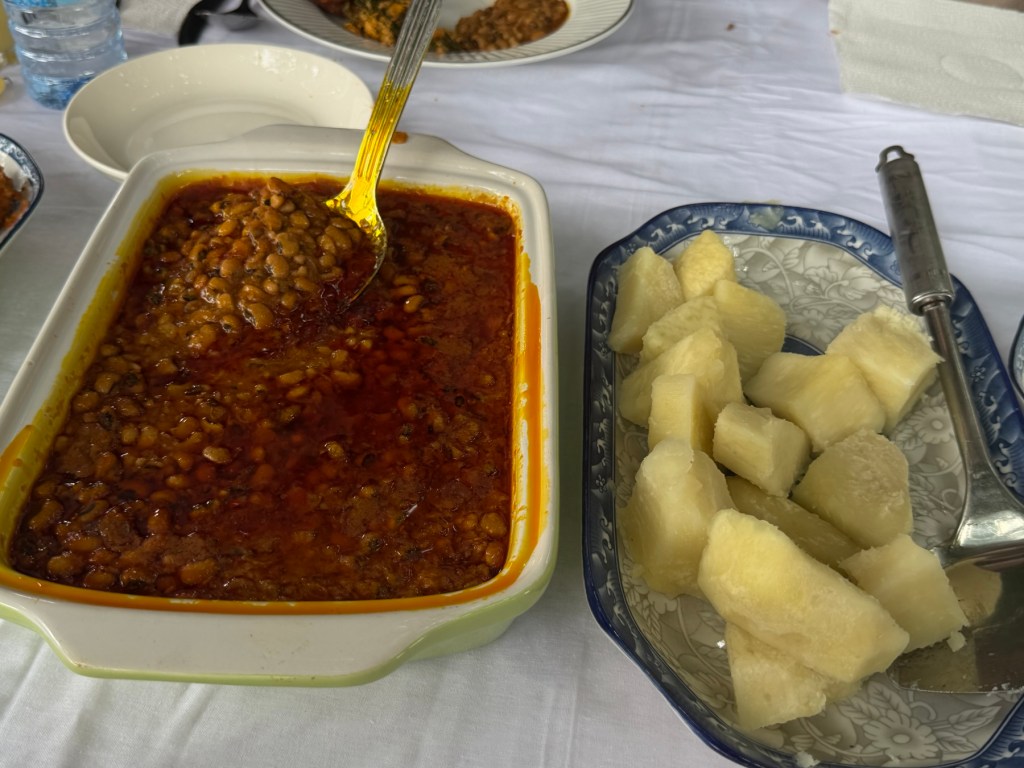
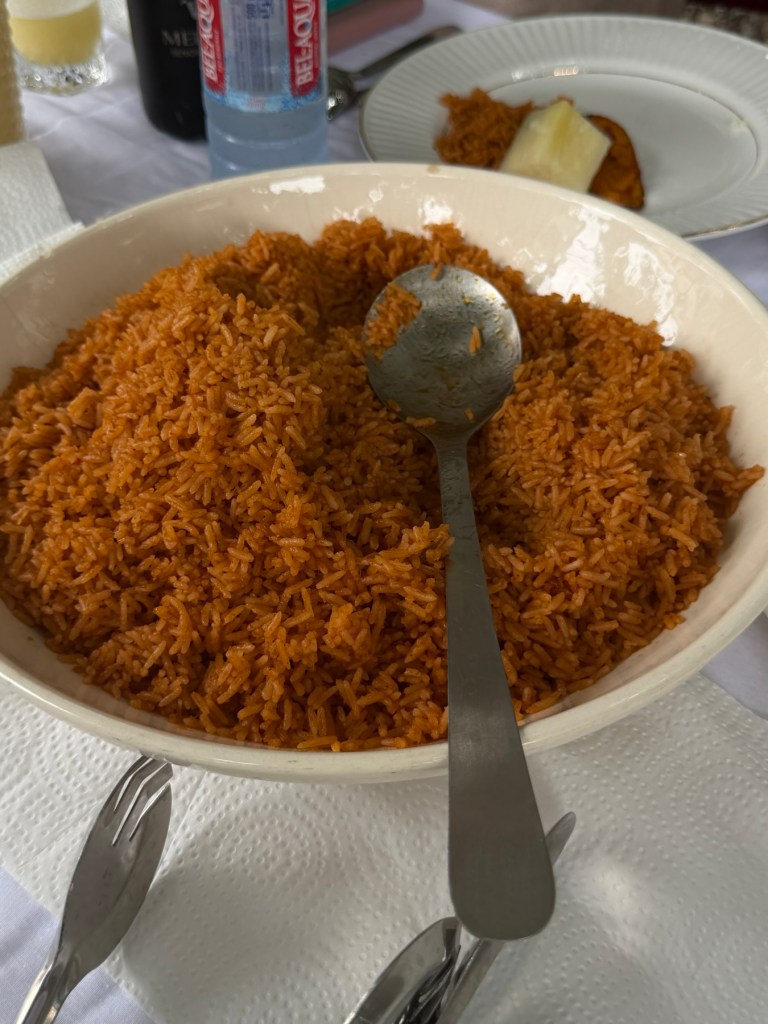
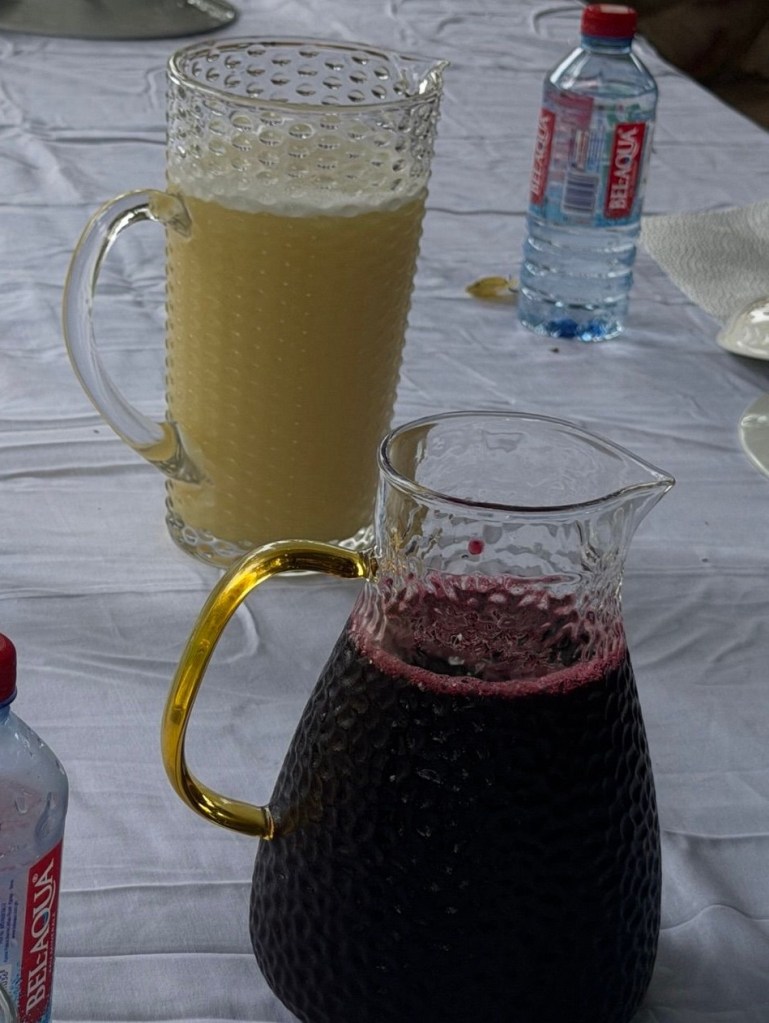
After lunch and collecting our batiks, we headed to a FAV (Fantastic Afterlife Vehicle) workshop. The Erico carpentry shop is across the street from the ocean. Erico himself explained a bit of context. Fantasy coffins are primarily built by The Ga people. The concept originated from figurative carriages used to carry Ga chiefs.
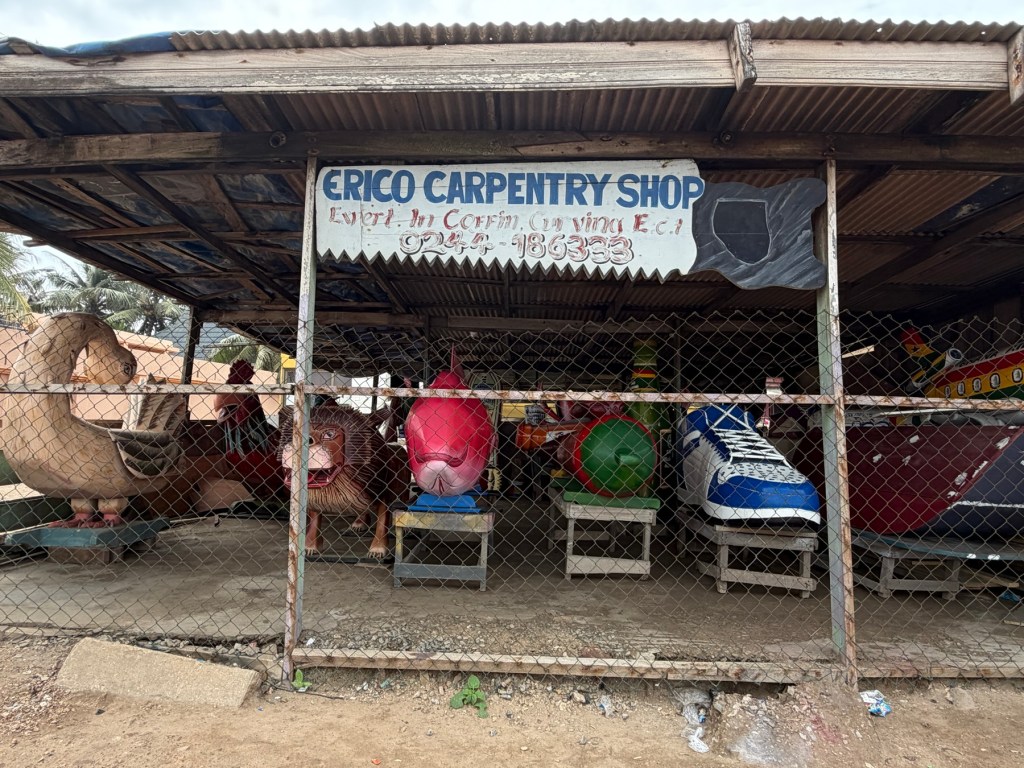
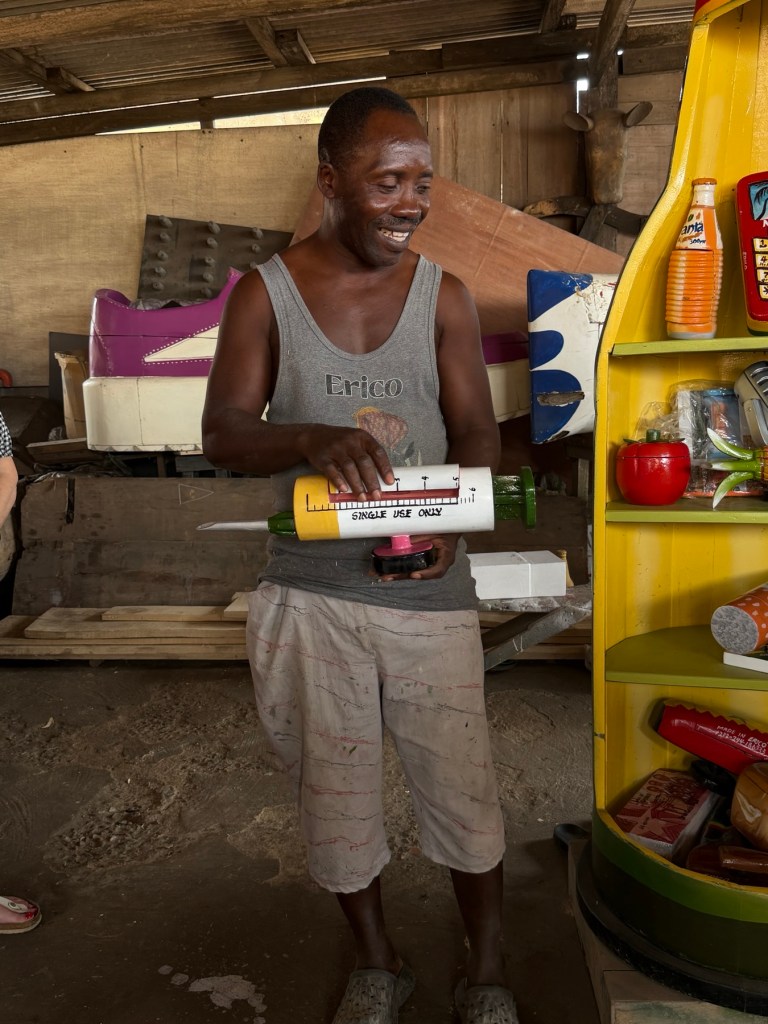
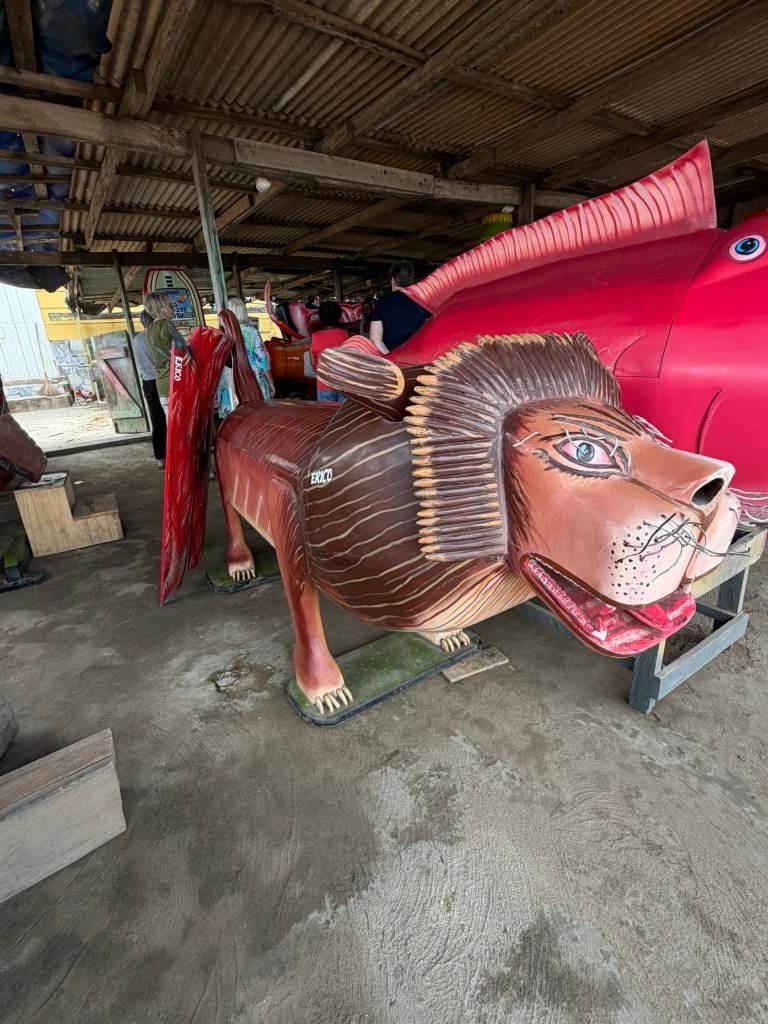
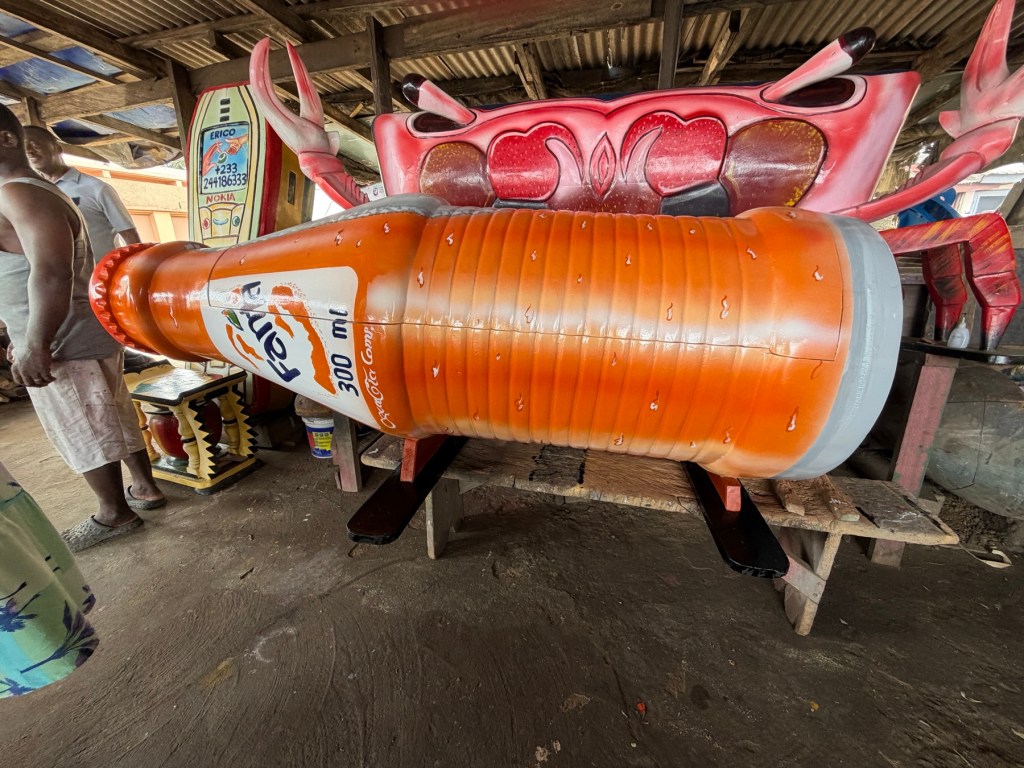
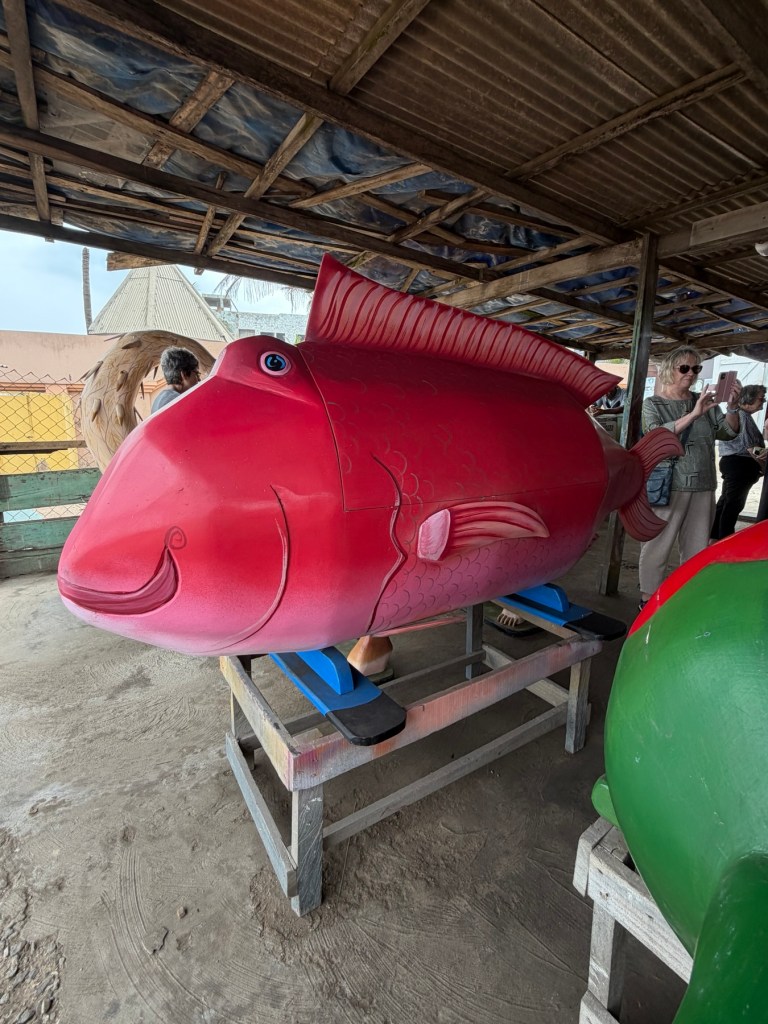
The custom, colorful carved caskets honor the legacy of the departed and help secure their transition to the occupation of choice in the next world. These coffins have also been displayed as works of art in galleries and museums around the world.
To round out our art experiences today, we also visited several contemporary artists. First we made a short detour to a shared studio space of two textile artists that repurpose fabric to create their artwork. Michael Gah and Kwaku Yaro. They spent time telling us about their inspiration and their upcoming shows.
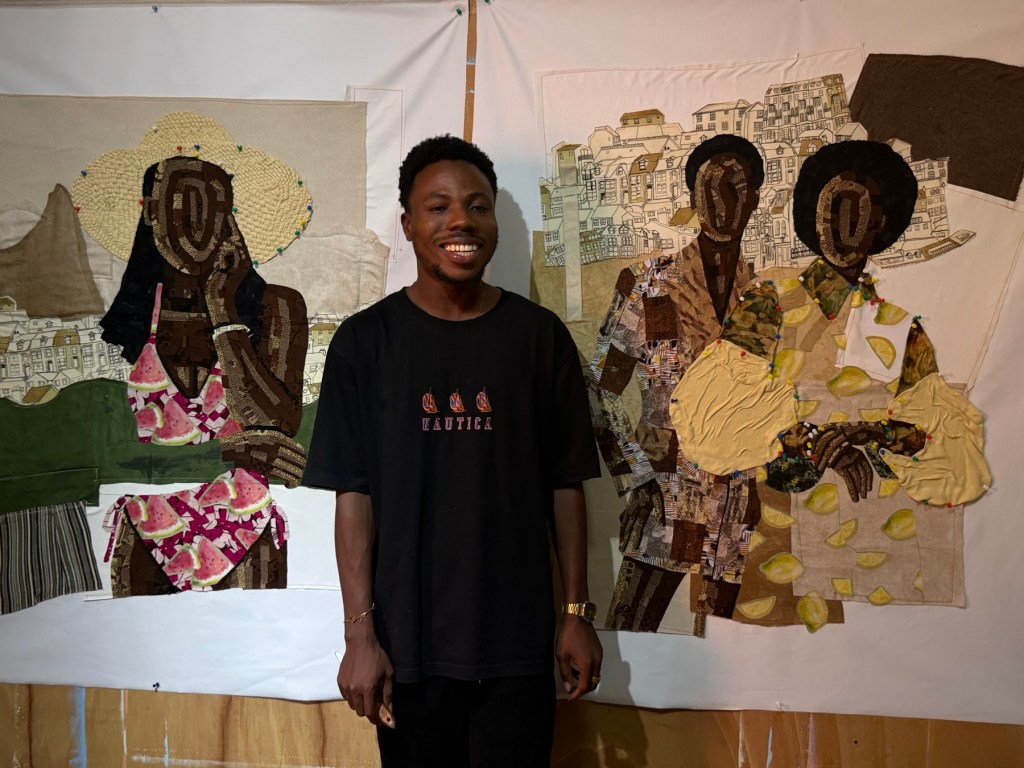
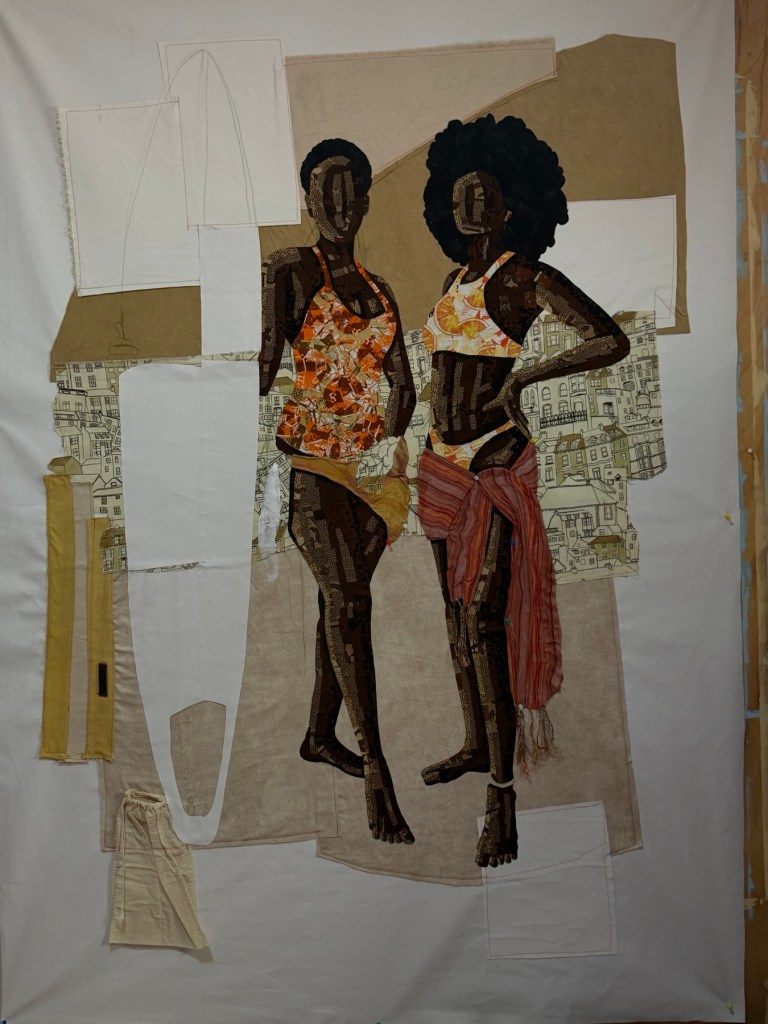
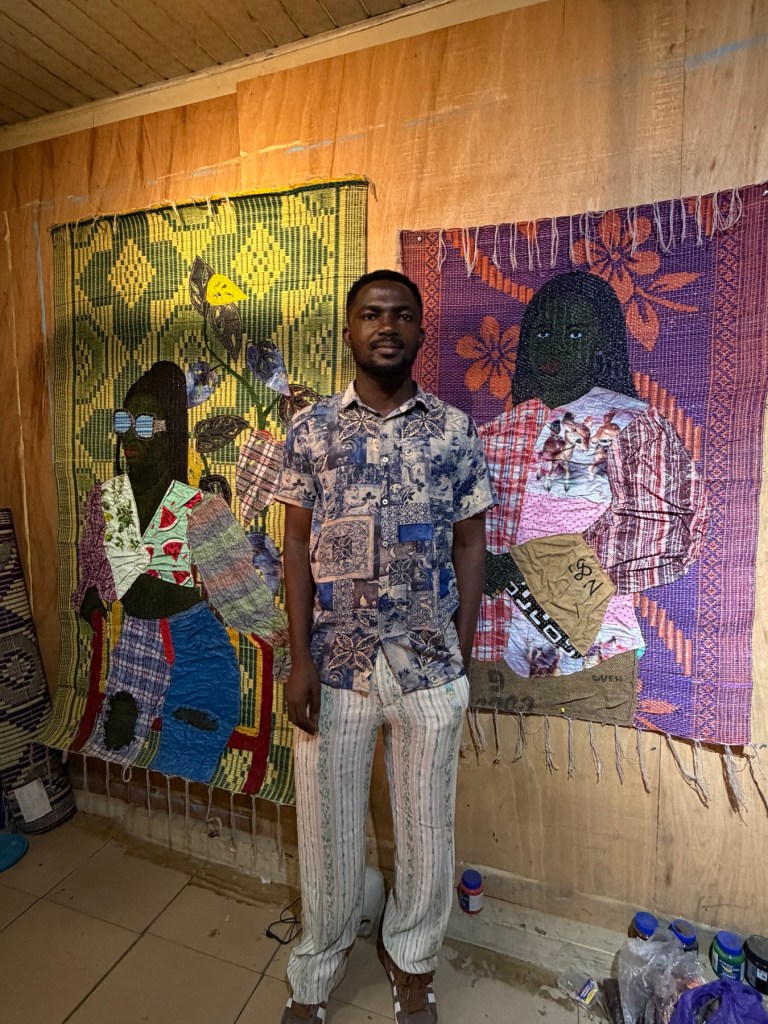
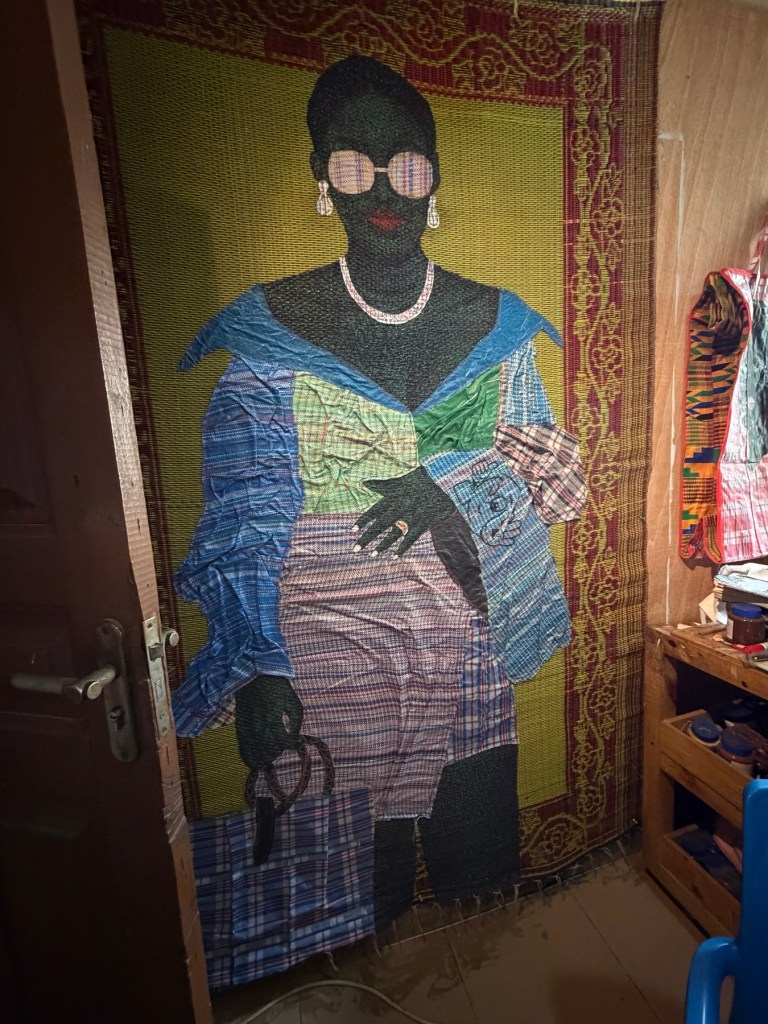
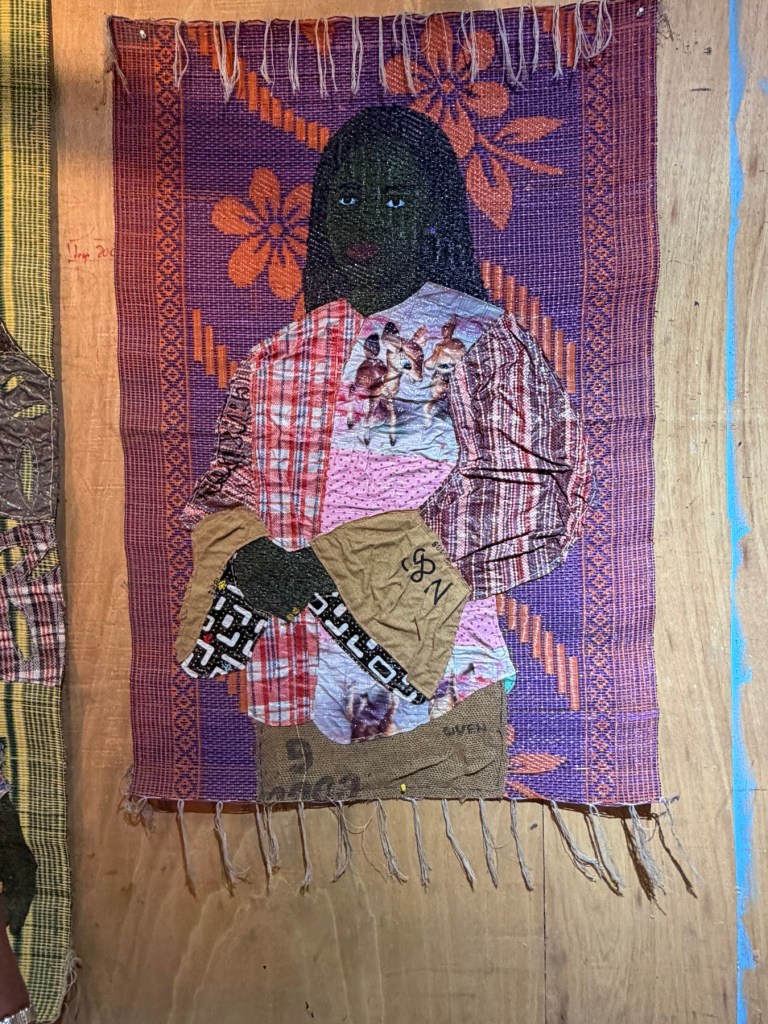
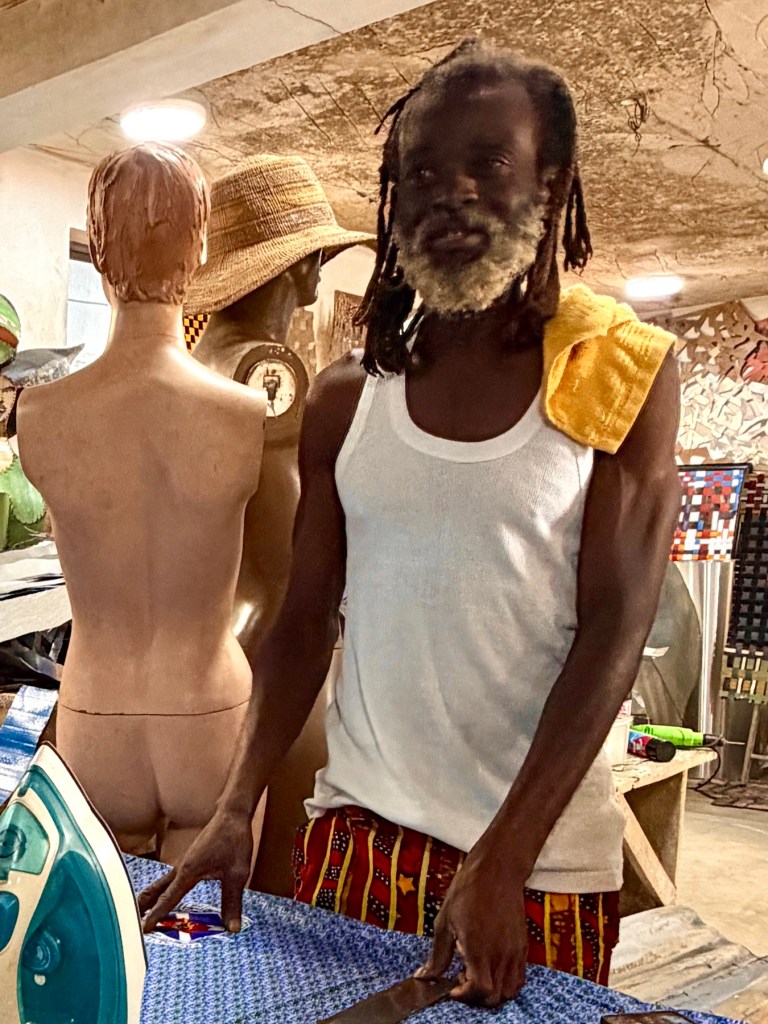
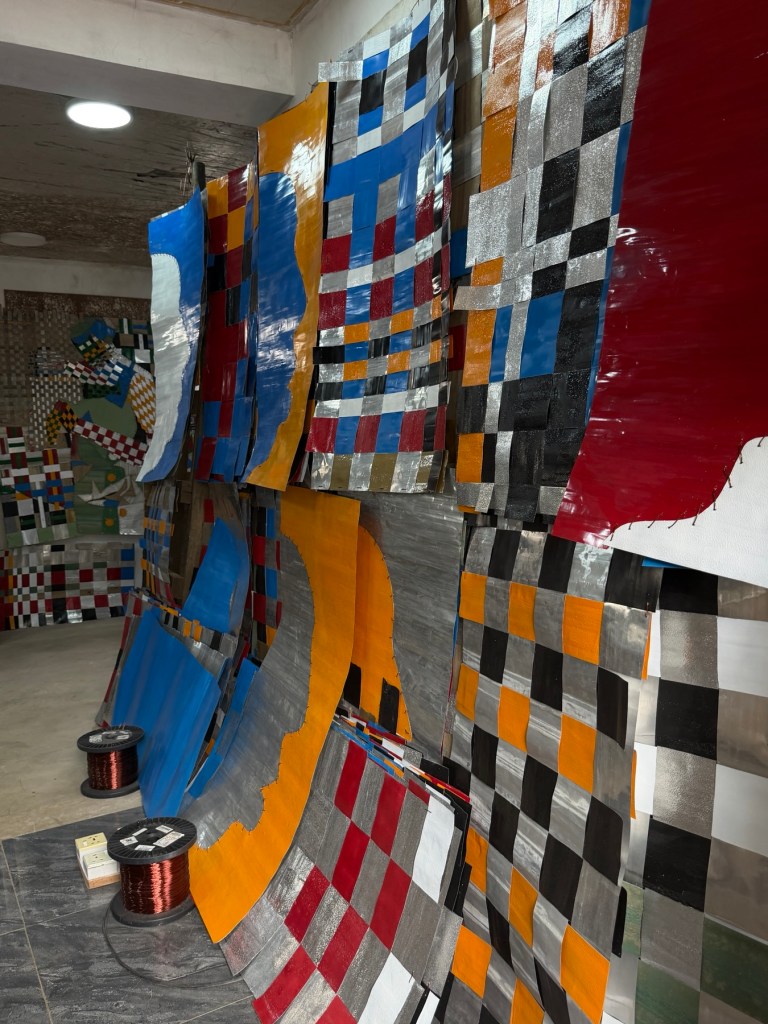
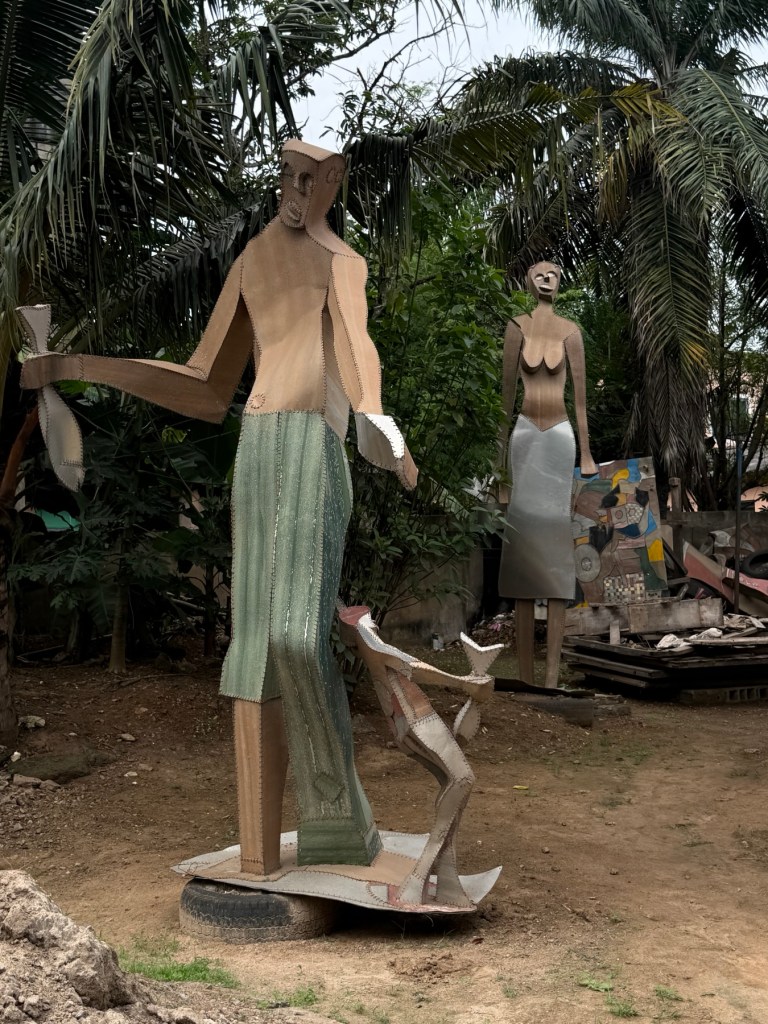
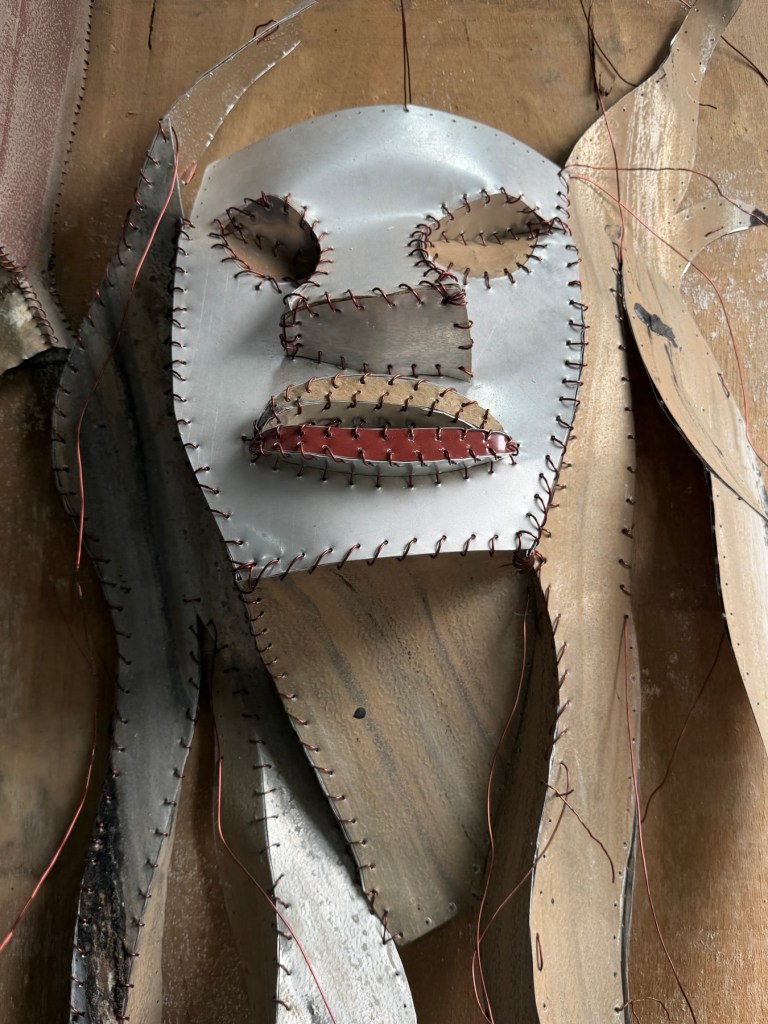
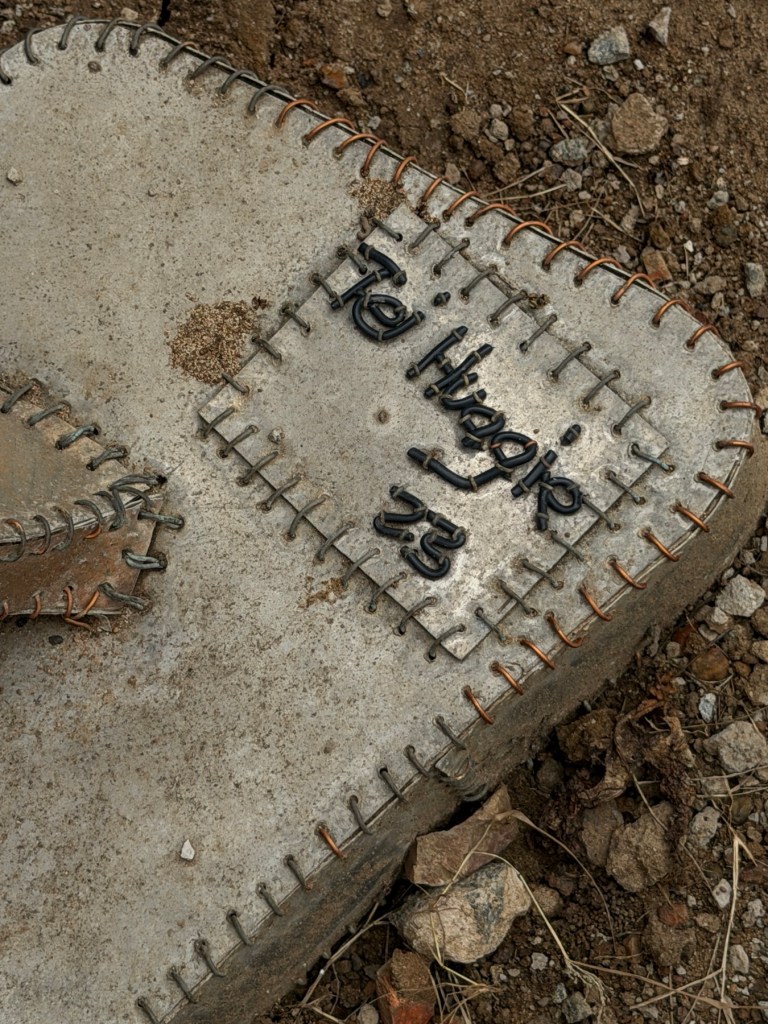
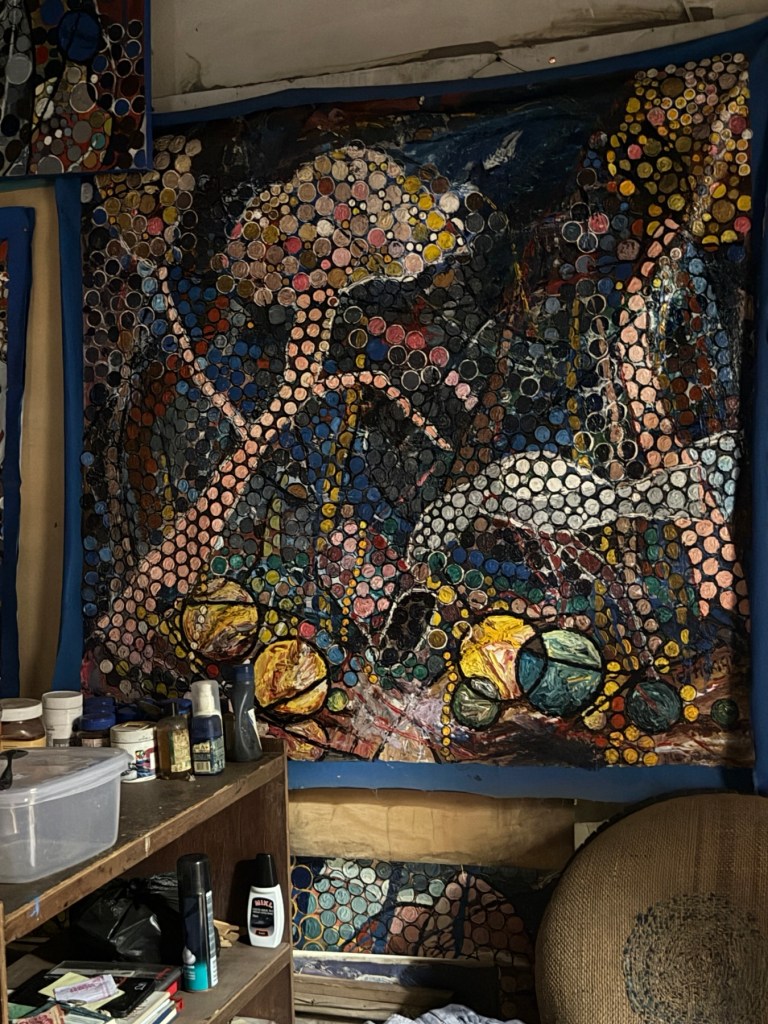
Then we went to the studio of Tei Huagie. His sculptures and paintings are also from reclaimed materials, mostly corrugated aluminum and copper wire. He told us his work is meant to inspire viewers to pursue their dreams.
After this creative beginning, I can only dream what is to come…


