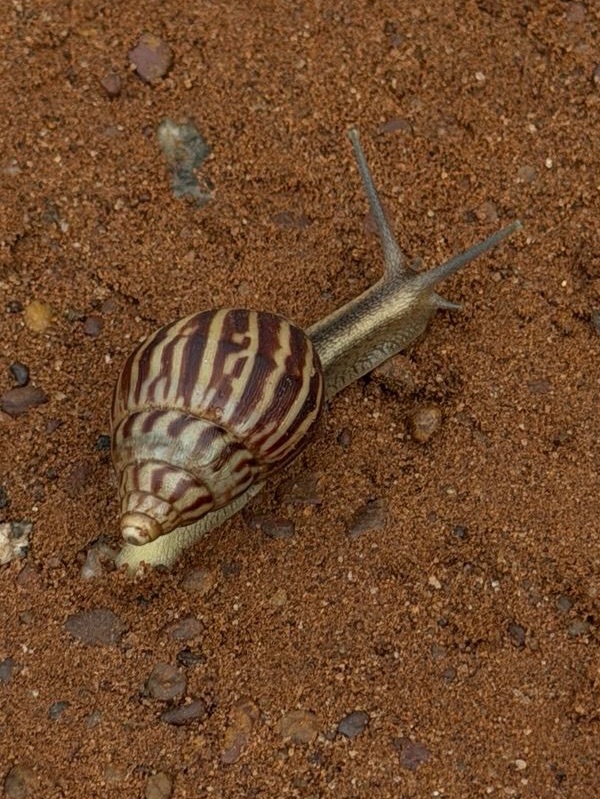
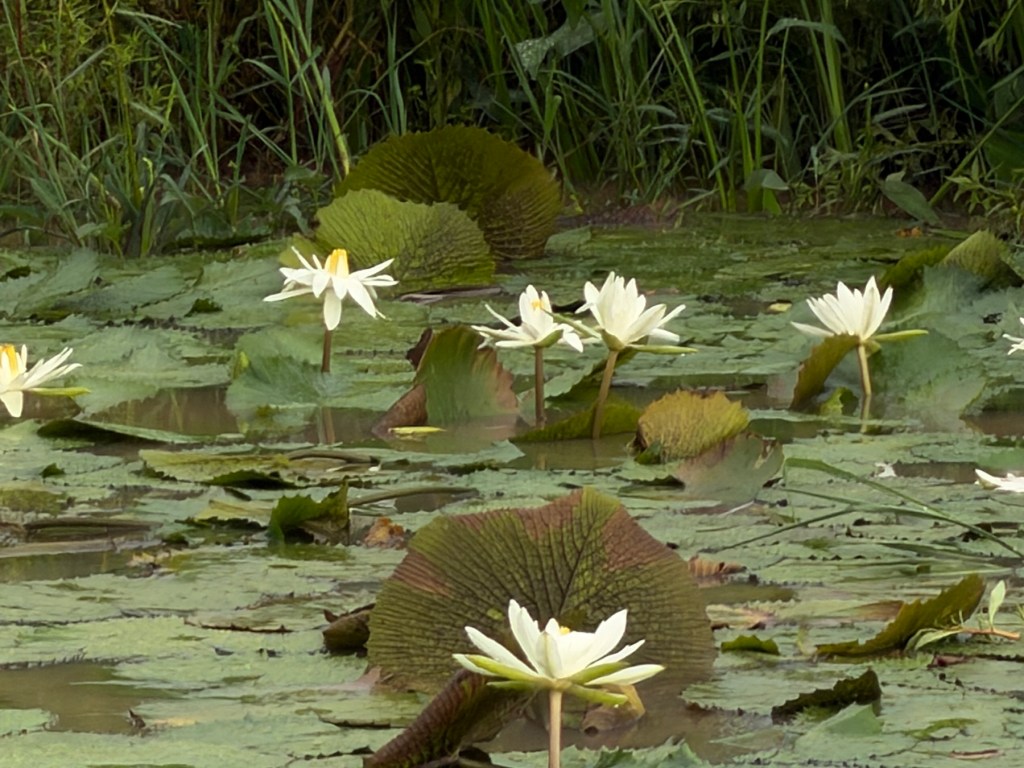
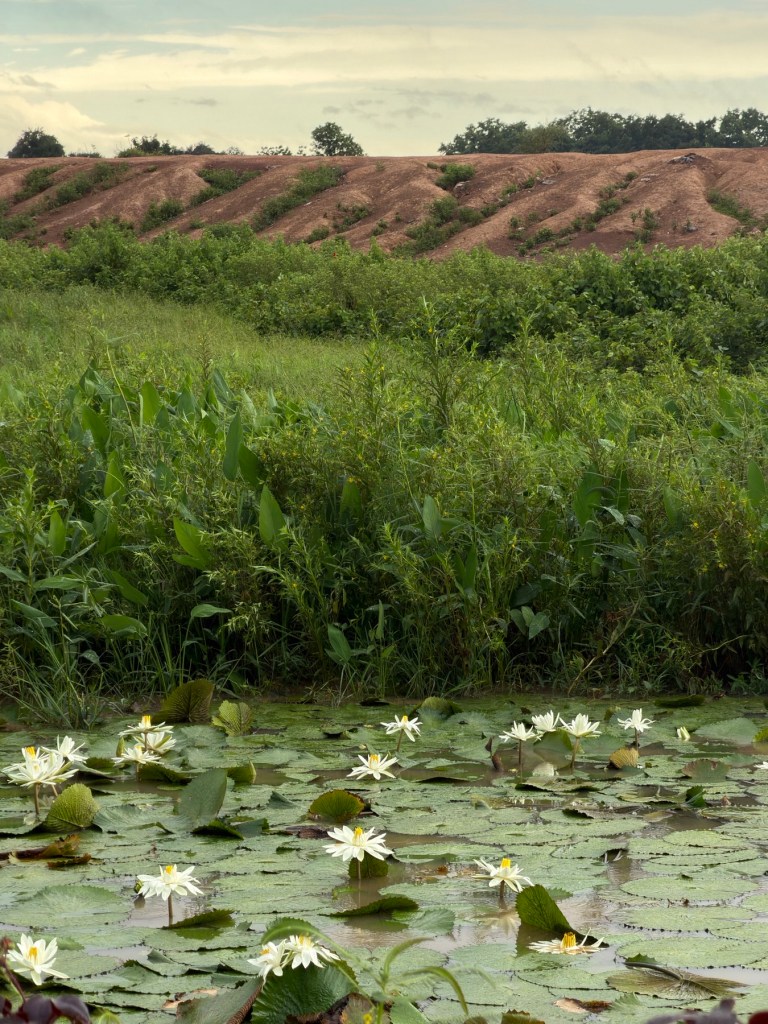
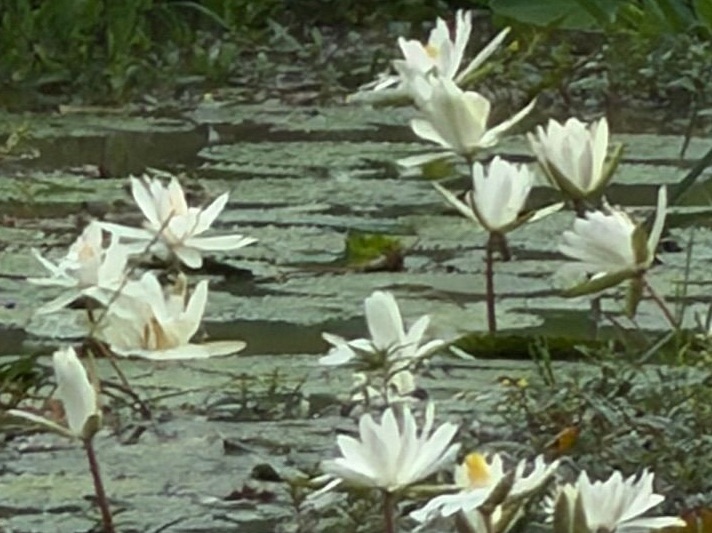
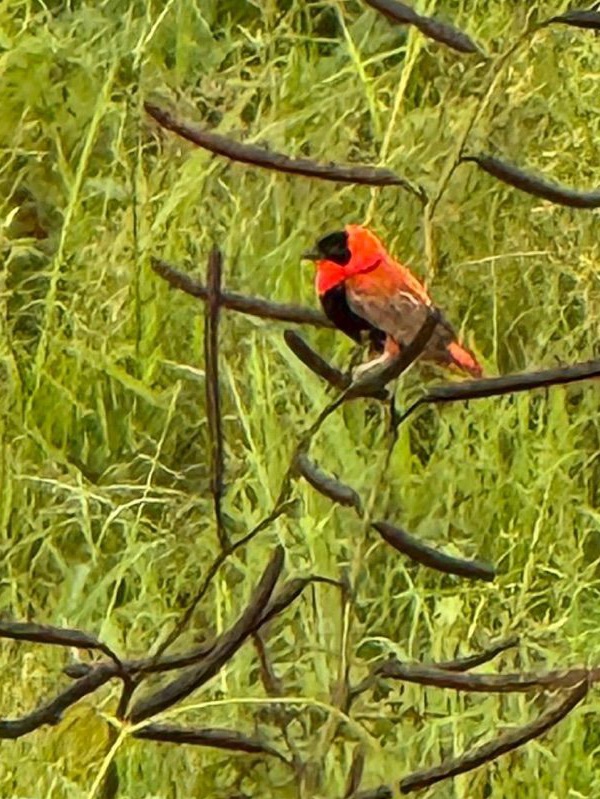
Another early walk to begin the day spotting a little snail along the route. Today’s plan was slightly delayed due to a downpour. We crossed our fingers hoping we would be able to cross the White Volta River to reach Daboya. The rain stopped leaving giant potholes and puddles every couple of yards. There was a surprise spontaneous stop at a small pond filled with water lilies. Also spotted were both red and yellow small birds. Our slow bumpy ride continued to the banks of the river.
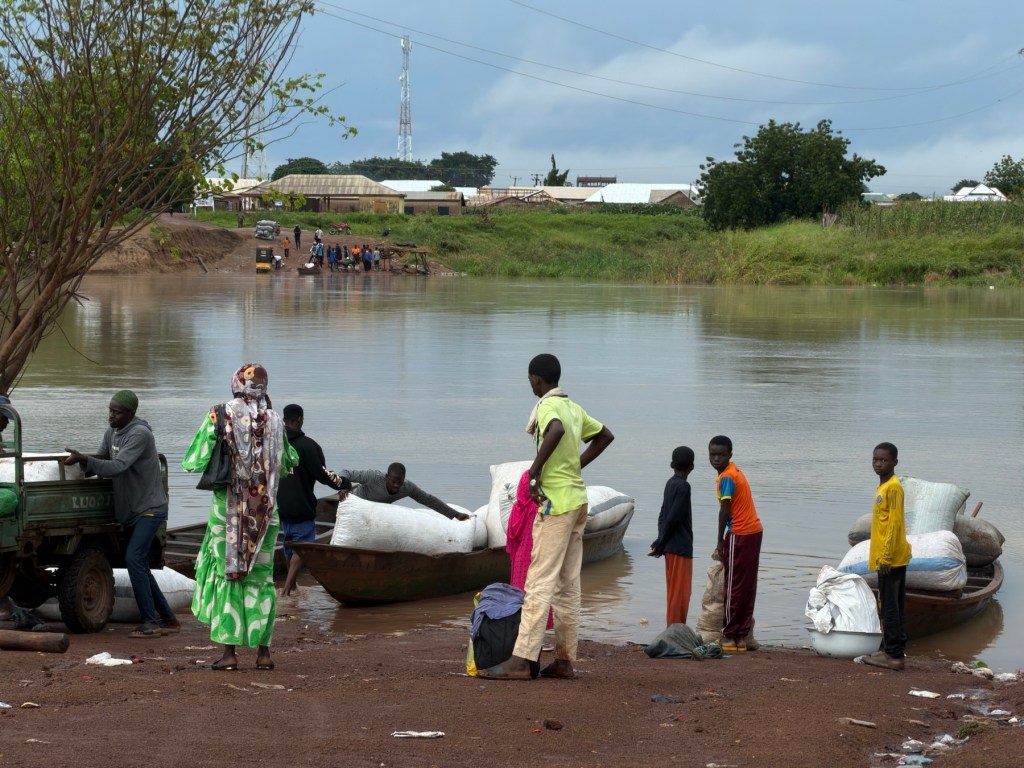
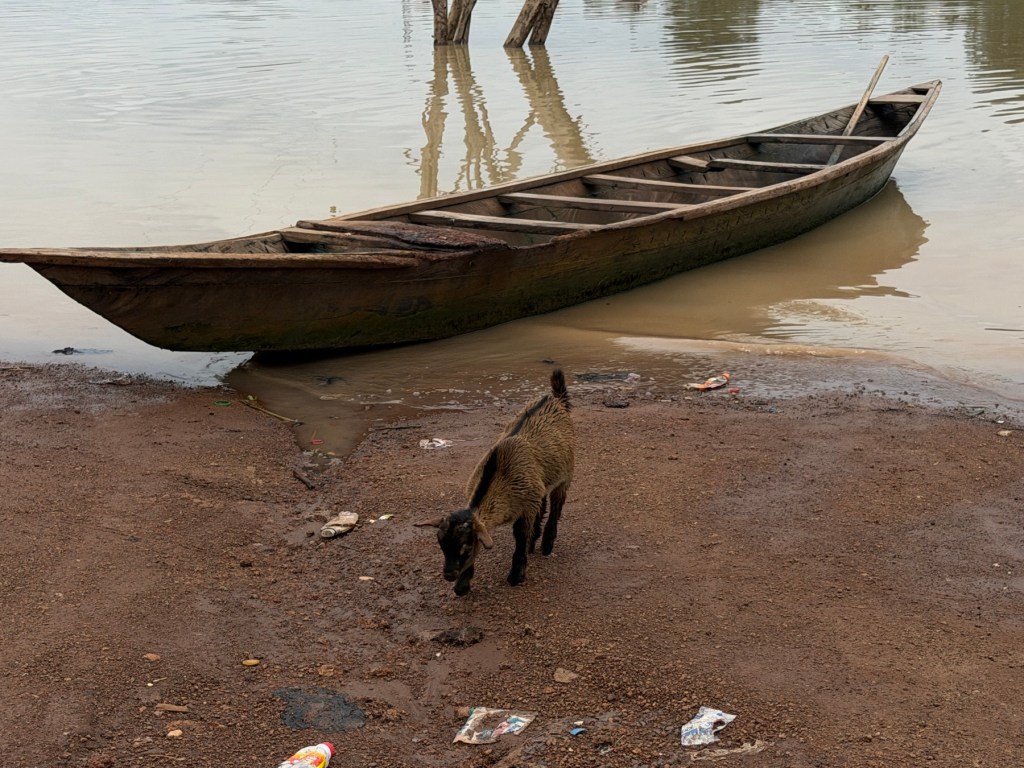
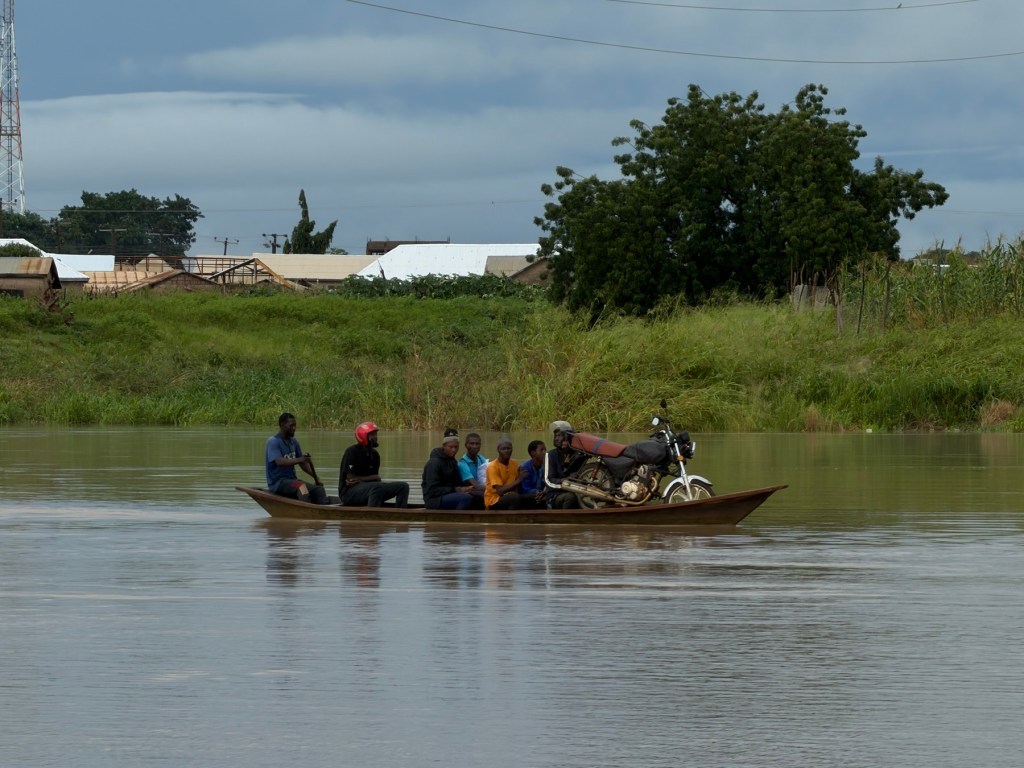
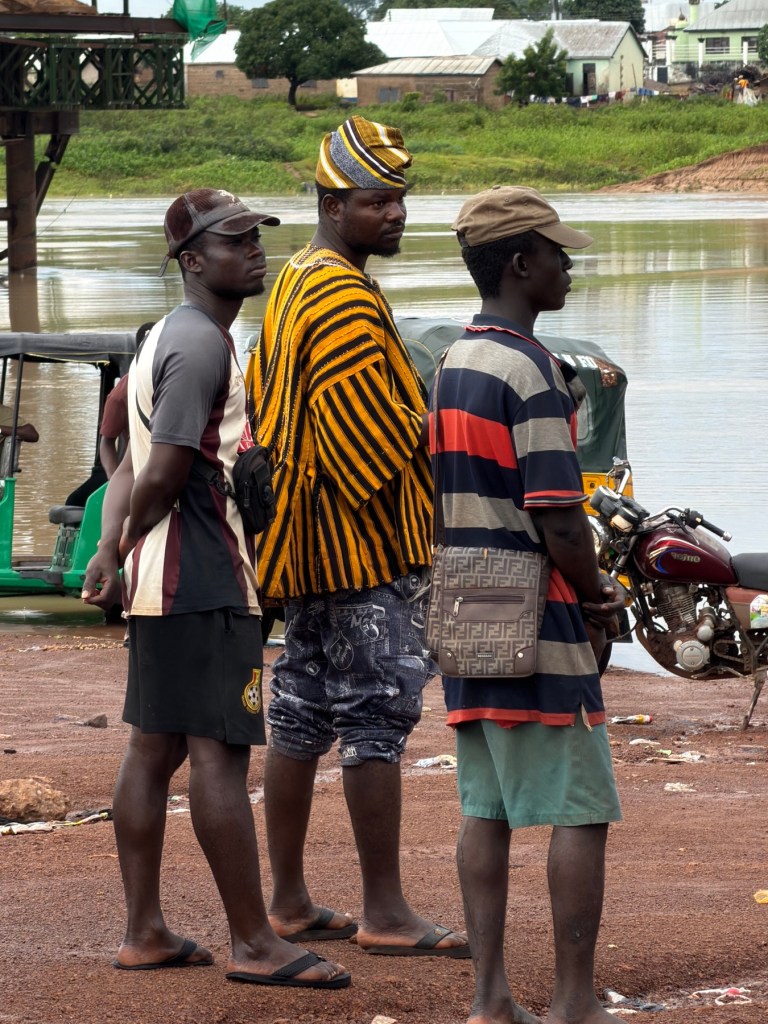
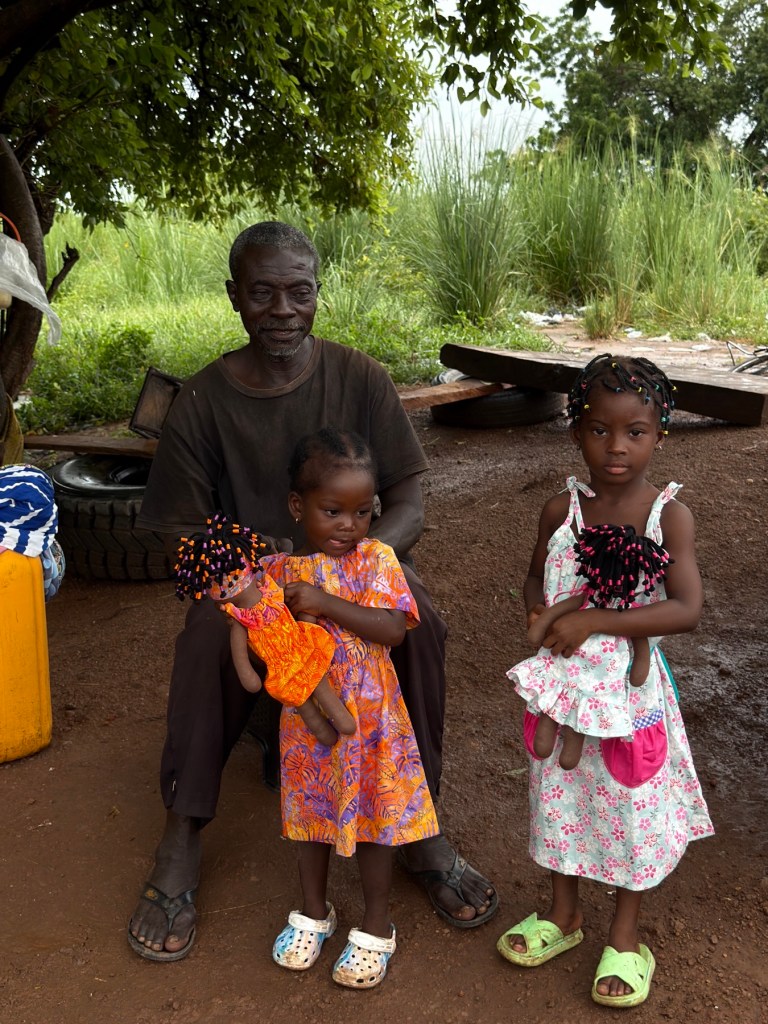
The boat “taxi service” to cross the river was fascinating to watch. Motorcycles, goods, goats and humans all loaded to be rowed across the swift moving current. While we waited for our turn… with life vests… one of our group gifted a few local girls some dresses and dolls.
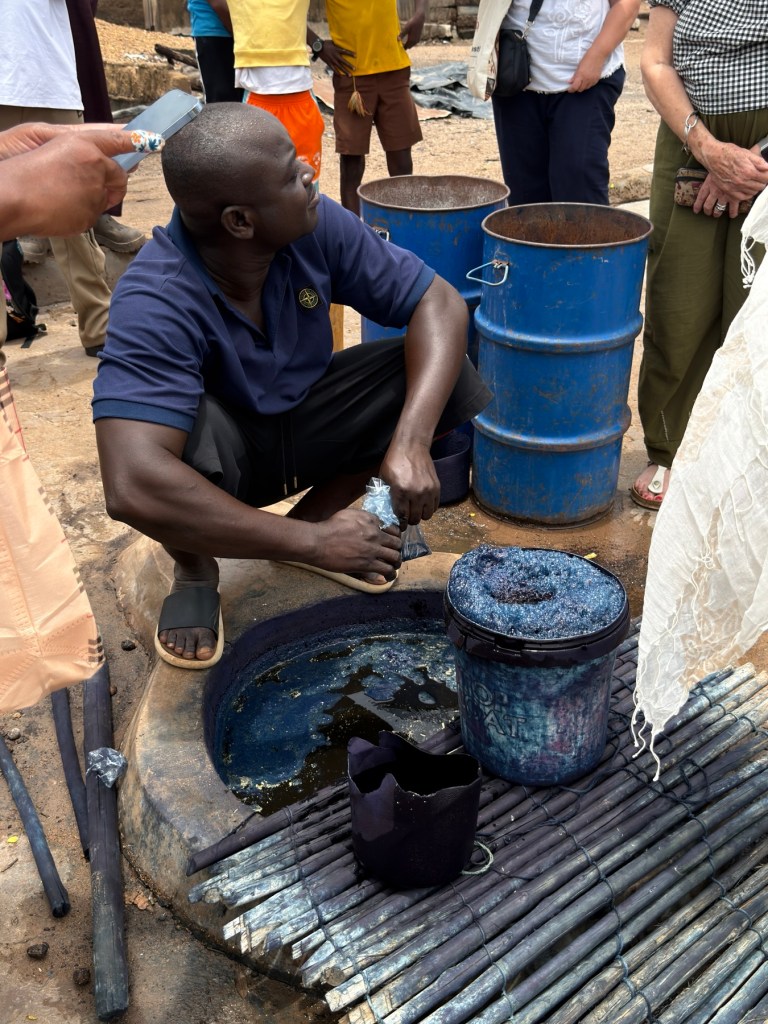
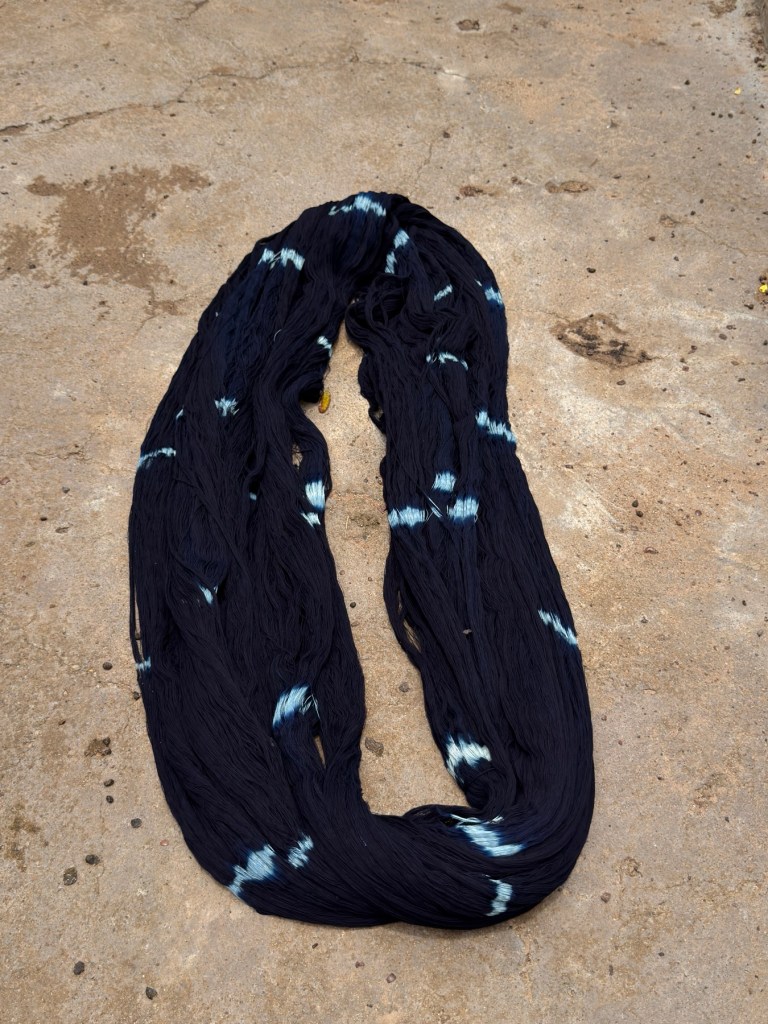
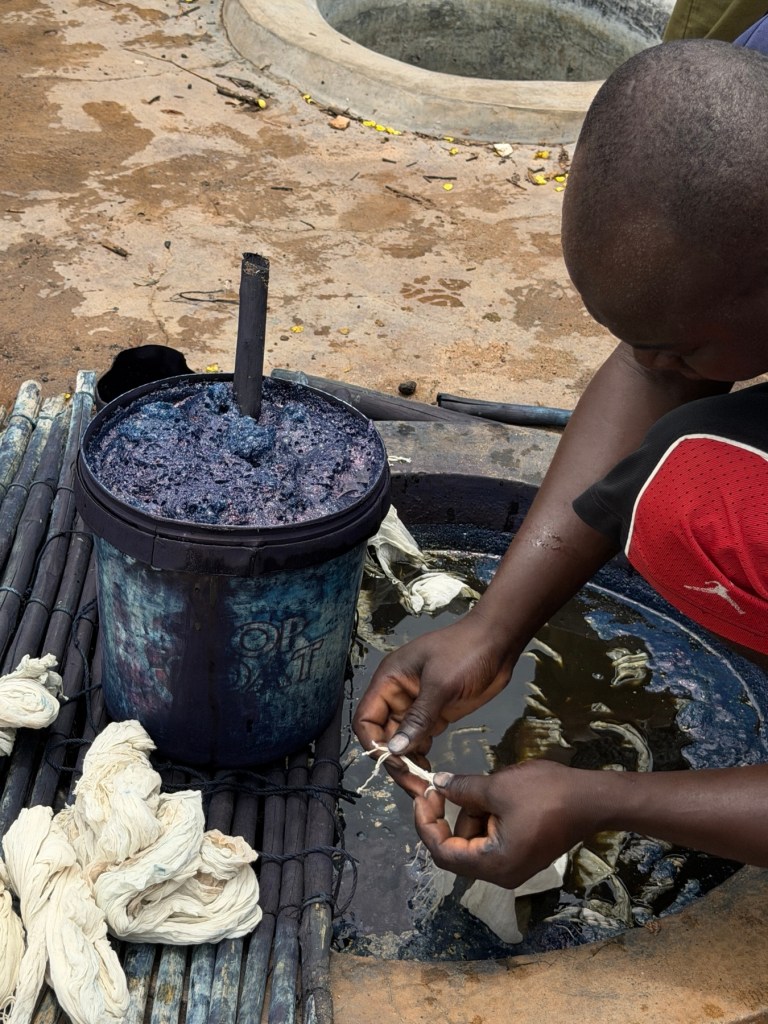
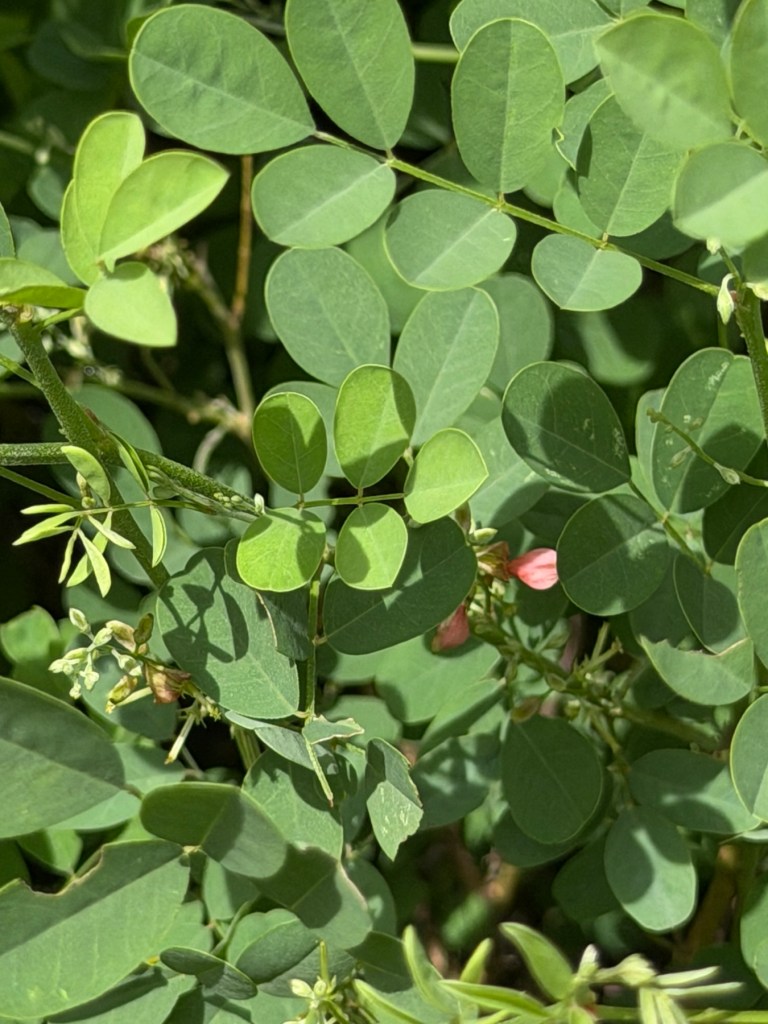
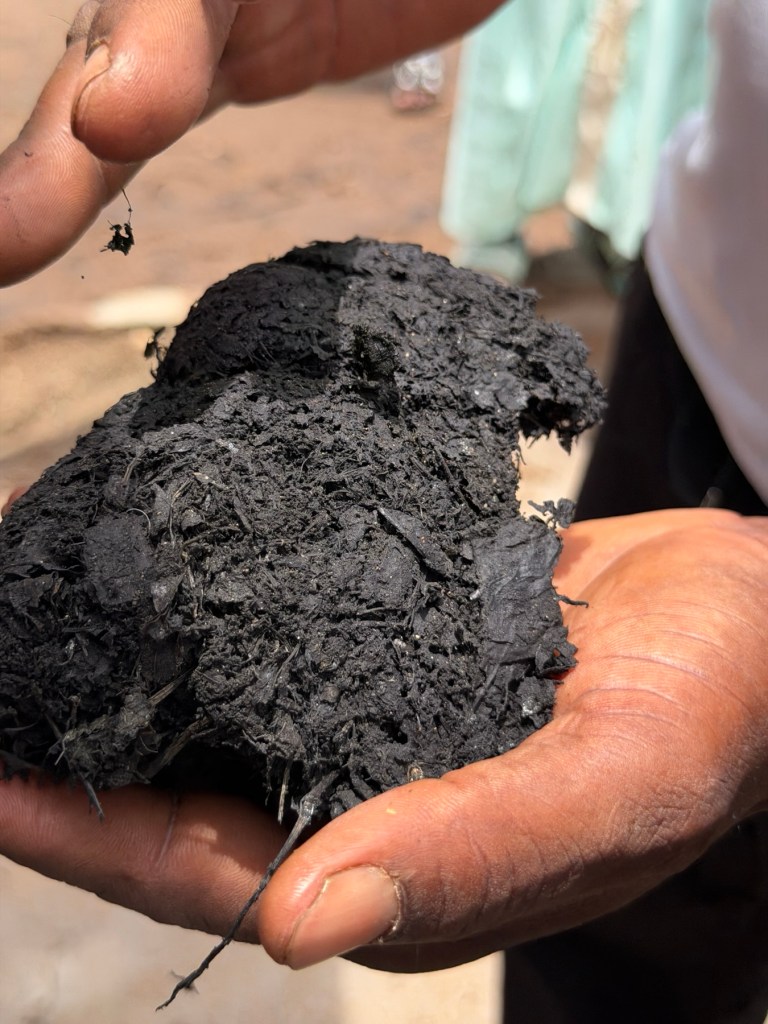
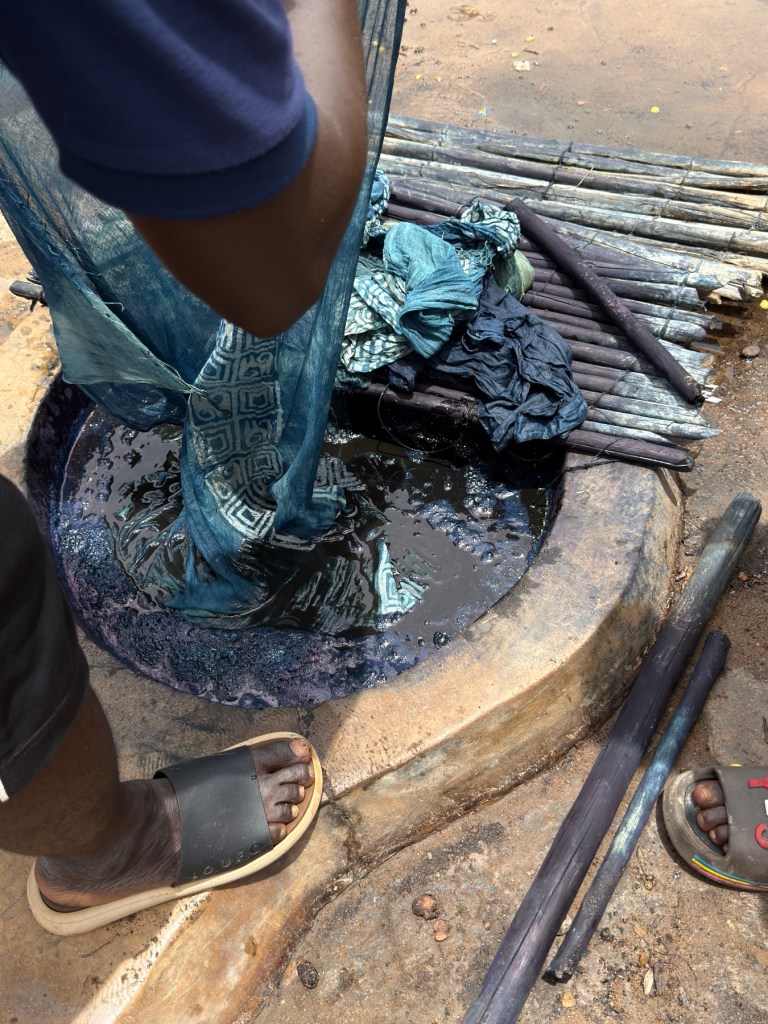
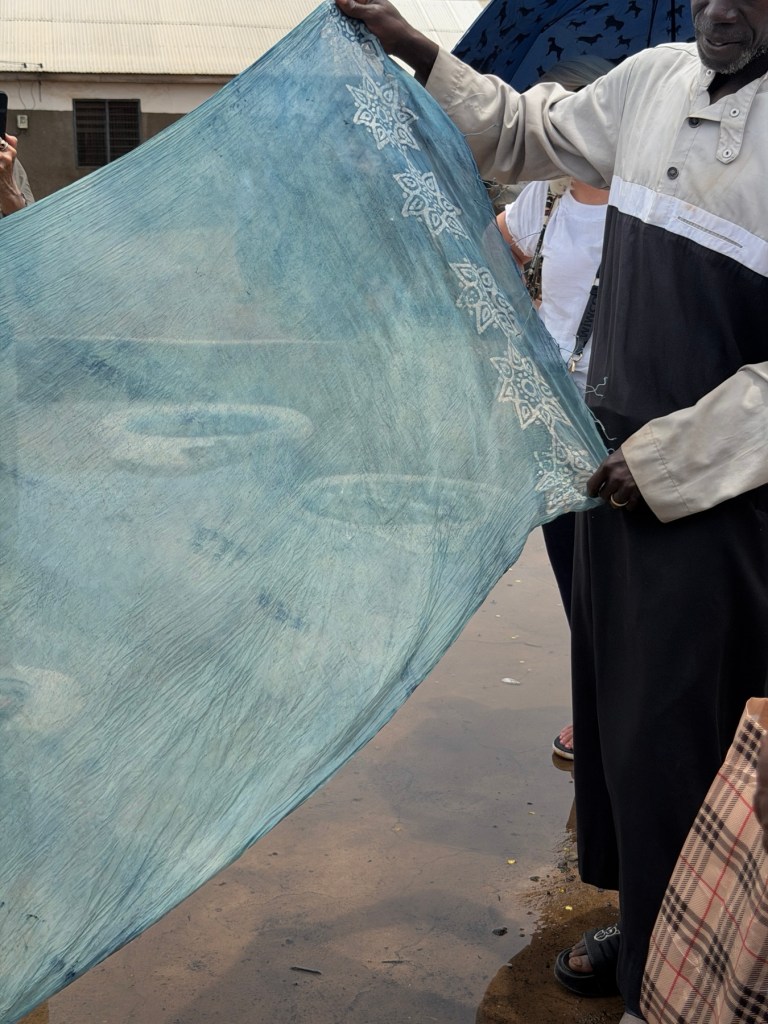
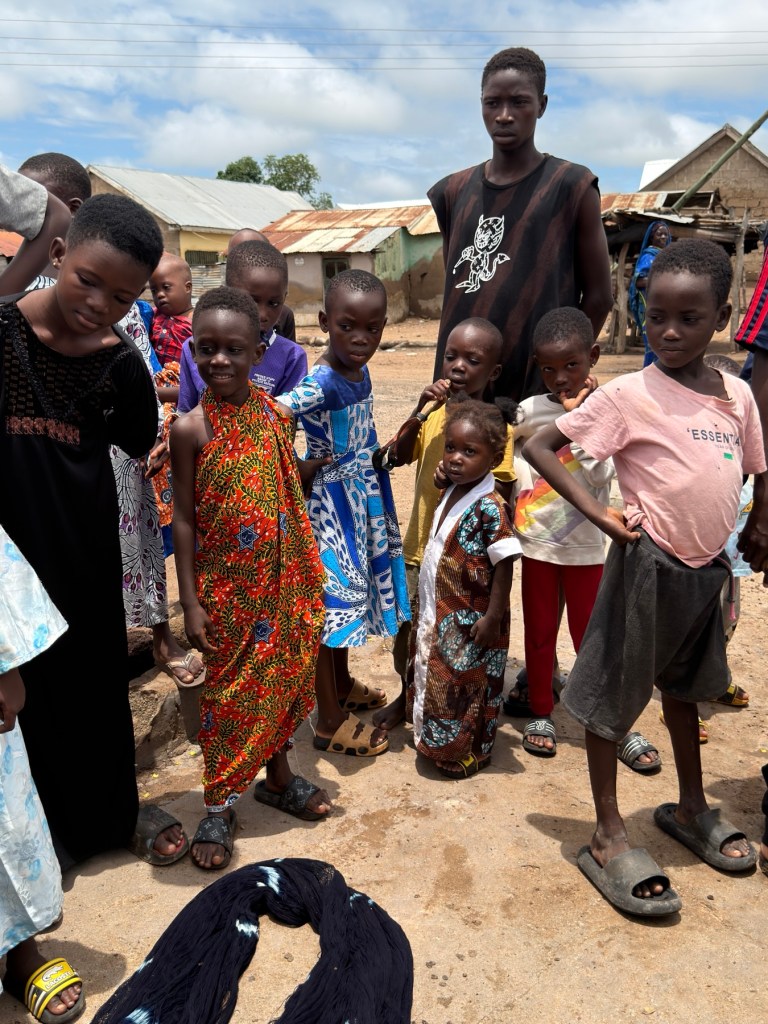
Daboya is known for its organic indigo dyeing and weaving. The traditional process from plant to dye was explained as we made our way to the dyeing pits. We greeted our dyer, Hafiz, who was dyeing a batch of yarn for weaving fugu smocks. He took the scarves that had been gifted to us and tied them to a piece of wood to secure them. The dye pit is filled with a special combination of fermented indigo plant along with water and a secret clay additive (Zata). The scarves were lowered several times and then they were placed to air dry. As usual, the local children were close at hand to watch and share in our journey as our scarves were dyed.
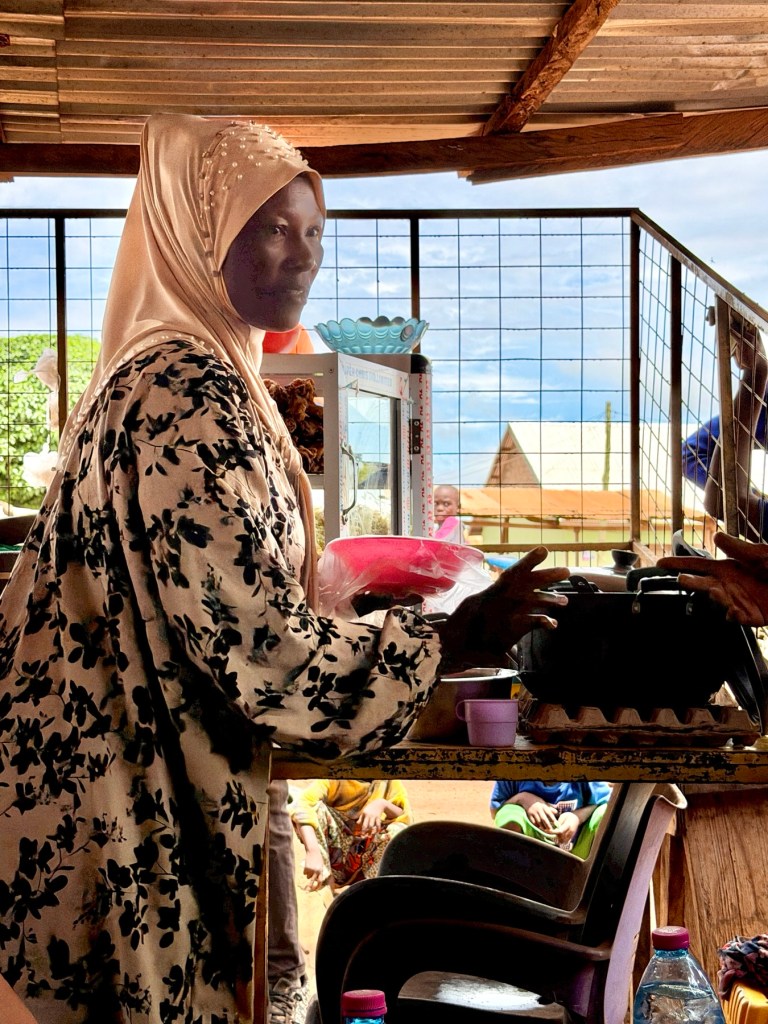
Lunch was served at a picnic table behind a local lunch counter. Waakye is rice and beans cooked together with red sorghum. It is often served with stew or vegetables and a protein. I just had plain waakye and it was delicious and filling.
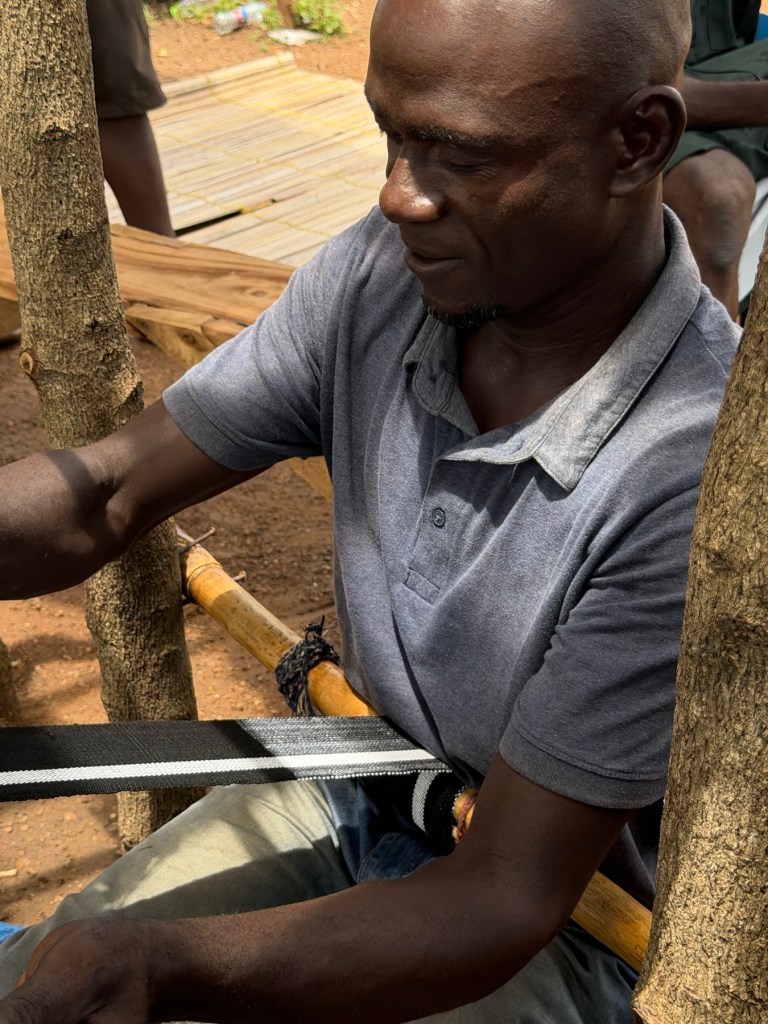
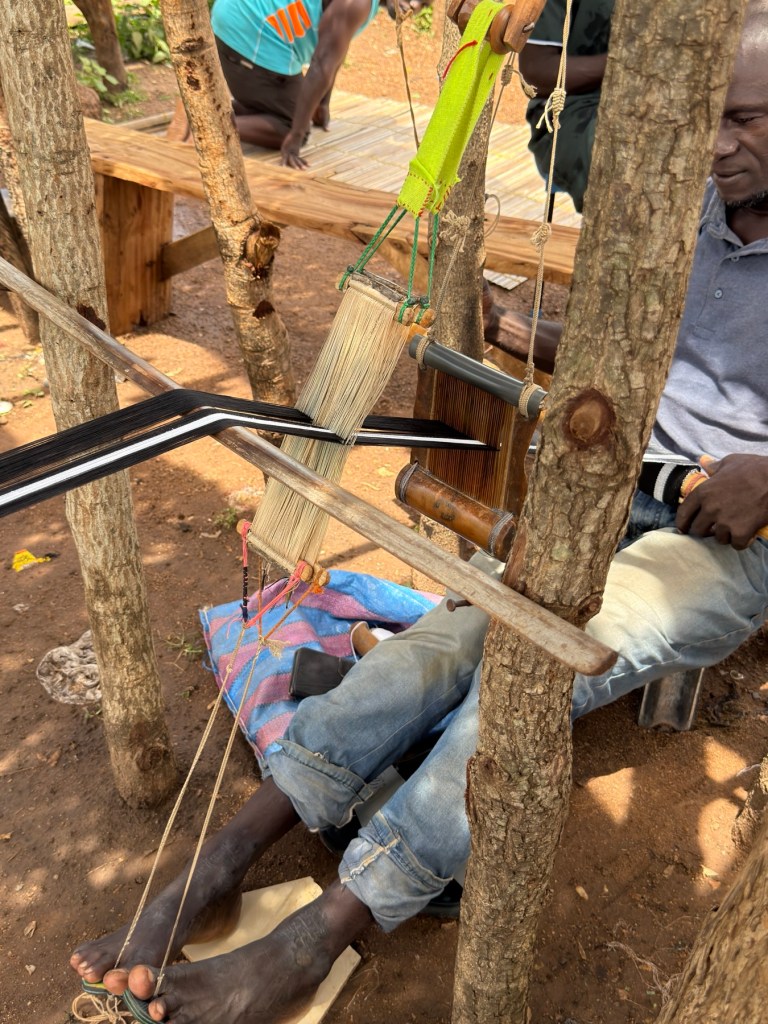
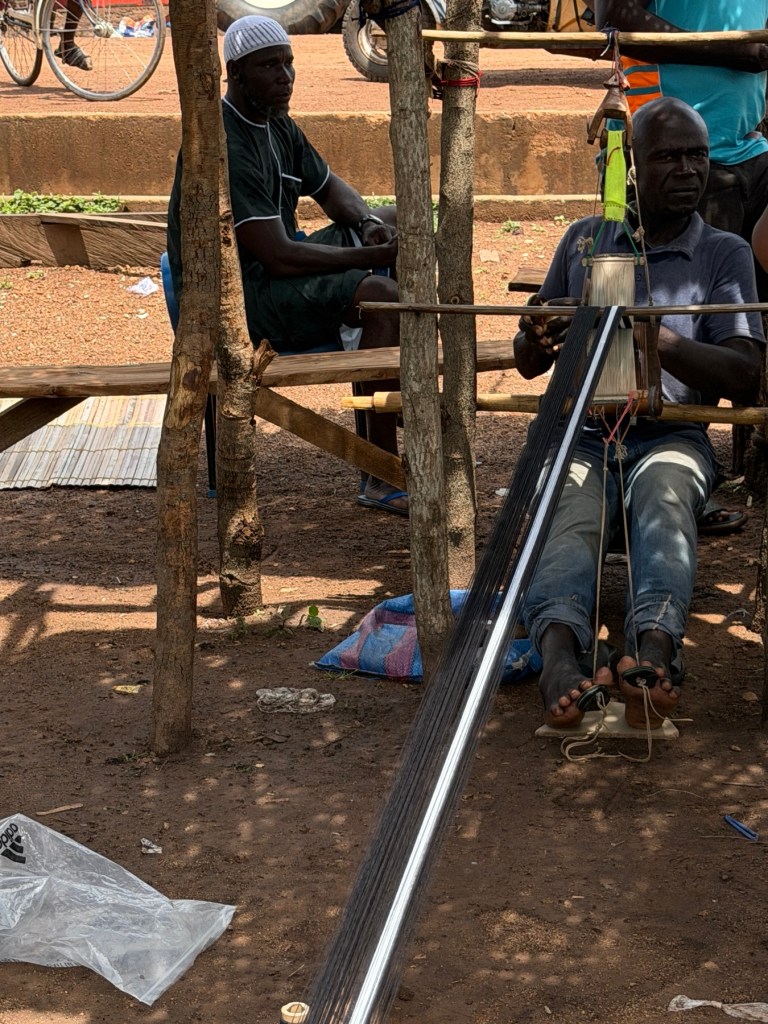
Fugu (batakari) is a traditional, loose fitting hand woven tunic smock in northern Ghana. All four limbs are used to weave the indigo dyed cotton threads into narrow strips on treadle looms. Then the strips are sewn together and the smock can be assembled. The weavers are typically male, however, women are now permitted to weave also.
We reversed our river crossing and will be ready to indi-go-go-go on another adventure tomorrow.


another wow!!!!
what an adventure!!!
I loved the dolls/ dresses to match for girls! So lovely.
Can’t wait to see your scarf! X J
LikeLike