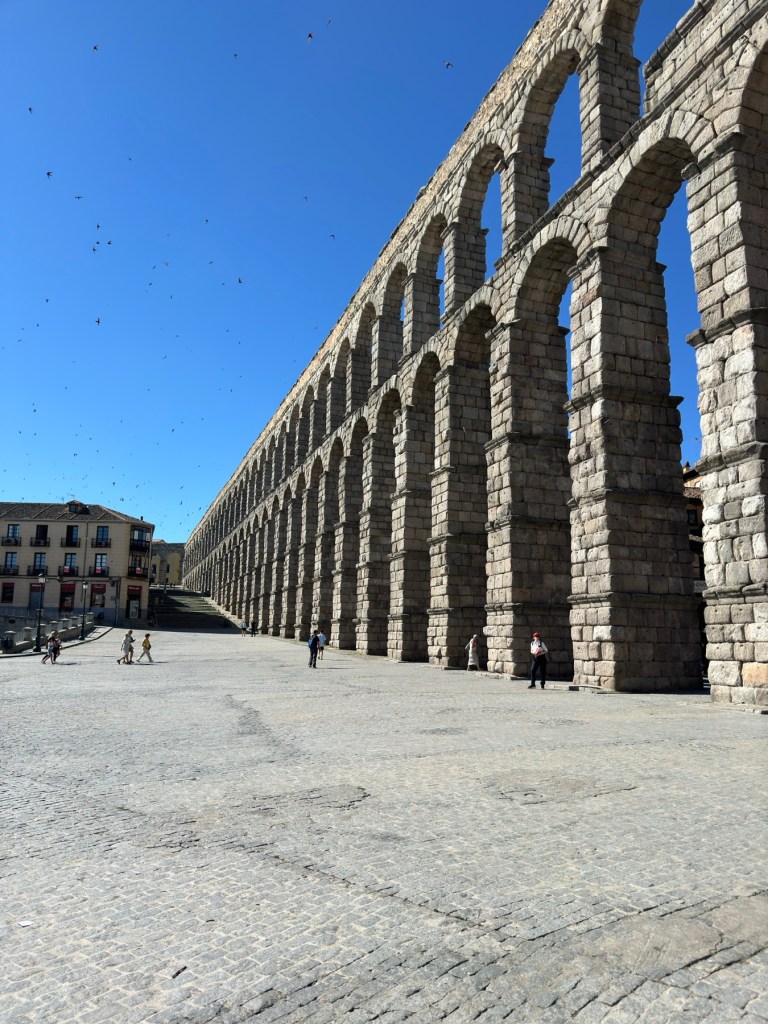
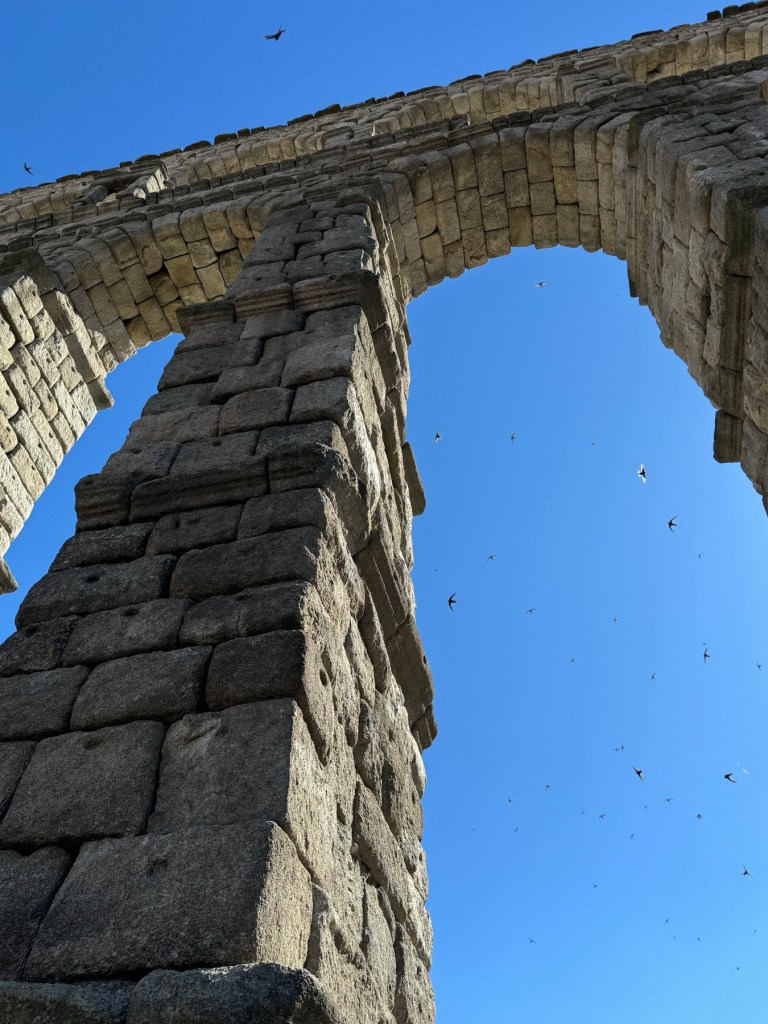
Not far from Madrid are several small towns that have well preserved historic sites. Segovia is roughly an hour drive north of the capital and the city greets you with its impressive Roman Aqueduct which has become the symbol of the city. Roughly 2,950 feet long and at its highest point almost 94 ft. tall, the aqueduct is made up of 167 arches supported by pillars. Its 25,000 granite blocks are held together by balancing forces. The aqueduct was built in the 1st century and amazingly, this water delivery system was used by the city until 1973. The most bizarre site (to me) is the thousands of small sparrow-like birds that swirl around the arches in a frenetic noise.
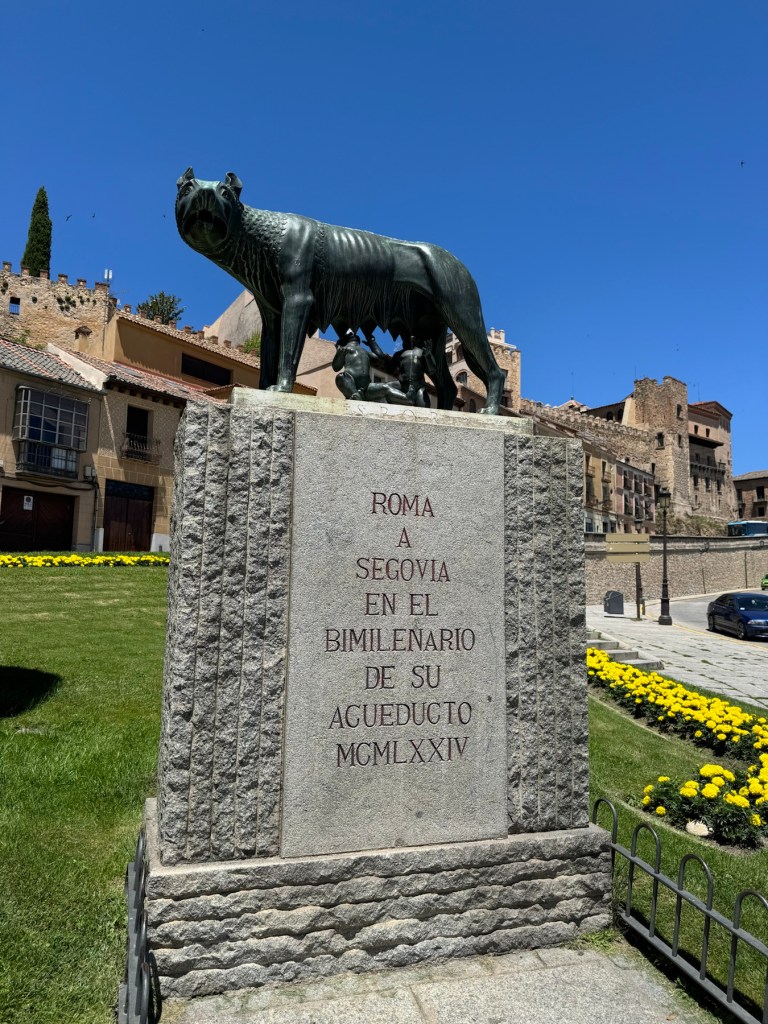
Just before the aqueduct, on the way into the town is a nod to Rome. There, is a replica of the bronze sculpture of the Capitoline, the she-wolf that in ancient Roman mythology suckled and raised the founders of Rome, Romulus and Remus.

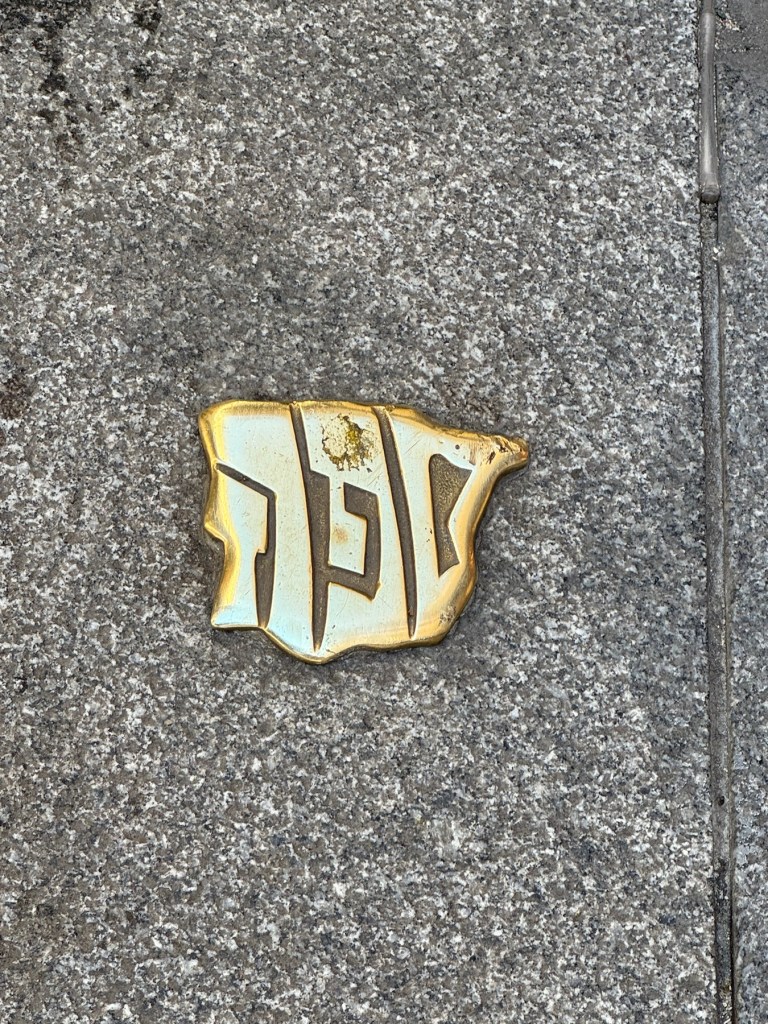
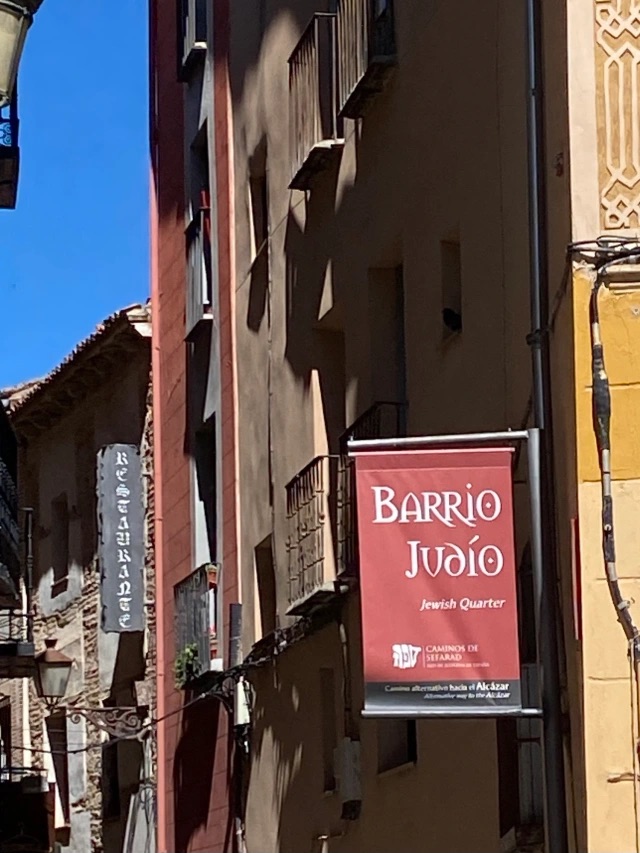
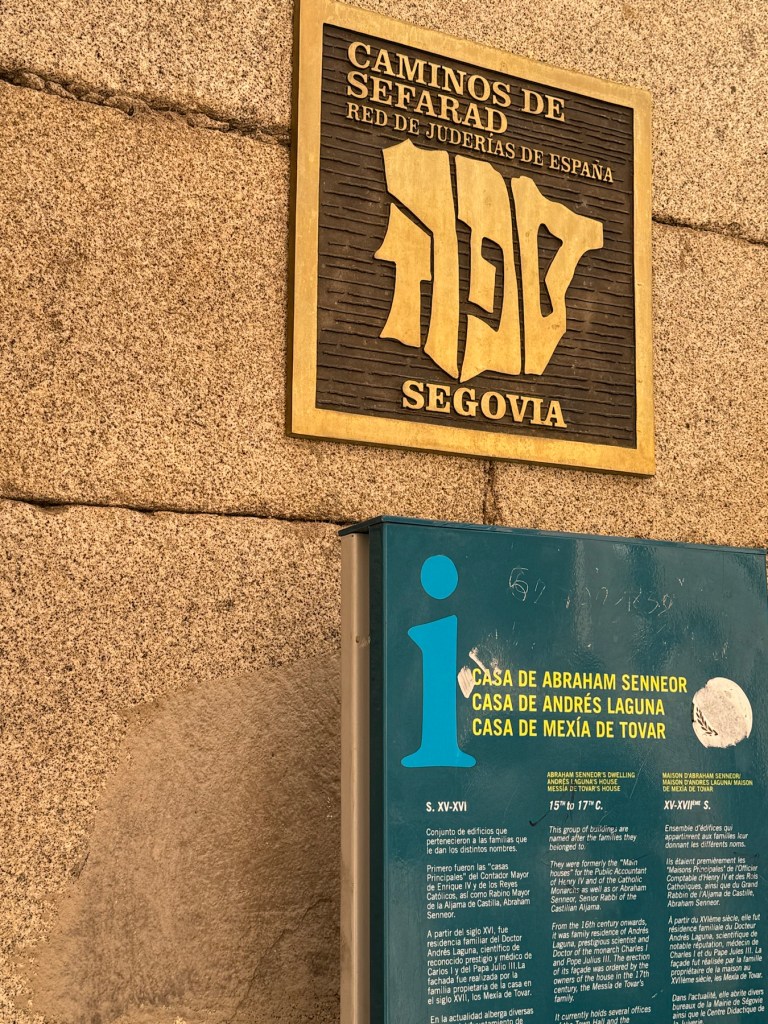
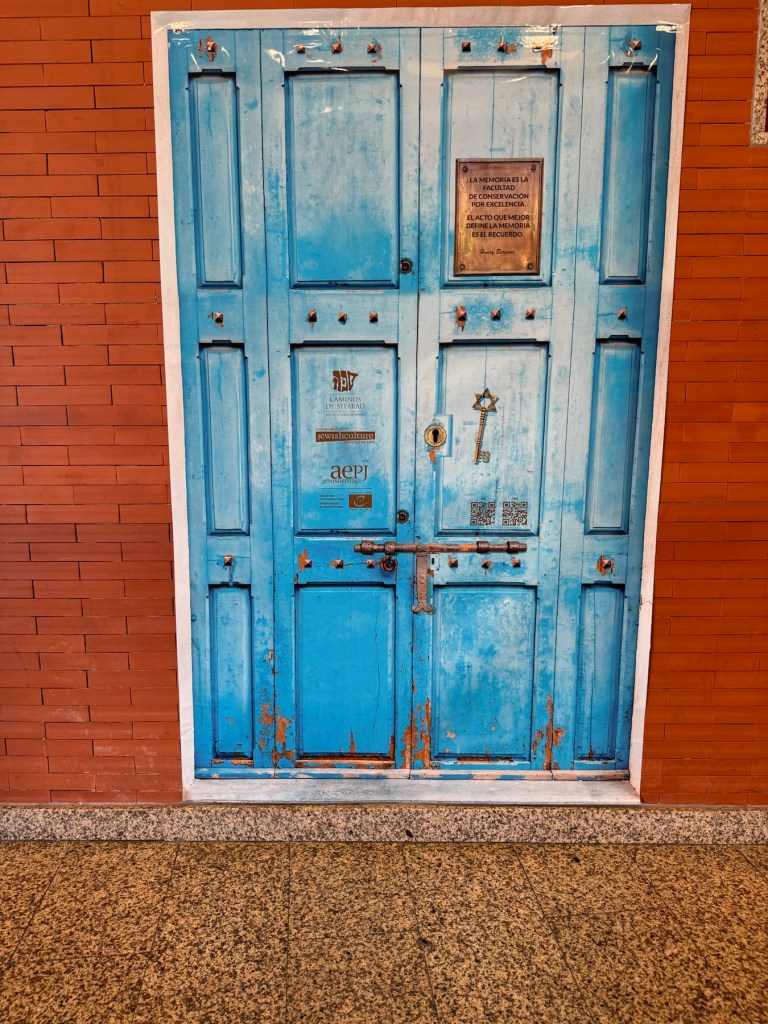
Walking through the pedestrian streets lined with shops and restaurants, we saw a shiny marker in the shape of Spain and Portugal with the Hebrew word Sephard. This marks the Jewish Quarter. There was, before 1492, a robust Jewish community throughout the Iberian peninsula. There is now a Camino Sefarad, a walk to many of the Jewish communities in Spain.

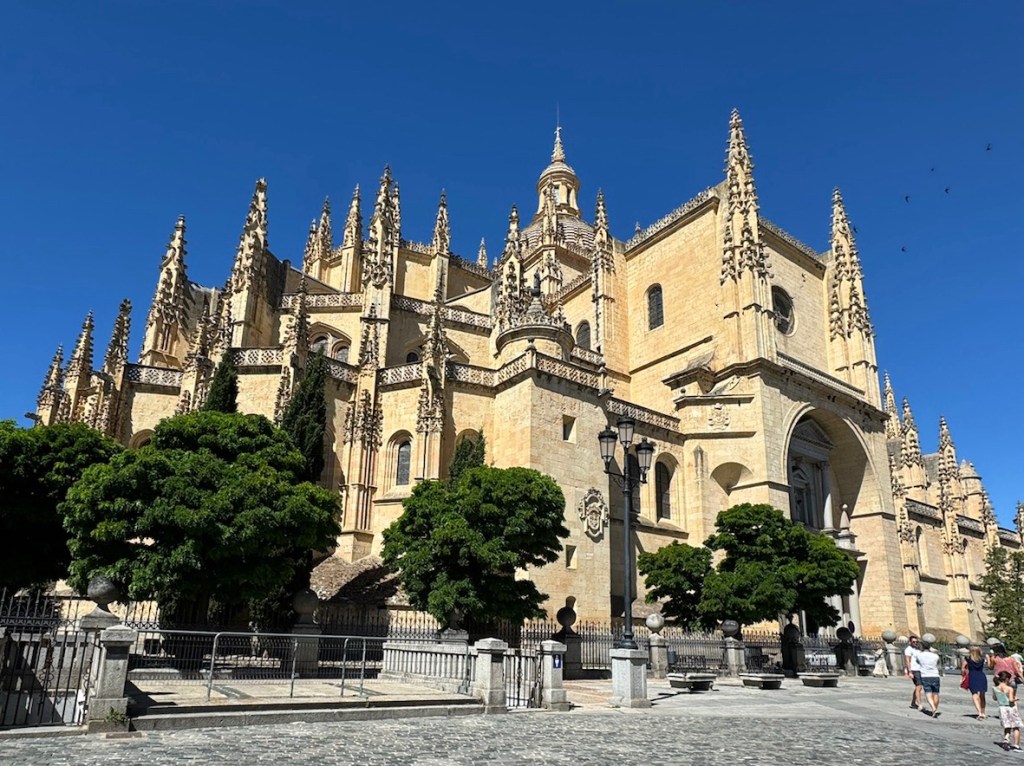
Segovia Cathedral, at the highest point in the city, is an imposing building. It has 21 chapels and a massive bell tower looming above the city.
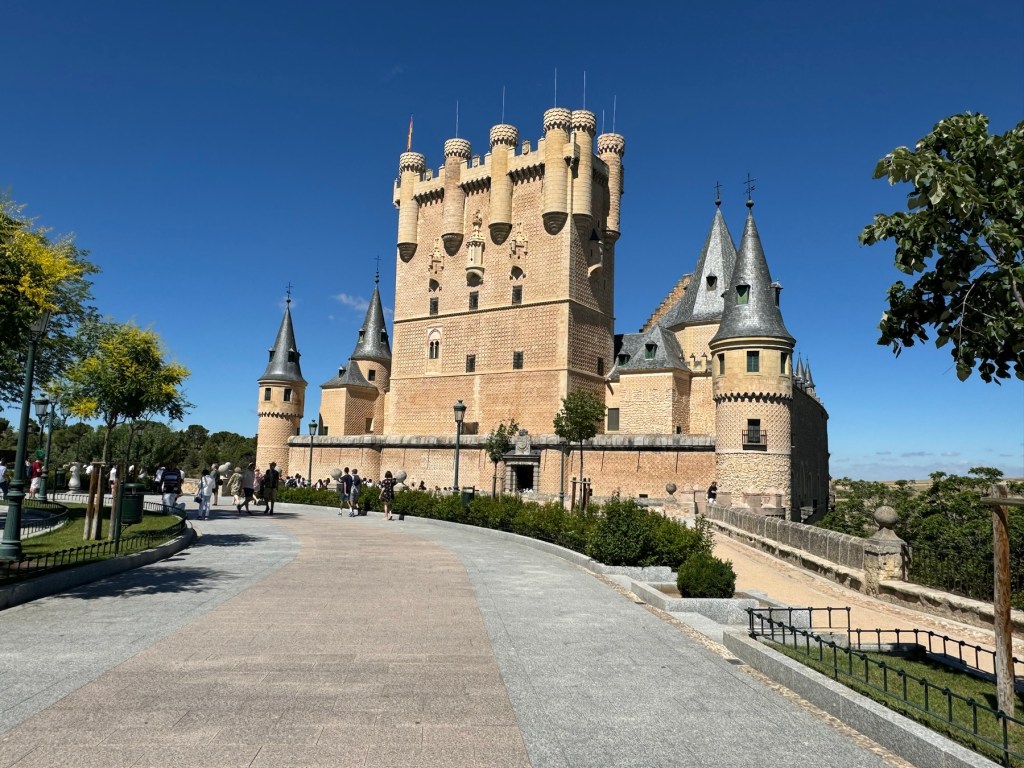
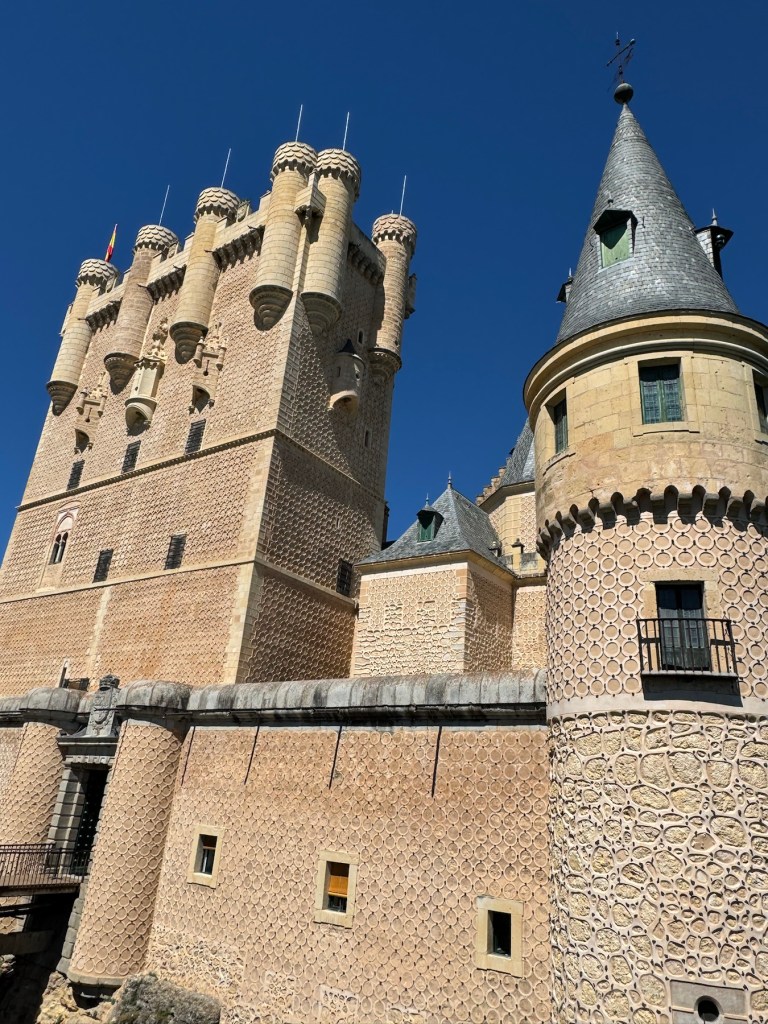
A five minute walk down narrow streets leads you to the castle (Alcazar). It is beautiful from the outside, The Alcázar became one of the favorite residences of the Spanish kings. Additional construction and renovation work shaped the fortress into a palace. It is believed that the Disney film Snow White and the Seven Dwarfs, used the Alcazar of Segovia as the inspiration for the wicked Queen’s castle.

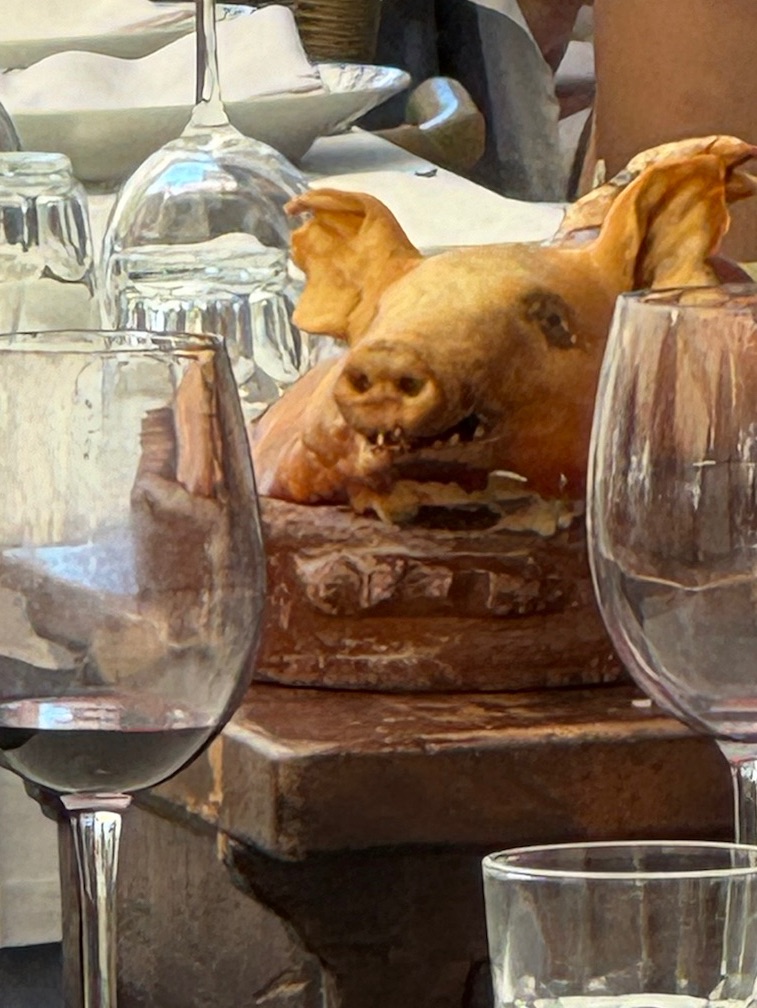
Along with historic sites, food plays an important part in our travels. Segovia has two dishes they are known for. Cochinillo is baby suckling pig. It is prepared in a way that the tender meat is served using a flat plate (as a knife). It’s found only in Segovia. We watched it getting served, zero interest in getting our own!
The other local specialty, Ponche Segoviano, is a dessert, made of almond-based marzipan, custard, and caramelized sugar. This we did try and enjoy.


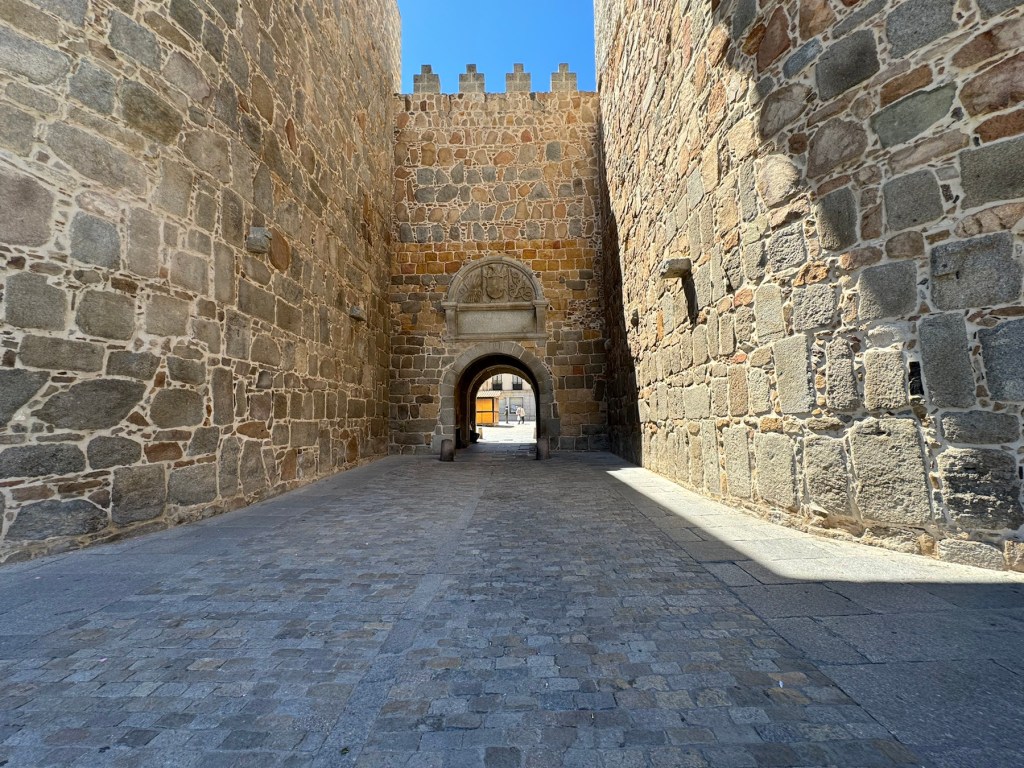
After our sweet treat and lovely visit to Segovia we headed to Avila, a forty minute drive from Segovia. The fortified walls that surround the city date to the 11th Century. We stopped before the city to take in the imposing view. Stretching for a mile and a half with over 80 towers and 9 gates, these stone walls are incredibly well preserved.


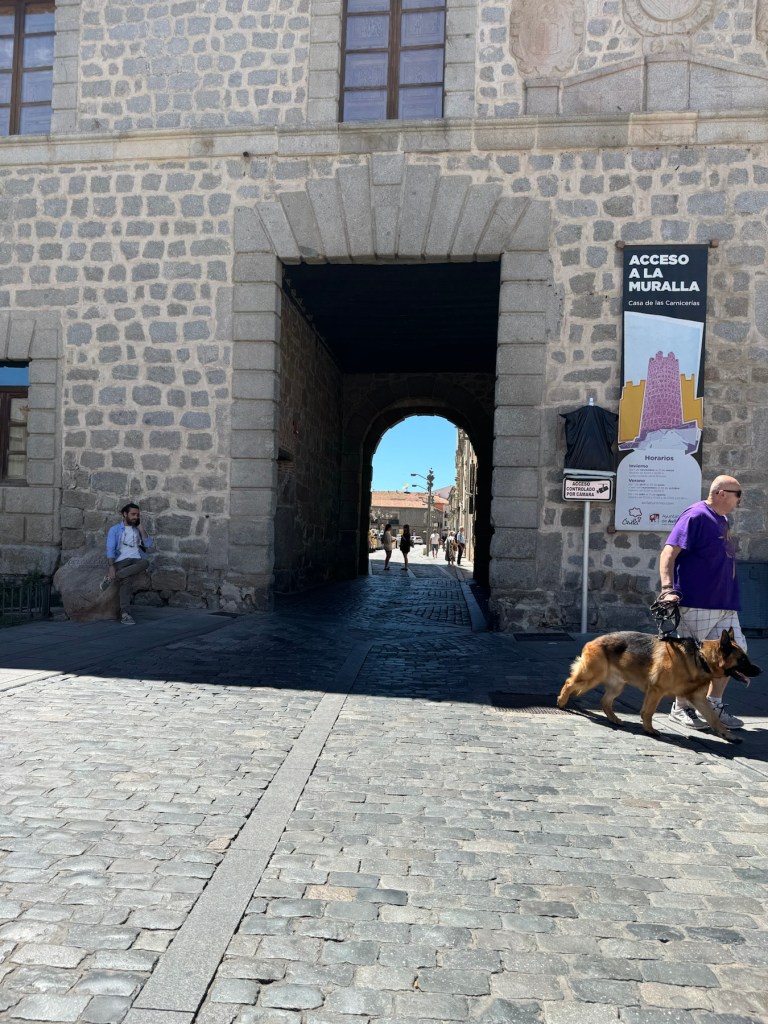

Siesta is a real thing in Spain, especially in the summer. and we arrived in Avila during Siesta. Luckily, the bakery which has made the local delicacy, Yemas de Santa Teresa was open. Yemas have been produced since the 1800s. Yemas are egg yolks. The pastries are simple and include granulated sugar and water with a confectioners sugar coating. There are differing interpretations of their origin; it seems most likely that local winemakers used egg whites to help purify wine, and had no use for the yolks. It was common for them to give all their leftover yolks to nuns at the convents, who traditionally prepared pastries and cookies to sell. Yemas are popular all over Spain.

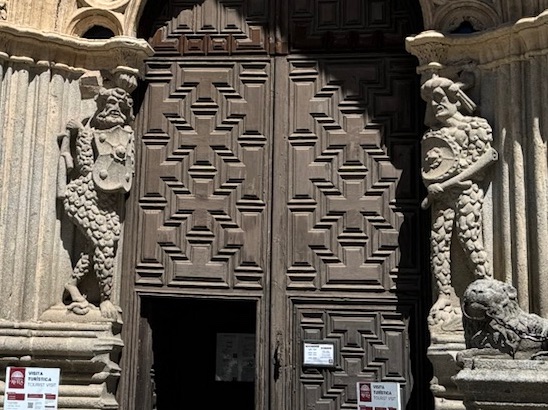
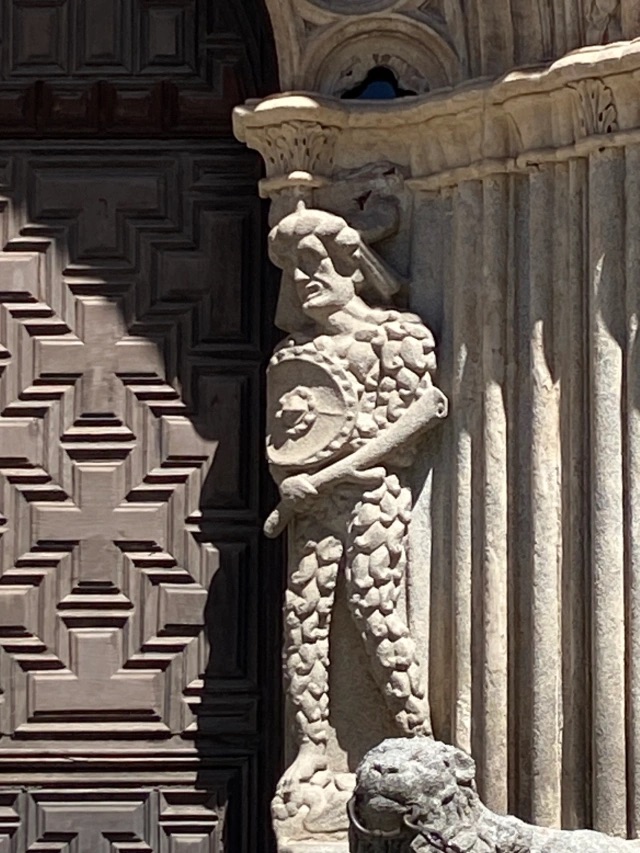
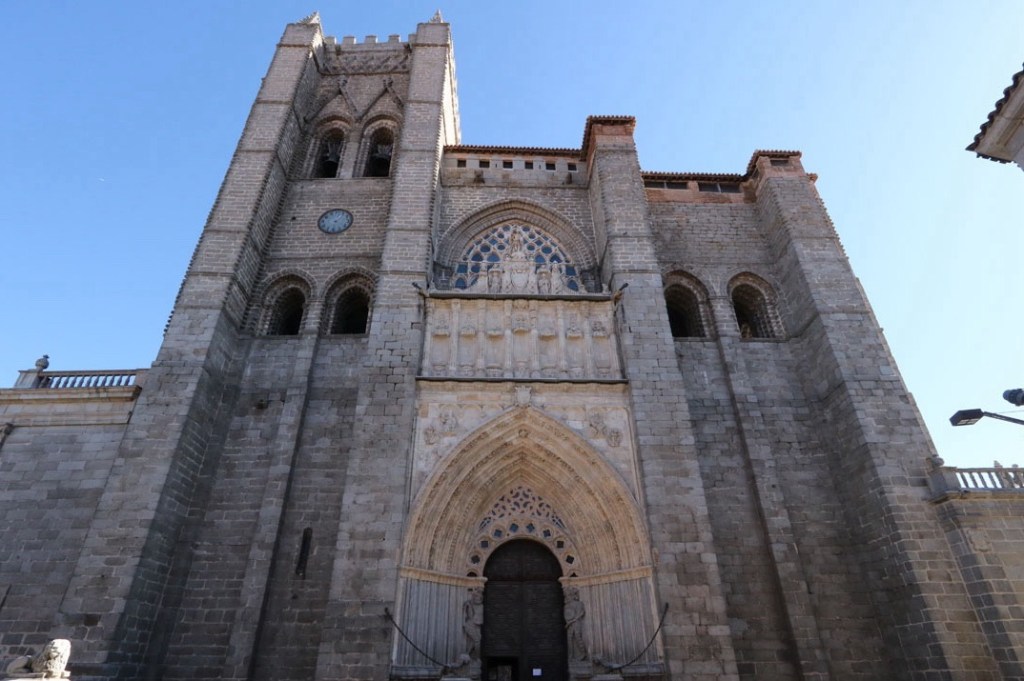
Fortified with yemas and other sweet treats, we walked the quiet streets to the cathedral. Avila’s Cathedral is smaller than most cathedrals in Spain and it actually forms part of the heavily fortified walls of the city. Fascinating to me are the two characters guarding the entrance, meant to scare away those that might invade; they look like sea monsters.
Avila is another of the Spanish cities which had a large Jewish population and is part of the Safard Camino.
It is possible to walk portions of the wall, but with the temperature in the 90°Fs and not a cloud in sky we opted to head back to Madrid.
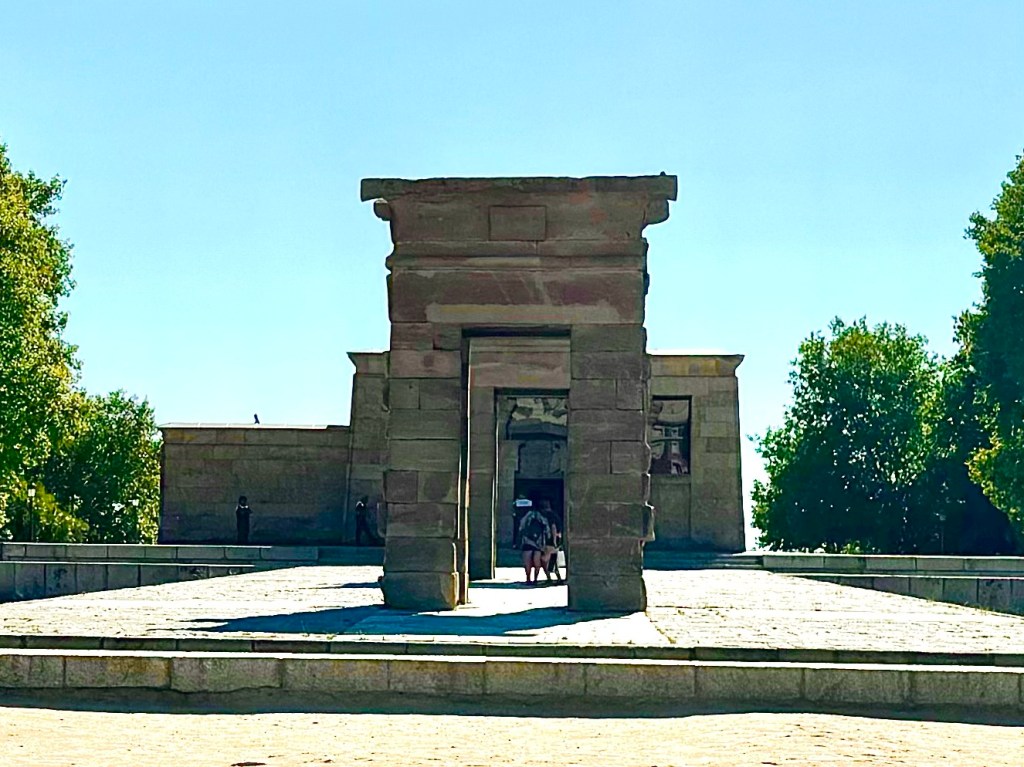
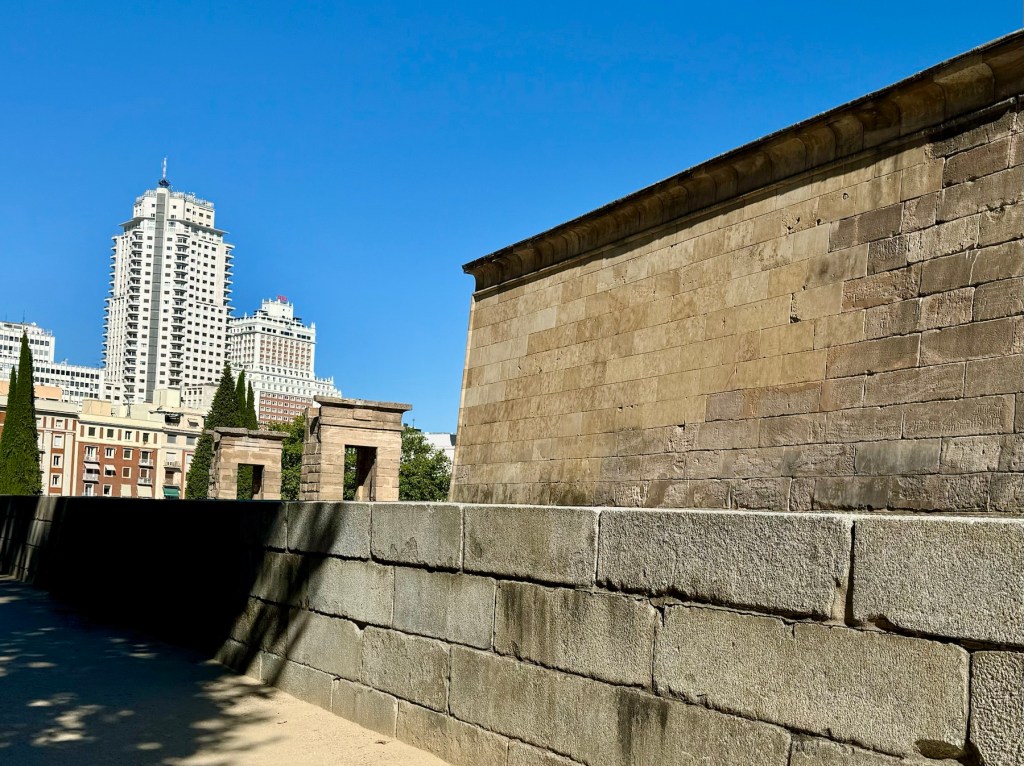
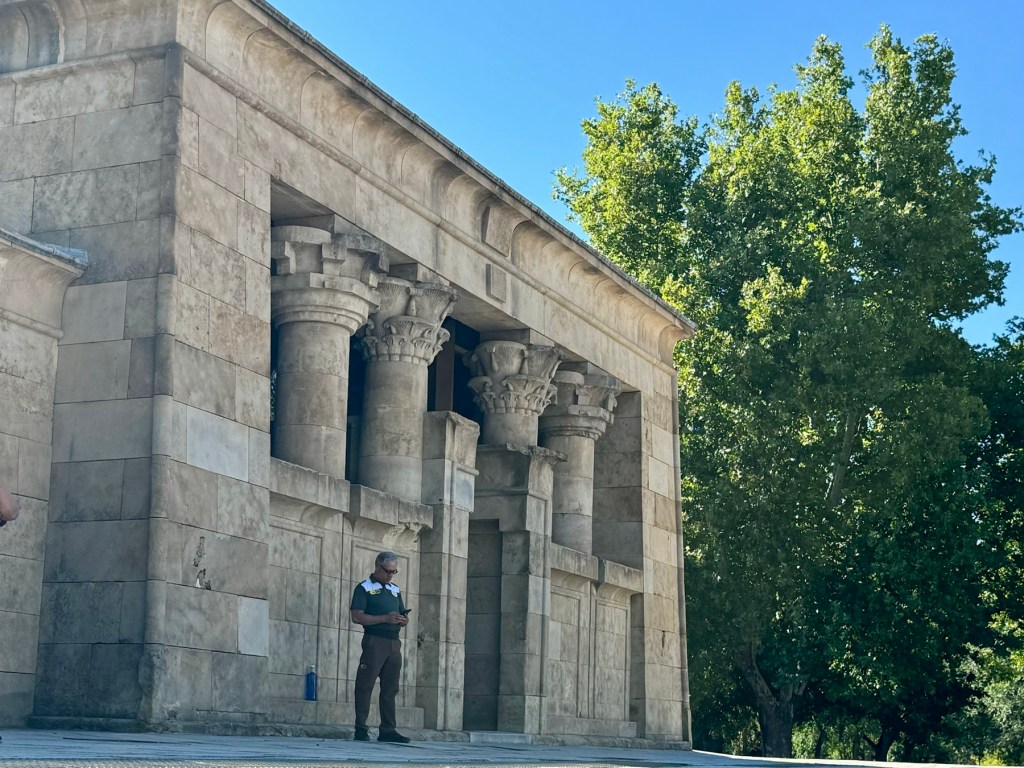
On our return to Madrid we went to the Parque del Oeste (West Park) where we visited the Temple of Debod. This ancient Egyptian temple is bizarrely out of place near the Plaza de España. It was a gift from Egypt to Spain in 1968 in thanks for Spain’s contributions to saving historic sites that would have been flooded when the Aswan Dam was completed. The temple was dismantled stone by stone and transferred to Madrid. It is striking by day and famously magnificent at sunset. Though we were there at 9:00pm, we were not even close to sunset.


Our day dated back to the Roman Empire, Egyptian temples, through the Middle Ages and Gothic periods. We are back to present day and grateful we live in these modern times.

 Where is Wendy